
EV critical material recovery
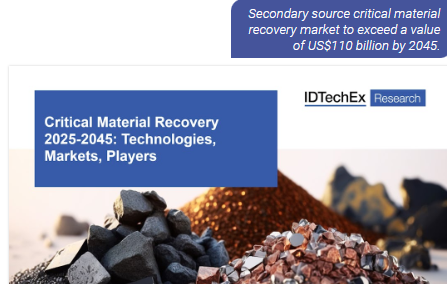
Automotive scrap is rapidly becoming a more attractive source of critical materials than many primary mineral sources.
More than 100 million EVs are expected to reach their end-of-life over the next 20 years, says IDTechEx’s Critical Material Recovery 2025-2045: Technologies, Markets, Players report which predicts their value recovered annually by 2045 will surpass NZ$161.4 billion (US$100b).
The automotive sector’s reliance on critical materials for decarbonisation will fundamentally change end-of-life vehicle recycling and metal value recovery, says IDTechEx technology analyst Dr Jack Howley.
The recovery of valuable platinum, palladium, and rhodium used in catalytic converters for emission control has long supported the auto scrap recycling market, he says. “However, greater vehicle electrification presents critical metals and rare-earth elements (REEs) used in li-ion batteries and electric motors as the emerging value opportunity.”
Howley reckons tens of kilograms of critical metals are within li-ion battery cathodes such as lithium, nickel, and cobalt.
“Moreover, rare-earth elements such as neodymium, praseodymium, and terbium compose up to 33% by weight of the NdFeB permanent magnets used in the electric motor.”
IDTechEx estimates up to NZ$2580 (US$1600) worth of critical li-ion battery metals and rare-earth elements can be recovered per EV.
“Yet despite EVs bearing greater critical material value compared to conventional ICE vehicles, recovery is far from straightforward,” says Howley, adding a key challenge is increased dismantling complexity.
As well as more mature recovery processes, direct recovery and recycling technologies show increasing potential, he says.
“Circular REE supply chains are in their infancy, but key partnerships are forming.
“The challenge in the short term will be weathering low end-of-life component supply while the majority of EVs remain in use – technology providers capable of accepting primary mineral sources in the meantime are best positioned to meet this challenge.”

Join the conversation