
EVs could cut power bills for all, Australian modelling shows
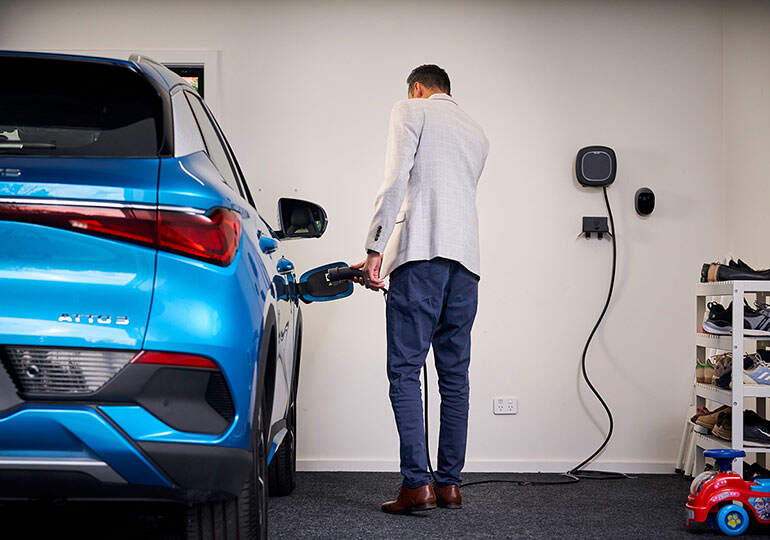
Electric vehicles could help drive down electricity prices for everyone — not just EV owners — if more government support is provided for vehicle-to-grid (V2G) technology, according to new modelling released by Australia’s Electric Vehicle Council (EVC).
The technology, also known as bidirectional EV charging, allows electric vehicles to act as mobile batteries, feeding stored power back into the grid during periods of high demand.
The EVC says a government $3,000 rebate for each V2G charger would create more than $4,500 in downward pressure on electricity bills nationwide over five years, by reducing wholesale power prices and limiting the need for costly new infrastructure.
“Just as Australia became a rapid global leader in rooftop solar, we have the opportunity now to lead the charge in vehicle-to-grid uptake,” Electric Vehicle Council chief executive Julie Delvecchio says.
“EVs can store up to five times more energy than a typical home battery. That’s a huge untapped resource sitting in driveways and with the right technology, we can use it to save money and support the grid, and make the whole system more reliable for everyone.”
Under the proposed model, EV owners could also earn up to $1,000 per year by exporting electricity from their vehicle to the grid, helping stabilise demand and avoid blackouts.
“V2G enables EV owners to feed stored power back into the grid during periods of high demand, when electricity is most expensive and vulnerable to disruptions like blackouts,” Delvecchio says.
“V2G allows EV owners to drive down power bills not just for themselves but for all Australians. EV owners could earn $1,000 annually by sending energy from their electric vehicle to the grid. Over five years, they can contribute more than $4,500 in broader community benefits that help reduce energy bills for everyone.”
The EVC is calling on the Federal Government to include V2G chargers in its $2.3 billion home battery scheme, recommending a rollout of 50,000 $3,000 rebates by 2028 — an investment it says would deliver $230 million in national benefit by 2033.
“We’d like to see the Federal Government roll out a $3,000 rebate for V2G chargers so that more Australians can use this technology to generate lower power prices for themselves and others,” Delvecchio says.
Currently, V2G chargers cost around $10,000, roughly the same as an average home battery system.
“Unlocking this energy from EVs brings huge financial benefits that are in the national interest. We need to encourage more people to use V2G chargers,” Delvecchio adds.
Australia now has more than 350,000 EVs, many located in middle and outer suburbs. With some models now available for around $30,000, the EVC says the transition to EVs is becoming more accessible — and V2G represents the next step in unlocking system-wide benefits.
“V2G offers more than lower energy bills, it can also improve the resilience of the energy system especially during severe weather events,
“While V2G is an emerging technology in Australia, a small group of early adopters have exported power to help stabilise the grid.”

Join the conversation