
EVs – three million to 125m in 12 years
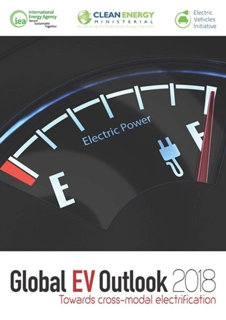 Electric and plug-in hybrid car numbers will rise by at least 122 million within 12 years.
So says the International Energy Agency’s latest Global Electric Vehicles Outlook report.
It says in 2017 the world had more than three million EVs – up 54% on 2016 – and forecasts EV numbers to reach 125 million by 2030.
EV growth has largely been driven by government policy, the report says. “Supportive policies and cost reductions are likely to lead to continued significant growth in the EV market.
”Should policy ambitions rise even further to meet climate goals and other sustainability targets, as in the EV30@30 Scenario, the number of electric cars on the road could be as high as 220 million in 2030.”
Supportive policies include public procurement programmes, financial incentives reducing the cost of EV purchases, tightened fuel-economy standards and regulations on the emission of local pollutants and low and zero-emission vehicle mandates.
China is the world’s largest electric car market, accounting for half sold last year. Nearly 580,000 electric cars were sold in China in 2017, a 72% increase on 2016.
The United States had the second-highest, with about 280,000 cars sold in 2017 – up from 160,000 the previous year.
Nordic countries remain leaders in market share. Electric cars accounted for 39% of new car sales in Norway – the world leader in EV market share. In Iceland, new EV sales were 12% of the total while the share reached 6% in Sweden. Germany and Japan saw sales more than doubling since 2016.
It’s not just cars – electric bus stock rose to 370,000 from 345,000 in 2016, and electric two-wheelers reached 250 million in 2017.
“The electrification of these modes of transport has been driven almost entirely by China, which accounts for more than 99% of both electric bus and two-wheeler stock, though registrations in Europe and India are also growing,” the IEA says.
Charging infrastructure is keeping pace.
Nearly three million private chargers were estimated at homes and workplaces globally in 2017. About 430,000 publicly accessible chargers were also available worldwide in 2017, a quarter of them fast chargers.
Improved lithium-ion battery performance and cost reduction help EV uptake.
“However, further battery cost reductions and performance improvements are essential to improve the appeal of EVs,” the IEA says. “These are achievable with a combination of improved chemistries, increased production scale and battery sizes. Further improvements are possible with the transition to technologies beyond lithium-ion.”
Innovations in battery chemistry will also be needed to maintain growth, as there are supply issues with core elements that make up lithium-ion batteries, such as nickel, lithium and cobalt. Almost 60% of cobalt global production is in the Democratic Republic of Congo.
China controls 90% of cobalt refining capacity, while EVs’ cobalt demand could be between 10 and 25 times higher than present by 2030.
Ensuring increased EV uptake while meeting social and environmental sustainability goals requires the adoption and enforcement of minimum standards on labour and environmental conditions, the report says. Improvement to end-of-life and material recycling processes are need for batteries.
The IEA’s latest Tracking Clean Energy Progress
report shows EVs are one of the four technologies out of 38 on track to meet long-term sustainability goals.

Join the conversation