
Fisker showcases EV line-up to 2026
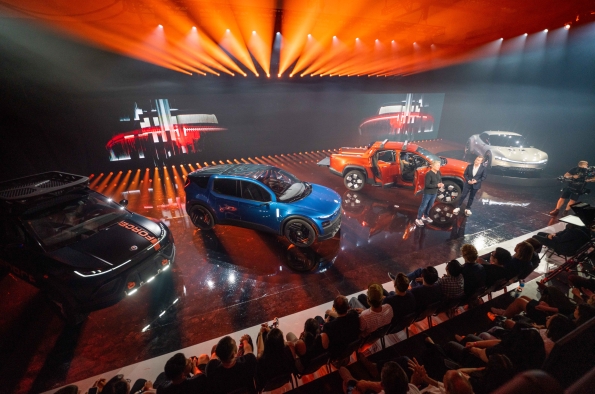
Fisker previewed its future EV line-up in Huntington Beach, California, presenting four vehicles as well as technology and sustainability visions.
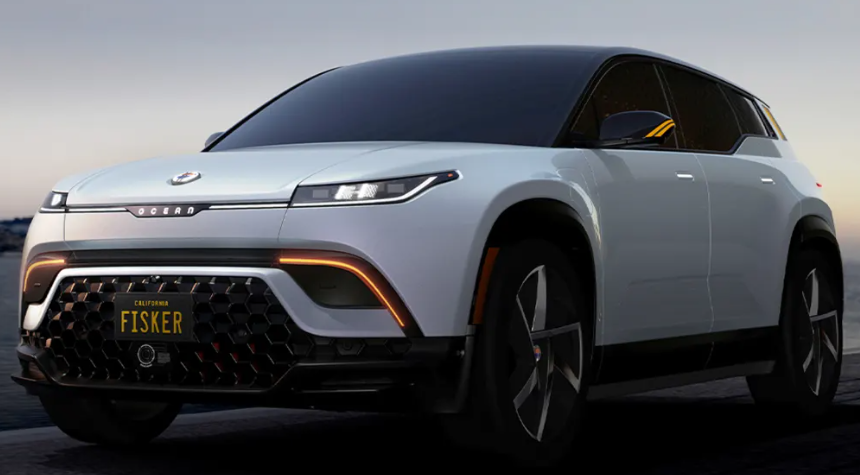
Chairman and chief executive Henrik Fisker presided over reveals of the Fisker Ocean SUV with a Force-E offroad package, the Fisker Ronin four-door convertible GT sports car, the Fisker PEAR sustainable city EV; and the Fisker Alaska electric pickup truck.
Recently returned from Austria for the company’s first major drive event for the Fisker Ocean, launched in November 2022, Fisker says: “We want the world to know that we have big plans and intend to move into several different segments, redefining each with our unique blend of design, innovation, and sustainability.”
The company detailed its Fisker Blade computer, a central computing platform which aims to reduce complexity in forthcoming vehicles. Fisker also reviewed its environmental, social and governance (ESG) objectives in its goal to become the world’s most sustainable carmaker.
“By 2027, we intend to produce the world’s first climate-neutral vehicle, and as our customers reinvent their relationships with mobility, we want to be a leader in software-defined transportation,” says Fisker.
Reservations have opened for both the Fisker Ronin and the Fisker Alaska.
The Ronin is a five-seat GT with a carbon fibre hard-top convertible, four butterfly doors, a high-tech luxury interior, a futuristic exterior design, and a claimed 965km range.
A triple motor all-wheel drive powertrain is projected to deliver more than 745.7kW of power and it reportedly does the zero to 100km/h sprint in about 2.0 seconds.
A showcase for Fisker engineering, powertrain, and software capabilities, Ronin will be ultra-luxury priced and built in limited quantities, the company adds.
The Fisker PEAR (Personal Electric Automotive Revolution) is Fisker’s vision of a sustainable EV as a connected mobility device and built on Fisker’s SLV-1 platform using Fisker’s Steel++ development process, resulting in the use of 35% fewer parts than other EVs in its class.
The PEAR features a highly connected and revolutionary electrical engineering architecture, and the first implementation of the Fisker Blade central computing platform.
A “Houdini Trunk” (hideaway liftgate) and a front storage compartment called the “Froot” (front boot) simplify cargo loading in city parking.
A compact body length provides seating for up to six.
The PEAR’s futuristic design includes an ultra-wide wraparound windscreen, sculptural exterior design, and slim LED lighting.
It is available in four trim levels, priced from US$29,900, and scheduled to be available in mid-2025.
The Fisker Alaska four-door electric pickup truck is built on an extended adaptation of Fisker Ocean’s platform called the FT31.
Built for multiple cargo configurations, including a cargo bed extendable from 1.37 metres to 2.28m to 2.80m, and a Houdini bed divider which hides away to connect the cargo bed and rear cabin, the Alaska is designed to be world’s most sustainable and lightest EV pickup truck, with a projected 370km to 547km range.
Alaska deliveries are expected in 2025, priced from US$45,400 before incentives.
Force E is the off-road package for the Fisker Ocean SUV and will be available for all-wheel drive Ultra and Extreme trims, both at vehicle purchase and as a post-purchase add-on package.
It includes 33-inch tyres on 20-inch wheels, higher ground clearance, specialised dampers, roof basket, front and rear skid plates, and an underbody plate for greater durability.
The Force E package is scheduled to be available in Q1 2024, with pricing to be announced.


Join the conversation