
Fonterra launches electric refrigerated truck
Fonterra has rolled out its first electric refrigerated truck, marking a new milestone in its drive to cut emissions from its supply chain.
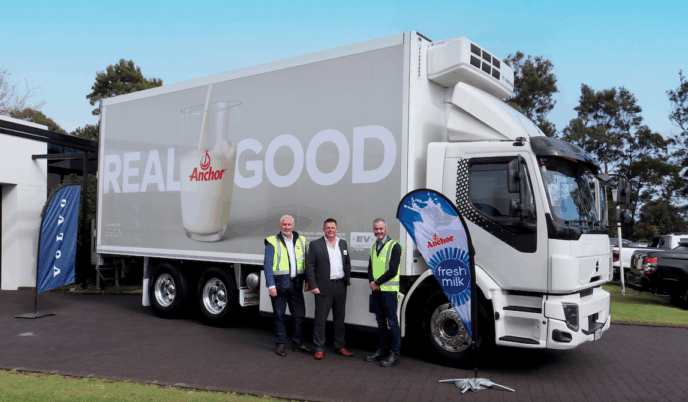
Fonterra has rolled out its first electric refrigerated truck, marking a new milestone in its drive to cut emissions from its supply chain.
The Volvo FE Electric, launched in partnership with Volvo Trucks New Zealand and the Energy Efficiency and Conservation Authority (EECA), will deliver dairy products from Fonterra’s Takanini site to customers across Auckland’s metropolitan area. It is the second electric truck in the co-operative’s Oceania metro distribution fleet and the first fitted with a refrigerated body.
Rob Howell, Fonterra’s director of operations and supply chain Oceania, says the move is part of the co-operative’s long-term sustainability plan.
“Our objective is to be a leader in sustainability while prioritising our commitment to delivering healthy dairy nutrition to consumers around the motu,” he says.
“We are working hard to reduce emissions across our supply chain. Working towards an electric fleet is another step in our journey partnering with Volvo Trucks New Zealand and EECA, providing access to the best technology to allow us to continue to make progress towards our climate ambitions.”
The Volvo FE Electric features a 256kWh battery pack, giving it a range of up to 200km per charge, and a refrigerated body capable of carrying over 400 crates — more than 1.6 million litres of dairy nutrition annually.
Scott Holt, general manager of Volvo Trucks New Zealand, says the deployment is an important moment for the industry.
“This electric truck marks an important juncture – the start of the real-world use and testing of this type of EV technology in a medium refrigerated truck application,” he says.
“In order for New Zealand to transition to low carbon fleets, we need leaders like Fonterra to continue to have the courage to break new ground so that others feel they can also follow, with validation of performance and local support, all while achieving critical sustainability goals.”

Join the conversation