
Fuel cell trucks in CO2 reduction plan
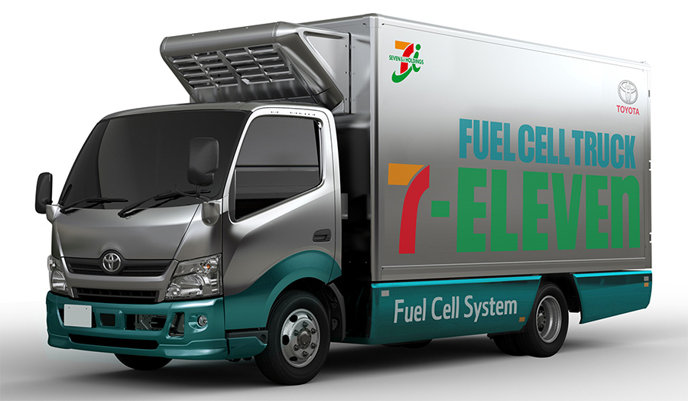
Hydrogen fuel cell trucks will be used in Japan to reduce CO2 emissions under a new project.
Seven-Eleven Japan and Toyota launch their joint “Next-Generation Convenience Store Project” in 2019.
Toyota has been investigating the use of newly developed fuel cell trucks and fuel cell generators, and the project will be implemented in stages starting next year.
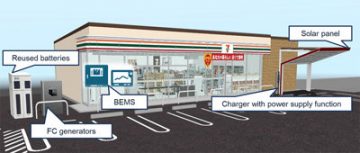
Stationary fuel cell generators (FC generators) and rechargeable batteries will be introduced at stores, managed centrally by building energy management systems (BEMS). They will raise the proportion of renewable energy and electric power derived from hydrogen used. A small FC truck will be introduced in the distribution process.
The rechargeable batteries will be end-of-life batteries from hybrid vehicles.
In addition to charging BEVs and PHEVs, the chargers can supply electric power from BEVs, PHEVs, and FCEVs to the store, also contributing to local recovery during a disaster.
The Seven & i Group is seeking to expand renewable energy use in line with the objectives of the Sustainable Development Goals (SDGs) adopted by the United Nations in 2015.
Specifically, the group plans to increase renewable energy use in stores to 20% and reduce CO2 emissions by 27% compared to FY 2013 by 2030.
On December 7, the environmentally, user friendly Seven-Eleven Chiyoda Nibancho Store opened as a flagship of these initiatives.
The second such store, the Seven-Eleven Sagamihara Hashimotodai Itchome Store, opened on May 22, with renewable energy accounting for 46% of the store’s electric power usage.
Toyota technologies and systems that use hydrogen will be in stores and distribution sites, with next generation stores further using renewable energy.
Two small FC trucks are intended to be introduced within the Tokyo metropolitan region in 2019, and operations in next generation stores are expected to start later that year.
Join the conversation