
Full steam ahead for geothermal carbon reinjection trial
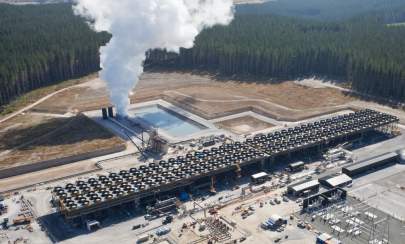
Geothermal carbon reinjection may soon become a feature of New Zealand’s energy network as major generators start trials of the technology to reduce emissions.
If successful, carbon reinjection has the potential to reduce emissions from geothermal by 568,000 tonnes annually, equivalent to taking more than 236,000 cars off the road (or 7% of the entire private vehicle fleet).
Mercury, Contact Energy, Ngawha Generation and Eastland Generation, collectively representing 96% of New Zealand’s total geothermal energy supply, have all committed to research and trials of carbon capture and reinjection.
The first of the trials, at Mercury’s Nga Tamariki Power Station near Taupo, began in October last year. Carbon dioxide released from deep geothermal reservoirs through the energy conversion process at one of the station’s four units is captured and reinjected back into the underground reservoirs, not only reducing emissions from the station but allowing storage of carbon dioxide deep underground.
Contact Energy’s trial at Te Huka Power station is set to start in coming months.
Carbon reinjection had never been deployed in the Southern Hemisphere before and the trials led by all major geothermal generators push the sector’s boundaries of science and technology for reducing emissions, says New Zealand Geothermal Association chief executive Kennie Tsui.
“While emissions from geothermal make up a relatively small component of Aotearoa New Zealand’s emissions profile, this is a very important development for the energy sector’s decarbonisation,” he explains.
“It is an immensely challenging exercise to research, design and build these systems. A lot of work is involved to just get to a trial stage.
“As a renewable, non-weather dependant source of energy, geothermal is a vital contributor to our energy security. It’s therefore vital that we have the means to harness it with lowest possible impact on the environment and these trials offer enormous potential for the sector to reduce its emissions profile substantially.”
The Mercury trial aims to determine the viability of reinjecting carbon dioxide back into the geothermal reservoir without affecting the operation of the power station or the environment. If successful, Mercury will evaluate if similar technology can be extended to Nga Tamariki’s three other units, and to Mercury’s other geothermal power stations.
The cumulative emissions reduced from all four units would be about 30,000 tonnes of carbon dioxide annually.
Technological advances with carbon sequestration and reinjection technologies could be the missing piece in making New Zealand’s renewable electricity network close to zero carbon, says Mercury chief executive Vince Hawksworth.
“Geothermal is a very important contributor to our energy portfolio. It is renewable and delivers through drought, low wind and cloud cover.
“We know there’s much more work to be done to meet the demand for renewable electricity as the nation transitions towards a lower carbon emissions economy,” Hawksworth adds.
“Investing in technologies that further reduce comparatively low, naturally occurring emissions from geothermal energy is an important priority for us. The trials at Nga Tamariki will inform how Mercury, and indeed the wider sector, could deploy carbon reinjection systems at other geothermal stations.”
Hawksworth says results so far are very encouraging.
“After six months we learned we can deploy carbon reinjection processes with no disruption to power generation or detrimental effect to the underground reservoir environment.
“Importantly, the performance of the geothermal wells is stable, and the pipeline and surface plant facilities are in good shape.”
The trial will continue until the end of the year, then data will be reviewed and Mercury will explore how it could scale up to introduce the technology at further units later this year.
Mercury says it will share insights with other interested parties and follow various research on the issue.
Geothermal stations power about 20% of New Zealand’s electricity and the energy generation process brings up naturally occurring carbon dioxide, methane and hydrogen sulphide, collectively known as ‘non-condensable gases’ to the surface with the high-pressure fluid used to move the turbines which create electricity.
Reinjection returns carbon to the underground reservoir with the water that is already drawn up and returned. The process diverts carbon dioxide from being released to the atmosphere as it is separated from steam in creating power, instead joining cooler water in the reinjection pipe.
The NZ Geothermal Association (NZGA) is a non-political, non-governmental and not-for-profit organisation focussed on providing leadership, connection and facilitation to sustain and grow sustainable geothermal opportunities in New Zealand.


Join the conversation