
Funding focus on reducing maritime emissions
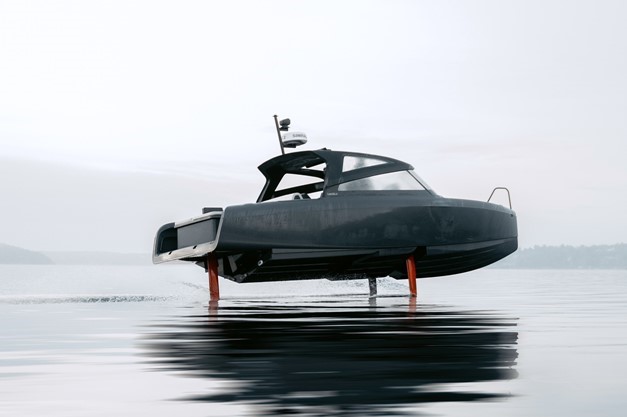
A first-time focus on commercial maritime projects is provided in the Government’s Low Emission Transport Fund (LETF) eighth round from February 8 to March 8.
Up to $2.5 million co-funding is available, with marine sector projects getting priority that demonstrate innovative solutions that enable future adoption and deployment, reduce energy related emissions in the sector, address market and organisational barriers through co-investment and diffusion of new knowledge and learnings, and share learnings and knowledge to stimulate wider replication of successful projects and solutions.
A new report from the Energy Efficiency and Conservation Authority (EECA) highlights the maritime sector’s heavy reliance on fossil fuels and the opportunity to transition boats to clean energy to protect oceans and the environment.
“Fuel use in the maritime sector, including coastal shipping, commercial fishing boats, ferries and recreational vessels, is responsible for 1.5 million tonnes of carbon dioxide equivalent emissions each year, the equivalent of around 600,000 cars,” says EECA chief executive Andrew Caseley.
“That’s nearly 10% of our total transport emissions.
“In the last couple of years, there have been encouraging moves towards electrification of water-borne transport, with a growing electric boat-building industry that’s had interest here and overseas,” Caseley adds.
“But we know there is significantly more energy and emissions savings potential – the industry is still young.”
EECA, which administers the LETF, commissioned research that identifies low-emission technologies, from fuel efficiency measures to electrification, that could be deployed across different marine sectors and vessel sizes.
“The LETF has already proven itself a catalyst for low-emissions innovation in road transport, helping to reduce emissions in light and heavy vehicles,” says Caseley.
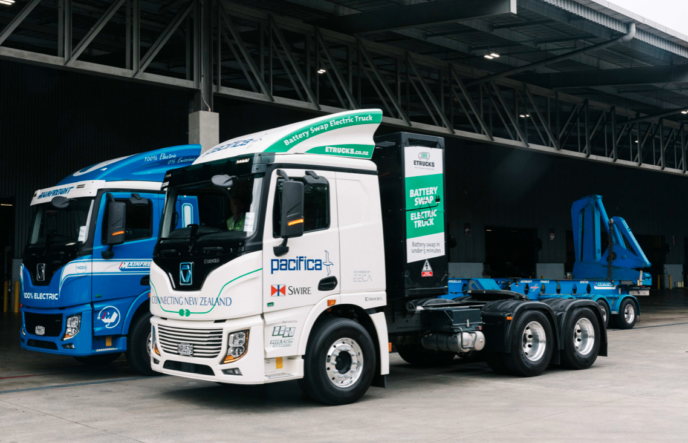
“Just in the last year, we’ve seen the first electric milk tanker take to the roads, the adoption of battery-swap technology and even a solar-panelled bus.
“I have high hopes we’ll be able to deliver for the marine sector, too.”

EECA commissioned Beca to undertake a scan of the maritime sector to identify emissions reduction potential. The study found that beyond electrification, some key technologies can offer significant improvements to fuel efficiency, therefore lowering emissions.
These include propeller optimisation, hull coating, hydrofoils, biofuels and hybrid drives.
The report also found that most technologies cost less than $1 million and show a reduction in operating costs.
Meanwhile, round six offering up to $2 million in co-funding for destination EV charging projects closes February 8 with successful projects announced in coming months.
Click here for more LETF information.


Join the conversation