
Global EV sales climb 20% to 20.7 million in 2025
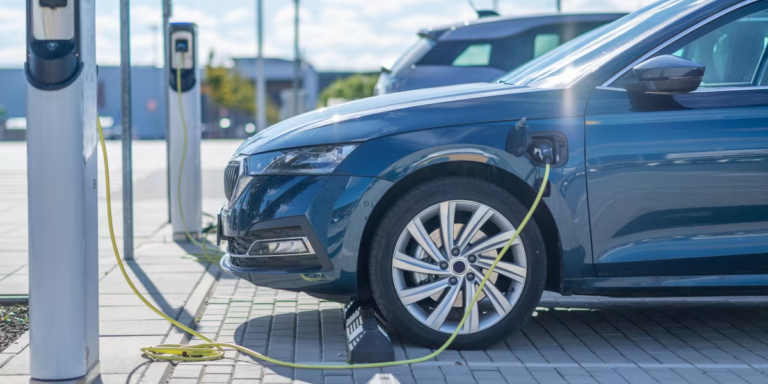
Global electric vehicle sales reached 20.7 million units in 2025, up 20% on the previous year, according to new data from Benchmark Mineral Intelligence.
The research firm says 2.1 million electric vehicles were sold globally in December, taking full-year sales across the passenger car and light-duty vehicle segment to 20.7 million units.
China remained the largest EV market, with 12.9 million vehicles sold in 2025, up 17% year-on-year. Europe recorded the strongest growth among major regions, with sales rising 33% to 4.3 million units. North America was the only region to contract, with sales down 4% to 1.8 million units, while the rest of the world grew 48% to 1.7 million units.
Benchmark Mineral Intelligence data manager Charles Lester says the global market has proved more resilient than many expected.
“This time last year few could have predicted the EV market upset that occurred which has resulted in a virtually unrecognisable landscape now as we enter 2026. Globally the EV sales figures have grown by a fifth compared to the previous year which shows how resilient the market is,” Lester says.
He says Europe emerged as the fastest-growing major region in 2025.
“Looking at Europe, the dark horse has overtaken China as the fastest growing major region. This is despite weakened car manufacturing targets bookending the year as many had already prepared for the 2025 targets to come into force,” he says.
“We do not expect this growth rate to be the same in 2026 as manufacturers focus their efforts on the deadline year, 2027.”
In contrast, North America experienced a sharp slowdown following policy changes in the United States.
“In North America, it will come as no surprise that the year has been tumultuous for the region. A year on from Trump’s inauguration, he has delivered on many of the promises he made to roll back the EV buying incentives and is attempting to domesticate manufacturing,” Lester says.
“In a move that signifies the arresting impact of this, GM has cancelled contracts with BEV battery suppliers. For the first time in seven years in the US we are predicting the market will shrink, by almost a third.”
China’s growth moderated in the second half of the year, reflecting tougher comparisons after subsidy changes in 2024.
“China’s growth appears to have slowed, largely due to the high comparison base created by improved EV subsidies introduced in mid-2024, which significantly lifted sales in the second half of that year,” Lester says.
“With domestic price wars sapping BYD’s profit margins, the car manufacturer looked more towards Europe and other regions where they could deliver a competitive advantage with home-grown car manufacturers and still make several times the profit on every car sold.”

Europe
Europe’s EV market grew 33% in 2025 compared with 2024, with battery electric vehicle sales up 31% and plug-in hybrid sales up 38%. The year was marked by legislative change, including the softening of EU tailpipe emissions targets and expanded consumer subsidies in several major markets.
Germany and the UK recorded strong growth of 48% and 27% respectively, while France finished the year up 2% after a weak start, supported by renewed subsidies in the final months.
The easing of 2025 EU emissions targets in May, shifting compliance to an average across 2025–27, provided relief for manufacturers, although many had already committed to boosting EV volumes. Benchmark Mineral Intelligence expects European EV sales to grow 14% in 2026 as emissions compliance requirements remain in place and subsidies are increasingly targeted at low- and middle-income households.
North America
The North American EV market was volatile in 2025. In the US, the removal of federal tax credits on September 30, alongside reduced CAFE penalties and protectionist policies, significantly weakened demand. US EV sales grew just 1% for the year, after a surge in August and September as buyers rushed to secure incentives, followed by a sharp contraction in the December quarter.
Canada recorded a 41% decline in EV sales after subsidies were removed early in the year, while Mexico grew 29%, largely driven by imports of Chinese-built EVs.
Benchmark Mineral Intelligence expects US EV sales to fall 29% in 2026, citing limited incentives, reduced policy support, and manufacturers scaling back electrification investment in favour of internal combustion engine programmes.
China
China’s EV market grew 17% in 2025, with BEV sales up 26% and plug-in hybrids up 6%. Growth slowed sharply in the final quarter as sales were compared against a subsidy-boosted second half of 2024.
Intense domestic competition and aggressive pricing pushed Chinese manufacturers to expand exports. BYD more than doubled its overseas EV shipments to over one million units in 2025, with Chinese-built vehicles accounting for 19% of all EV sales in Europe and more than 85% of sales in South and Central America.
From 2026, Chinese EVs will no longer be fully exempt from purchase tax, with exemptions reduced to 50% and trade-in subsidies moving to a price-based structure.
Rest of world
EV sales across the rest of the world rose 48% in 2025, driven largely by Chinese imports. Southeast Asia nearly doubled year on year, while South and Central America grew 49%.
Japan recorded modest growth of 6%, with EV penetration holding at 3% as hybrids continued to dominate. South Korea, by contrast, saw EV sales jump 50%, supported by new domestic models and government incentives.
Snapshot electric vehicle sales in 2025 vs 2024:
- Global: 20.7 million, +20%
- China: 12.9 million, +17%
- Europe: 4.3 million, +33%
- North America: 1.8 million, -4%
- Rest of World: 1.7 million, +48%

Join the conversation