
Graphite from wood chips for EV batteries
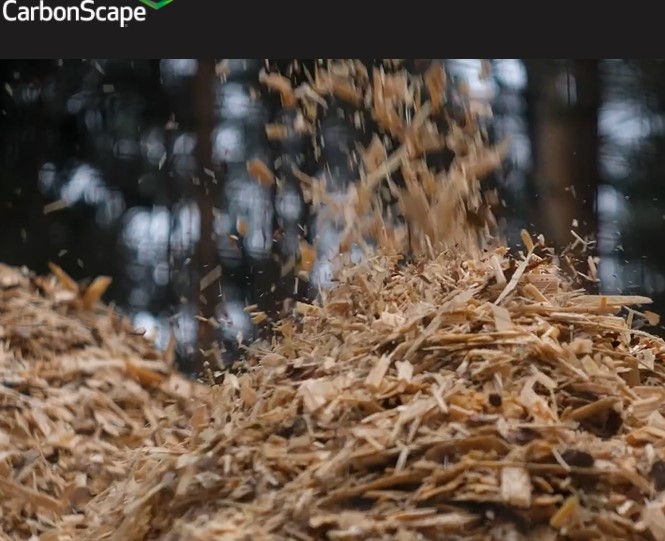
A Kiwi start-up has a NZ$30.3 million (US$18m) investment to commercialise graphite from wood chips for EV batteries in Europe and the US.
New Zealand-based battery material innovator CarbonScape aims to commercialise production of “biographite” in Europe and the US, enabling cleaner lithium-ion batteries for EVs and grid-scale energy storage.
Its pilot facility in Marlborough produces biographite for customer testing and validation, while providing the necessary scale-up data for global commercialisation.
Carbon-negative biographite addresses the raw material scarcity for EV and grid-scale batteries, says CarbonScape, adding graphite is up to 50% of the weight of a lithium-ion battery.
“Yet expected global demand (for graphite raw material) far outstrips supply, with a forecast deficit of 777,000 tonnes per annum by 2030.
“Biographite, produced from forestry and timber industry by-products, is a sustainable alternative for battery supply chains currently dependent on petroleum-based or mined graphite.”
The investment round led by Stora Enso Oyj, is joined by Amperex Technology Ltd (ATL) and other partners.
CarbonScape says its patented process is the result of seven years of development and testing, pointing out that conventional graphite production is one of the largest CO2 emitters in the battery raw materials supply chain and represents a significant proportion of the cost of a battery.
“With countries increasingly competing for raw materials, securing supplies of graphite is key to ramping up production of EVs and renewable energy systems – as reflected in the recent EU Critical Raw Materials Act and US Final Critical Materials List,” CarbonScape explains.
“If we are to truly move away from fossil carbon and power our economies through mass electrification, we urgently need sustainable alternatives like biographite to scale quickly,” says CarbonScape chief executive Ivan Williams.
“With these partnerships, CarbonScape is another step closer to bringing biographite to market on a commercial scale.”
Biographite is expected to save up to 30 tonnes of CO2 emissions per tonne of material compared to synthetic or mined graphite.
“Using biographite will enable battery manufacturers to cut the carbon footprint of each battery by almost a third (30%), potentially reducing sector emissions by more than 86 million tonnes of CO2 per year by 2030,” the company explains adding it could use less than 5% of the forestry industry by-products generated annually in Europe and North America.
“Crucially, biographite production can be localised to EV and battery manufacturing hubs, vertically-integrating domestic and regional supply chains. This reduces geopolitical risk as countries compete for minerals and as mineral producers seek a greater share of the value, as seen recently in Chile, which plans to nationalise the lithium industry, and in Indonesia, which has banned exports of nickel ore in an attempt to build domestic industry.”
Stora Enso biomaterials growth businesses senior vice president Juuso Konttinen says the partnership marks another step on Stora Enso’s journey to serve the fast-growing battery market with sustainable, local materials made from trees.
ATL executive vice president Joe Kit Chu Lam says that as a premier global innovative technology corporation, ATL’s central vision is to contribute to the green energy revolution for the future.


Join the conversation