
Hamilton, city of the future
This story first appeared in the May issue of EVtalk – CLICK HERE to download the magazine FREE
 Hamilton is about to live up to its handle “City of the Future”, particularly in developing a “Smart Hamilton” initiative.
While the City of the Future name was apparently given with some irony in the late 1990s (much like its nickname The Tron), the Waikato city is heading down that track, especially with electrics.
That’s as in electric vehicles (EVs), electric bikes, electric buses and possibly electric rail.
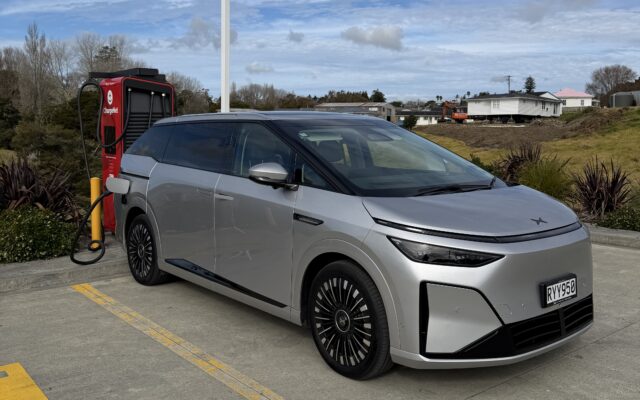
Advanced, intelligent transport operation and EV charging stations in association with WEL Networks are among priority projects in the “Smart Hamilton” initiative.
The council says in the Smart Hamilton document that the city’s size and scale mean it’s “small enough to try things and big enough to make them meaningful”.
The Smart Cities style programme aims to leverage innovation, technology and insight to make cities more liveable, optimise resources and create sustainable economic growth.
Hamilton has the capability, and a growing population that requires action, especially before it develops neighbouring Auckland’s traffic congestion woes.
While Hamilton’s peak periods may be shorter than Auckland, the Ministry of Transport reports that motorist delay in minutes per km travelled because of congestion is already on a par with Auckland at times. This is likely to increase given that Hamilton’s population is expected to reach nearly 169,000 by June and the Waikato region will swell to 470,000 people by 2031.

Concern that Hamilton could soon experience Auckland-like transport issues prompted renewed calls for a regional fuel tax from Hamilton City Council growth and infrastructure committee chairman Dave Macpherson recently.
He’s saying about 48,000 people make the daily commute into Hamilton’s central business district.
Many people are now commuting to Auckland too.
The Hamilton to Auckland expressway completion might help with the journey which can take around two hours.
And a new passenger train from Frankton station to Auckland could be operational soon, linking with the electric train service at Papakura.
The aim is for a twice morning and twice evening service which could eventually be extended.
Whether the full distance will eventually be electric has yet to be decided.
The city council and the Waikato Regional Council have an end of May deadline to include the rail plans in both their long-term plans, with the city intending to adopt the plan on June 28.
The city council also acquired 2.1ha at Rotokauri near The Base to develop a park and ride facility to support the proposed rail link.
One possibility to ease Hamilton traffic issues is to get more people on electric bikes, with interest in e-bikes there growing.
Electric bikes can tackle head winds and hills easily without the rider working up a sweat and are often a quick way to commute.
The council itself could adopt a similar scheme to its Tauranga counterpart with staff using e-bikes, setting an example in the process.
City Transportation community engagement adviser Ngaire Atmore says Hamilton is well suited to cycleways, which e-bikes can use, as the city is largely flat with reasonable weather year-round.
It has the award-winning Western Rail Trail shared path alongside the main trunk line which links southwestern suburbs with the CBD, and a connection could also be provided to The University of Waikato.
Atmore says there are already many on-road cycleways, but none yet with the separation from traffic like those in Auckland.
E-bikes could be considered alongside electric buses and other electric vehicles, City Transportation infrastructure systems engineer John Kinghorn says.
The Waikato Regional Council is responsible for contracting and providing bus services in Hamilton city and for some of the region’s communities, working closely with Hamilton City Council on route planning.
Electric buses don’t appear to get specific mention in the Waikato Regional Public Transport Plan 2015-2025, but may be covered generally. An objective of the National Energy Efficiency and Conservation Strategy, for instance, is for a more energy efficient transport system with a greater diversity of fuels and alternative energies.
The council could also work with “smart” developers on ideas, such as having EV charging sites working off solar grids and cloud-based networks.
Car sharing– usually involving EVs – is another transport option becoming established in other cities, and could help Hamilton.
Apps may summon rides, rather like Uber, so that vehicle ownership may eventually fall.
Kinghorn says apps can be used to find when the next bus is due, and may eventually allow people to be picked up outside their home and workplace rather than at bus stops.
The Design Factory at Wintec has students working on the issue of encouraging people to use alternative modes of transport.
Kinghorn says the Leading the Charge EV road trip stop in Hamilton was a great way of advertising EVs and allowing people to familiarise themselves with electric cars.
He says that momentum needs to continue.
There are many other facets to Hamilton’s transport, such as moves to set up a traffic operations centre, using cameras and information to provide the public with options to optimise travel.
Kinghorn wouldn’t be surprised if Hamilton also eventually gets an autonomous electric air taxi service like the Zephyr Airworks’ Cora project under trial in Christchurch.
Which all goes to show that Hamilton is living up to that “City of the Future” tag.
Join the conversation