
Hyundai and Audi partner on fuel cell EVs
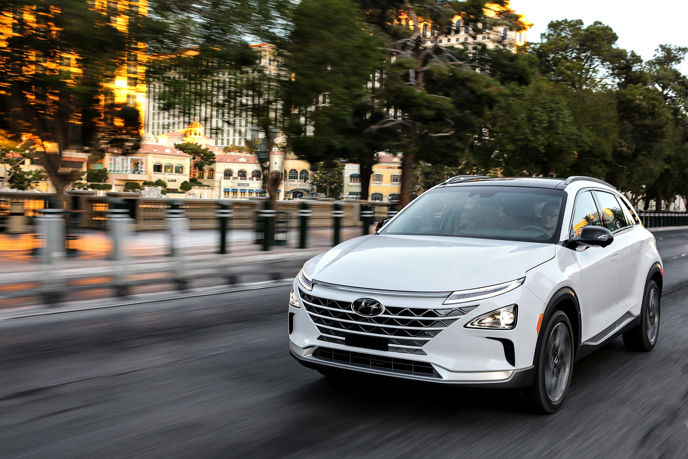
A new partnership to develop fuel cell electric vehicles (FCEVs) has been formed by Hyundai Motor Group and Audi AG.
The multi-year patent cross-licensing agreement covers a broad range of FCEV components and technologies.
The agreement also covers and benefits both companies’ affiliates, including Kia Motors Corporation and Audi’s parent company Volkswagen AG.
 Hyundai and Audi, as well as their affiliates will equally share the patent licenses over the years to come. The duration of the agreement, which includes mutual access to fuel cell components, is undisclosed.
The partnership will leverage collective research and development capabilities in fuel cell technology.
As a first step, Hyundai will grant its counterpart access to parts based on Hyundai’s know-how accumulated from the development of its ix35 fuel cell as well as the Nexo.
Audi – responsible for the development of fuel cell technology within the Volkswagen Group – will also be able to take full advantage of Hyundai’s FCEV parts supply chain.
Hyundai, the world’s first mass-producer of fuel cell vehicles, has been offering SUV-Class FCEVs since 2013, and sells them in 18 countries.
“This agreement is another example of Hyundai’s strong commitment to creating a more sustainable future whilst enhancing consumers’ lives with hydrogen-powered vehicles, the fastest way to a truly zero-emission world,” Hyundai Motor Company vice-chairman Euisun Chung says.
Audi technical development board member Peter Mertens says; “For the breakthrough of this sustainable technology, cooperation is the smart way to leading innovations with attractive cost structures.”
Hyundai and Audi have also agreed to explore opportunities for a next step in their collaboration, aiming to lead industry standards in fuel cell technology as well as accelerate FCEV development and spur innovation in this technology.
FCEV components manufacturer Hyundai Mobis is expected to continuously expand its role, increasing production capacity from 3000 powertrain fuel cell (PFC) modules annually to tens of thousands.
Long ranges and short refuelling times make hydrogen an attractive future source of energy for electric mobility, especially larger vehicles, the two automakers say.

Join the conversation