
Hyundai Australia backs efficiency standard but dealer research does not
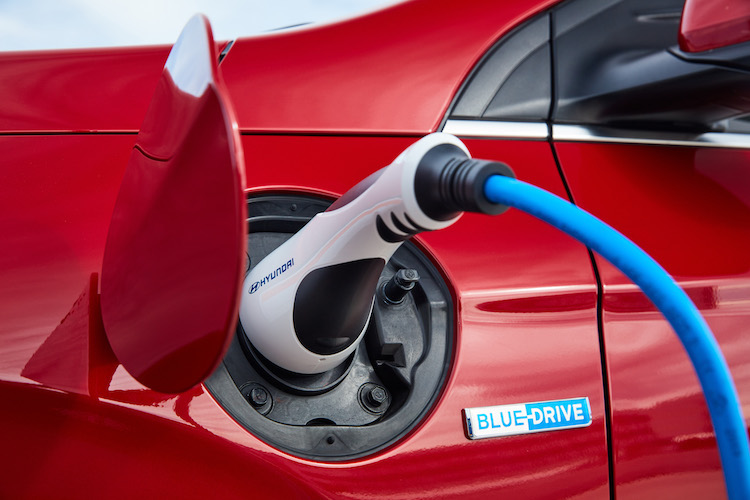
Hyundai Motor Company Australia (HMCA) has taken the country’s new vehicle distribution industry by surprise by issuing a public statement that it has welcomed the Federal Government’s impact analysis for the New Vehicle Efficiency Standard (NVES).
HMCA says it is committed to working with the Federal Government and industry to ensure Australian consumers get access to the widest range of affordable low- and zero-emission vehicles.
“We see this as an intriguing challenge, and we look forward to responding to the Government’s call for feedback,” Hyundai Australia chief operating officer John Kett says.
“We think we will soon have a world-class efficiency standard in Australia and we’re excited by that.
“With the standard in place, Hyundai dealers will still have great vehicles to sell, customers will have great vehicles to drive, and we will be doing our bit to reduce emissions in line with Australia’s commitment to decarbonise,” Kett says.
“We only have five years to catch up to other advanced markets that have had efficiency standards in place for decades, and that’s a challenge. We see merit in the Government’s preferred Option B, and with some minor aspects of Option A introduced to it, we can hit the proposed target and bring accessible, affordable and efficient vehicles to the market.”
Hyundai says its vision for the rapid development of sustainable transport technologies aligns with the ambition of the Australian Government’s proposed NVES policy.
“The Government has been confronted with many competing voices and opinions throughout this process, and treading a workable path through all the noise will not be easy,” Kett says.
“A world-class Standard demands world-class thinking around the commercial pressures and infrastructure challenges we jointly face.
“We applaud the ambition of the policy, and with the input of all the major stakeholders who have a role to play in its development, we’re confident that the Government will get the NVES right for all Australian new car buyers,” he says.
Dealer research pours water on fuel efficiency standard
New research about car buying intentions underscores the challenges of the Federal Government’s plan to reduce Australia’s light vehicle emissions by 60% in five years.
The ‘EV & Hybrid Vehicle Wave 2 Insights Report’ released by the Australian Automotive Dealer Association (AADA) shows that electric vehicle sentiment is shifting at a trickle rather than a flood, while most consumers plan for their next vehicle to be an SUV or Ute.
The AADA represents 670 new car Dealers in Australia that operate more than 3000 dealerships that directly employ more than 56,000 people.
The research is a second wave of tracking EV sentiments across the community following a similar study conducted in December 2022, collecting feedback from a sample of 2,000 Australian drivers (representative by age, gender and household location across Australia).
“The proportion of the market open to buying an EV has grown but represents only one in four buyers, as the strongest barrier to considering an EV remains the higher purchase price,” AADA chief executive James Voortman says.
“Most buyers are looking at a non-electric SUV or a Ute as their next vehicle. This is no surprise because these are the vehicles Australians love, but are also the cars most at risk of an overly aggressive vehicle emissions standard.
“It is also clear that consumers are less likely to buy a new one due to the current cost of living crisis. The last thing we need to do at this time is to further discourage consumers from buying new cars which are safer, cleaner and greener than the old cars they replace,” he said.
“We urge the Government to study this survey and adopt an emissions policy that reduces vehicle emissions in a way that protects affordability, choice and the local automotive industry,” he says.
Among the survey findings are:
- Two-thirds are going to keep their current vehicle for longer than initially planned due to cost of living pressures.
- Three in five are less open to paying more for EVs due to cost of living pressures.
- Respondents open to buying an EV for their main vehicle has grown from 21% in 2022 to 25% in 2024.
- Consumers are more likely to be intending to replace their main vehicle in the next three years (61%, up from 53%).
- The price premium consumers are willing to pay for an EV over a traditional fuel type is 8% up from 6%.
- More than two-thirds believe governments should be incentivising more customers to transition to EVs.
- 57% are not open to an EV due to the perception that EVs cost too much, but this is down from 62%.
- 62% of respondents say their next purchase will be an SUV or a Ute.
“This research confirms what we already knew, Australians continue to preference SUVs when considering their next vehicle purchase, are very conscious of price given current cost of living pressures, and intention to consider an EV on the next main vehicle driven is lowest when replacing large SUVs and utes,” Voortman says.

Join the conversation