
Hyundai targets 60% electrified sales by 2030 as new battery tech doubles output
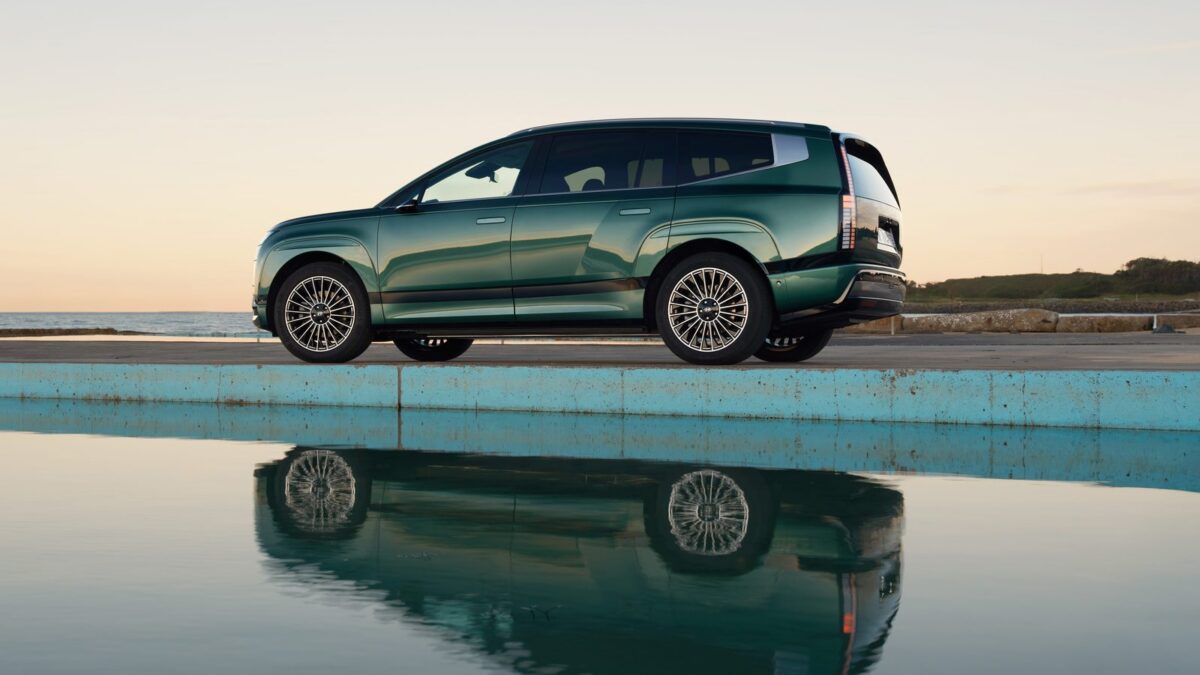
Hyundai will lift electrified vehicles to 60% of its global sales mix by 2030, up from 23% last year, backed by in-house battery cells delivering more than double the output of its previous packs and a first wave of extended range EVs from 2027.
The targets headline the company’s 2026 CEO Investor Day, which sets out more than 100 model launches and refreshes by 2030 and raises Hyundai’s operating margin target above 9%.
The IONIQ 3 went on sale in Europe this month with 497km of WLTP range, the first vehicle in Europe carrying Pleos Connect, Hyundai Motor Group’s next generation infotainment platform. New Zealand timing for the compact EV has yet to be confirmed.
Hyundai’s first extended range electric vehicles arrive from the first half of 2027, led by a Santa Fe EREV targeting more than 600 miles, around 965km, of total range. The company says the EREV uses less than half the battery capacity of a comparable EV while delivering equivalent battery performance and EV driving dynamics. The model will be built in the United States, leaving right-hand drive prospects unclear. Genesis adds an EREV SUV targeting over 640 miles in early 2027.
The battery story runs deeper than the EREV. Hyundai has independently developed cells producing more than double the output of the high-nickel units used previously while cutting charging time by 40%. EV models launching next year move to mid-nickel NCM cells, reducing battery cost by around 30%, and an enhanced cloud-based battery management system aims to extend battery life by an average of 20% by 2028.
A new safety technology, Thermal Runaway Protection, debuts on the Genesis GV90. Hyundai says the system blocks heat transfer between cells at the source in the event of a battery fire, rather than merely delaying it, using heat-dissipating pack design and barrier structures between cells, verified through more than 200 tests on prismatic and pouch NCM batteries.
“Our fundamentals have never been stronger. Hyundai Motor Group is the third-largest automotive group and the second-most profitable, which gives us the ability to invest while others are pulling back,” president and chief executive Jose Munoz says.
In Europe, Hyundai plans a fully electrified portfolio covering 85% of the market, growing EV sales from 116,000 last year to more than 420,000 by 2030. Its robotaxi programme scales this year, with the first IONIQ 5 Waymo robotaxis delivered in the fourth quarter and international expansion of robotaxi services flagged as early as 2027.
The autonomy roadmap runs in stages: the Atria AI system begins real-world data collection in Korea this year, Level 2+ arrives on the company’s first mass-produced software-defined vehicle in 2028 in collaboration with NVIDIA, and a 100-megawatt AI data centre housing more than 50,000 GPUs comes online from 2029.

Join the conversation