
IT BEAT US THE PHEV PROVING ITS RANGE CREDENTIALS
I’ll admit from the outset: my knowledge of Timaru was limited. Beyond the irreverent Deja Voodoo track “Today, Tomorrow, Timaru” and knowing there’s a beach called Caroline Bay, I’d never had much reason to learn more. I certainly wasn’t aware that Timaru would be the place where we decided to find the limit of BYD’s new plug-in hybrid wagon, the Sealion 6.
Our plan had been to see how far this ambitious new vehicle could travel on a single tank, starting all the way up in Auckland’s CBD and cruising south to Christchurch. After well over 1,000km, we ended up pushing even further, deep into the South Island, well beyond our original target.
THE JOURNEY BEGINS
We (friend of the magazine Graeme Macdonald was along for the drive) set off the previous evening at around 10pm from Beach Road in Auckland. The tank was brimmed with what BYD claimed was 55 litres of petrol, plus
an 18.3kWh battery pack fully charged. Our goal was straightforward if audacious: reach Christchurch on a single tank and single charge, no hypermiling tricks, no sacrificing comfort. We’d run the climate control, stick to the legal speed limits (including those newly introduced 110km/h sections), and carry all our gear—magazines, camera equipment, and even some last-minute Christmas presents. The target was Cathedral Square, roughly 991km away. BYD’s promotional materials suggested a 1,070km range, but I was skeptical. Such claims often reflect best-case scenarios with minimal load and gentle driving.
MEETING THE BYD SEALION 6
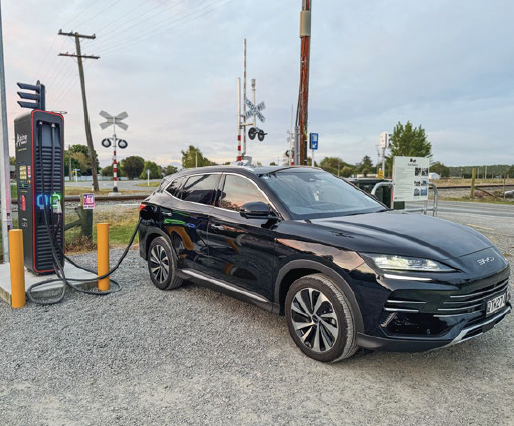
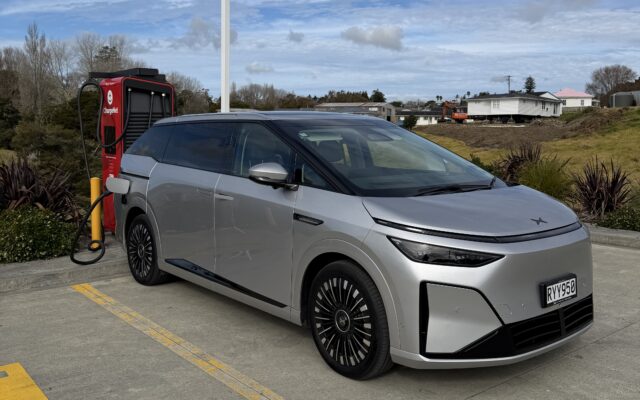
Before detailing the trip, I should explain the Sealion 6’s appeal. This Chinese plug-in hybrid is at the forefront of a wave of long-range PHEVs, featuring BYD’s DM-i system. Essentially, the petrol engine mostly serves as a generator for the electric motors that do the heavy lifting. The battery provides up to 81–92km of pure electric range and can recharge fully in about 2.7 hours on a wallbox, or top up via DC fast charging in around half an hour—swift for a PHEV. The Dynamic model (the one we drove) combines a 72kW/122Nm 1.5L engine with a 145kW/300Nm electric motor, totaling 160kW and 300Nm for an 8.5-second 0–100km/h time. Fuel economy claims of 1.1L/100km are impressive but assume regular charging and careful driving. For many owners, it might mean barely using petrol at all in daily life.
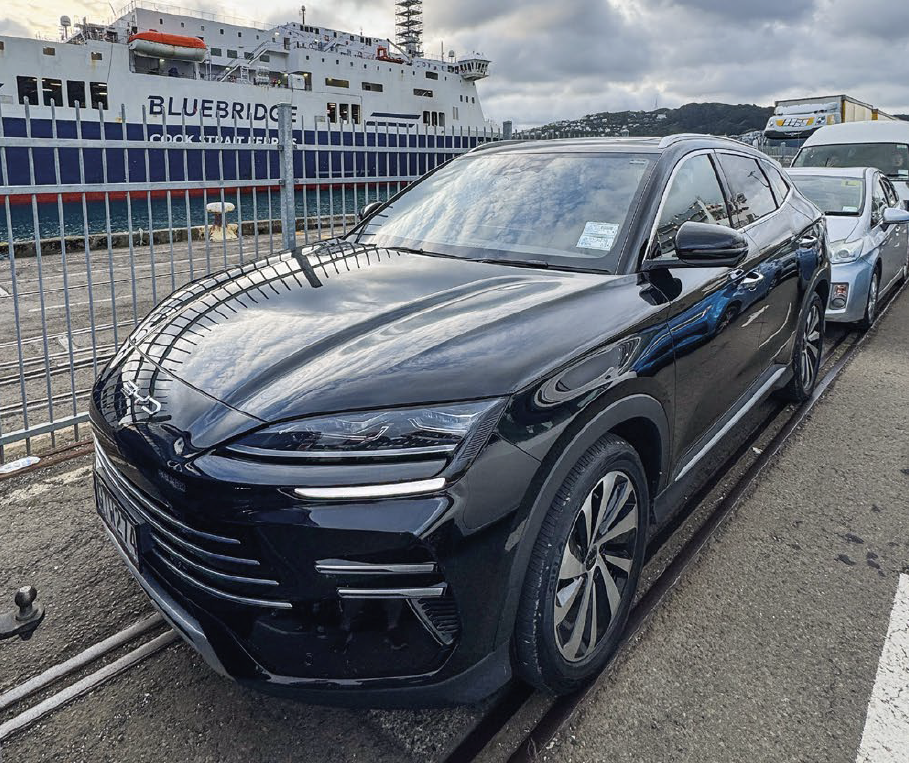
As we rolled south through the night, the Sealion 6 remained quiet and composed, with minimal wind and road noise. It’s no performance car, but the ride comfort over long distances was outstanding. With two drivers swapping shifts, we found ourselves cruising through the many North Island night time diversions and onto the ferry in Wellington, catching a few hours’ sleep in a cabin before the South Island leg.
ACROSS THE COOK STRAIT AND DOWN THE COAST
By the time we disembarked in Picton and headed towards Kaikoura, the Sealion’s numbers remained impressive. At Wellington, after 661km on the road, we’d averaged 5.2L/100km. Better yet, the car’s predicted remaining range suggested we’d sail well past our initial goal. The gentle ups and downs of the road encouraged the DM-i system to regenerate on descents and coast efficiently on level stretches.
We paused in Kaikoura, chatting with a curious American tourist who couldn’t quite believe we were so far into our journey with no sign of needing a fill. With about 182km left to Christchurch’s Cathedral Square, success seemed guaranteed. But as we reached Christchurch’s outskirts, we decided to raise the stakes. Could we push further south into Canterbury’s plains and beyond?
FROM AMBITION TO OBSESSION
Rolling out of Christchurch, a strange competitive spirit kicked in. The Canterbury plains, however, were a different beast. Unlike the undulating hills of the North Island or coastal highways, these long, flat roads left fewer opportunities for regeneration. Still, the Sealion soldiered on, and we pressed ahead, passing Ashburton and spare fuel for the end point.
By now, it was late in the evening. We’d been on this mission for nearly 24 hours. The distance-to-empty gauge gave up first, showing no more than dashes when we hit the 1,050km mark. At 1,070km, the exact figure BYD had claimed, we were still rolling. At 1,100km, the car still had tricks up its sleeve. Approaching Timaru, at 1,157km, we began feeling fatigued ourselves. The Sealion, however, gave no sign of surrender.
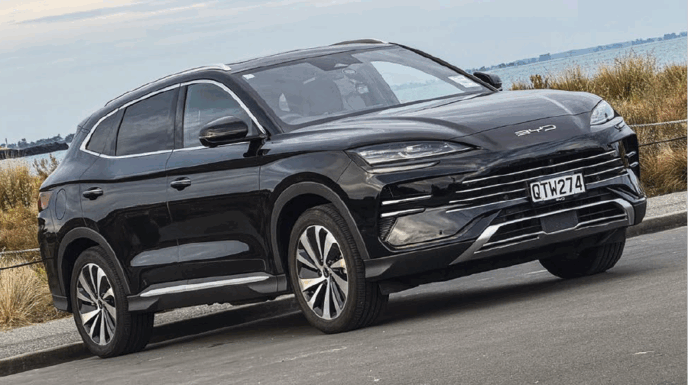
Eventually, we reached Caroline Bay’s shores. We were well past our initial goal, but the car kept going. Following photos and a turn around, he Sealion finally began to falter around 1,176km, gently urging us to slow and find a safe spot to pull over. We could have squeezed a bit more electric range out of the battery alone, but safety mattered more than adding another kilometre. We topped up from the jerry can, and the car sprang back to life, ready for more.
REFLECTIONS ON A LONG, LONG DRIVE
In total, we covered 1,186km on a single tank and charge, averaging 5.19L/100km with a full load and no special eco-driving measures beyond obeying the speed limits. There are vehicles that might beat that fuel figure or the overall range in isolation, but few do so with this blend of comfort, practicality, and electric capability. The Sealion 6’s DM-i system, while not the very latest iteration, proves that there’s incredible potential in these emerging PHEVs.
Had we stripped out the load and driven more gently, I’m convinced we could have surpassed 1,300km. And I shudder to think what’s possible with some of BYD’s future models—there’s talk of a Qin sedan that might hit 2,000km. Just don’t expect us to attempt that without a few good naps along the way.
Join the conversation