
Kia EV3 SUV specs
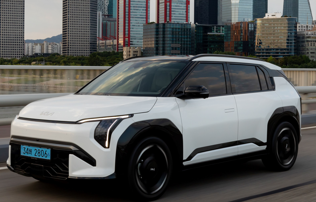
The new electric Kia EV3 SUV includes vehicle-to-load (V2L) capability, a driving range guide to coach drivers for greater efficiency (it has about 600km WLTP range), fast-charging, a smart regenerative braking system, and offers a “breakthrough” in thermal management technology.
Kia unveiled the EV3 in May this year, now saying its “game-changing blend of attributes means customers needn’t be concerned with making the transition from an internal combustion engine (ICE) car to an EV”.
Kia New Zealand says the timing of the EV3’s arrival here and pricing are unconfirmed as yet, though will be revealed ahead of its launch which is anticipated to be the first half of next year, adding the information relates to the overseas model with local specification to be advised.
“Kia is constantly innovating and has evolved its regenerative braking technology for the EV3 with its upgraded i-Pedal 3.0 and Smart Regenerative 3.0 systems,” the brand says.
“The latest i-Pedal 3.0 technology offers the driver much more flexibility and control by separating the level of regenerative braking from the full stopping control function.
“Full one-pedal driving can now be used in all regenerative braking modes, while i-Pedal 3.0 can be used optionally in reverse and will also remember the previously selected level when the vehicle is turned off. The system can be selected through a simpler process of pulling the left-hand steering wheel paddle for more than one second.
“Regenerative braking levels are rated from 0 to 3, with the most substantial Level 3 braking ideal for driving in heavy start-stop traffic, where drivers may need to slow the car quickly. This has also been optimised with a more linear calibration for smoother results.
“Level 2 provides slightly less braking force, an ideal setting on a winding road, enabling drivers to really engage with the driving experience by slowing the SUV smoothly for corners without touching the brake pedal. This sustainable approach can extract more driving range from each battery charge.
“On a long motorway journey, drivers might prefer Level 1 or even Level 0, which allows the EV3 to glide when lifting off the accelerator. These regenerative braking levels provide more comfort-focused deceleration. i-Pedal on Level 0 allows the EV3 to coast fully, while bringing a similar deceleration rate to Level 1 at lower speeds.”
The Kia EV3 is the first car to feature Hyundai Motor Group’s Smart Regenerative System 3.0 technology, says Kia.
“This intelligent system provides the driver with a digital co-pilot that can scan the road ahead and respond to situations with lightning-fast reactions.
“The Smart Regenerative System is engaged by holding the right-hand steering wheel paddle for more than a second and integrates autonomous driving technology with regenerative braking.
“When the driver releases the accelerator pedal, the system uses sensors to detect the distance to the vehicle ahead and navigation information to automatically decelerate to a safe speed, if necessary.”
Smart Regenerative System 3.0 can relieve the stress of negotiating a busy, unfamiliar city centre by relieving mental strain on drivers,” says Kia, adding it can bring the EV3 to a complete stop.
The 81.4kWh fourth-generation battery unit has about 22% higher energy density compared with the Niro EV, which shares the same 400V architecture, says Kia.
The EV3’s aerodynamics have been honed and include optimised wheel shapes and enhanced rear combination lamps, new side sill undercovers, along with eight parts covering the underbody, which contribute to cleaner underfloor airflow and reduced drag.
Kia says that, combined with optimised headlamp and front bumper cover profiles, wheel gap reducers, an optimised wheel arch design, a shallower roof spoiler angle, aerodynamic strakes on the rear bumper cover and improved front wheel deflectors, ensures the EV3 has a 0.26Cd drag coefficient .
“The EV3’s body across the rear wheel arches is also narrower than across its front wheel arches, creating a boat-tail shape and greater electric driving range.”
A “Driving Range Guide” in the instrument cluster is easy to understand at a glance, displaying maximum and minimum driving ranges achievable depending on driving style, and an estimated range based on past driving efficiency, says Kia, adding that when driven efficiently a green gauge nears maximum.
“If the car’s efficiency potential is not being maximised, this gauge turns orange and displays a reduced potential driving range.”
The EV3 is the first vehicle in the world to deploy a simultaneous heat absorption system, enabling it to recycle waste heat not just from the vehicle, but also outside air to optimise efficiency, says Kia.
“The EV’s advanced heat pump technology significantly improves its ability to protect battery performance and charge quickly in cold weather.
“Thanks to the introduction of a unique high-thermal-efficiency sheath heater and low-temperature charging software, EV3 owners spend much less time waiting for their vehicle to charge,” says the brand.
“The EV3’s battery is also equipped with a liquid cooling system, which is used during charging to optimise battery thermal management and enhance charging speeds. The EV3’s rapid charging time is up to 12 minutes faster than the Niro EV, enabling charging from 10% to 80% capacity in 31 minutes (Long Range model, under 350kW fast charging condition).
A THIN HVAC (heating, ventilation and air-conditioning) system allows the EV3 to deliver consistent cabin conditions in all conditions, maximising comfort, says Kia, adding front-seat passengers get an extra six centimetres of room in the footwell when compared with a conventional HVAC system, thanks to a 33% reduction in the unit’s height.
Cutting-edge connectivity features enable travellers to engage with the digital world in more immersive ways.
Kia plans to introduce an all-wheel drive (AWD) variant as well as a GT model, expanding the range of choice for customers beyond the current two-wheel drive (2WD) models.


Join the conversation