
Leaf 30kW battery response awaited
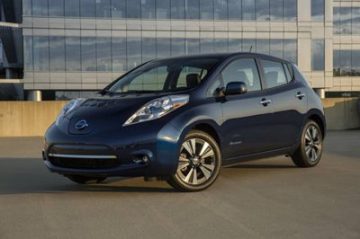
Previous hard use or continued rapid charging may have contributed to reported battery degradation issues identified by Flip the Fleet in the Nissan Leaf 30kW electric vehicle.
So says Imported Motor Vehicle Industry Association (VIA) chief executive officer David Vinsen in a Radio New Zealand report.
“We think it might be heat related in some individual vehicles,” Vinsen says.
“It may be related to previous hard acceleration, as an example, or hard use, or continued rapid charging.”
Vinsen says the argument is around whether the degradation is accelerated. “We don’t know.”
He says he understands range may not necessarily be reduced in 30kW Leafs as a result.
A road test by one dealership with a tow truck following showed the 30kW Leaf was still seeing good range, he told RNZ.
Vinsen says he spoke to Nissan representatives at a launch of the 40kW Leaf and was informed Nissan engineers are investigating the 30kW degradation reports.
He says Nissan NZ will be advised in due course. “I’m unsure when that response will be.”
In March, research by Flip the Fleet, a citizen science coalition of EV drivers, found the battery health of the newer 30kW Nissan Leafs appeared to be degrading at three times the rate of older 24kW models.
Founder Henrik Moller told RNZ the cause is unclear. “We don’t know exactly what was changed in the chemistry of the battery,” he says.
He adds Vinsen’s comment on the road test finding range largely unaffected wasn’t backed by any scientific study.
Moller says buyers of any EV should always get a battery scan before purchasing.

Join the conversation