
Leapmotor B10 targets competitive segment
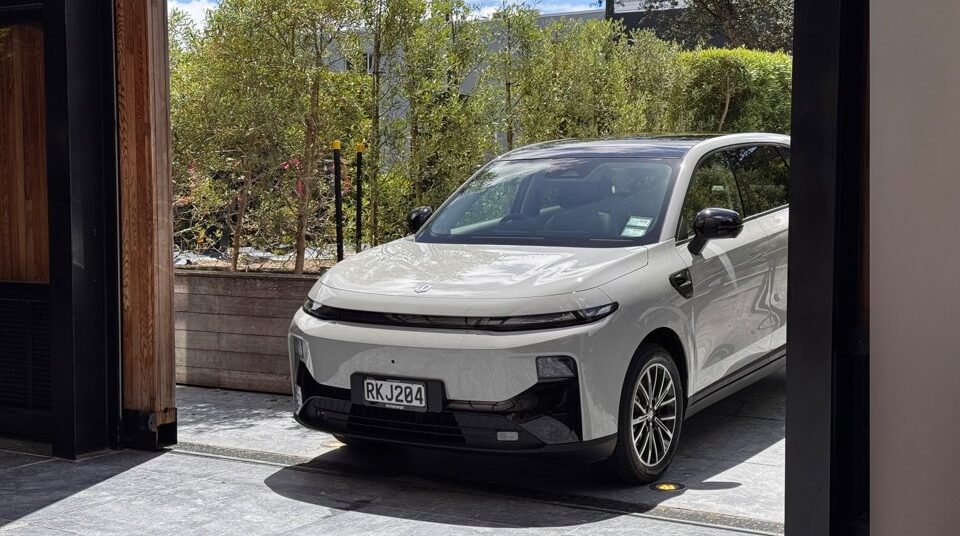
Leapmotor has launched its second New Zealand model with the B10, a mid-size electric SUV priced to compete directly with the BYD Atto 3, Geely EX5 and MG ZS EV in the volume EV market.
Launch pricing starts at $42,990 plus on-road costs for the Life variant and $47,990 plus on-road costs for the Design, both covered by a four-year vehicle and eight-year battery warranty. Once the introductory pricing ends, both variants will increase by $2000, positioning them alongside the MG while undercutting BYD and Geely’s offerings.
Building critical mass
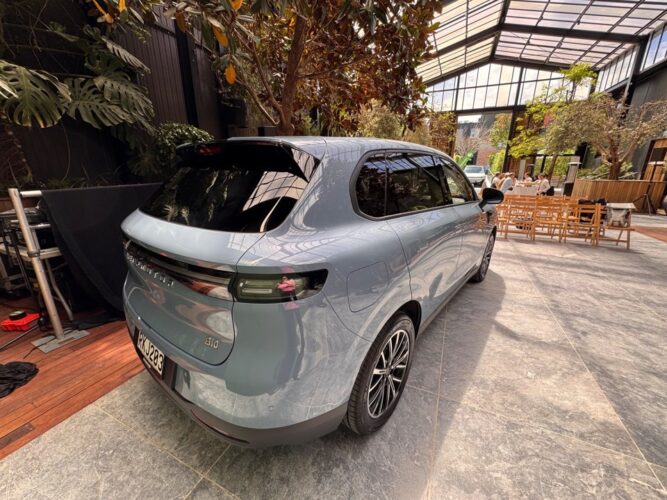
Auto Distributors NZ boss Simon Rutherford says the B10 represents a pivotal moment for the Chinese brand’s local ambitions.
“This is the first time we’ve had a new model – our second model effectively – and it signals the beginning of a critical-mass journey,” he says. “The B10 gives us the second horse in the stable. It’s a key enabler for network expansion and a major milestone in establishing Leapmotor in New Zealand.”
Rutherford acknowledges the C10’s launch provided valuable lessons that have been applied to the B10 rollout.
“We’ve had customer feedback, and we’ve fixed issues with better processes and updates. That transparency and responsiveness are what we’ll carry into B10,” he says.
Sales and service currently operate through Armstrong’s, with additional Stellantis-aligned outlets planned as volumes increase.
Technical evolution
The B10 is built on Leapmotor’s new 3.5 architecture, an advancement over the system used in the C10. The platform integrates the battery pack into the vehicle structure, streamlines electronic control units, and improves both rigidity and energy efficiency.
Power comes from a single 160kW/240Nm motor driving the rear wheels. Two battery options are available – 56.2kWh for the Life and 67.1kWh for the Design – both using cell-to-chassis lithium iron phosphate technology. Claimed WLTP efficiency sits just over 17kWh/100km, delivering ranges of 361km and 434km respectively.
DC fast charging capabilities are class-leading at 140kW for the Life and 160kW for the Design, enabling 30-80% charging in approximately 20 minutes.
Vehicle-to-Load power export functionality includes a dedicated camping mode that maintains climate control and power sockets overnight. However, the required adapter is not supplied and Leapmotor NZ is not currently stocking the component.
Interior and features
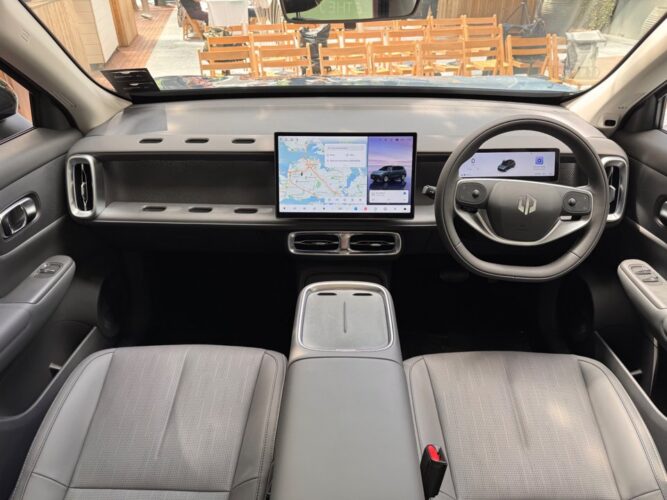
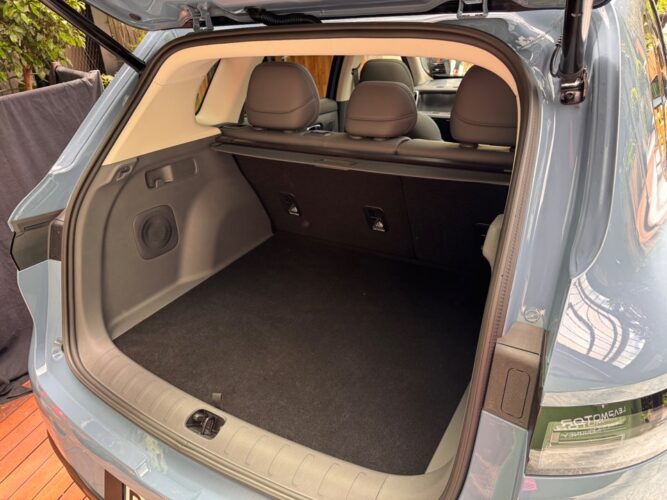
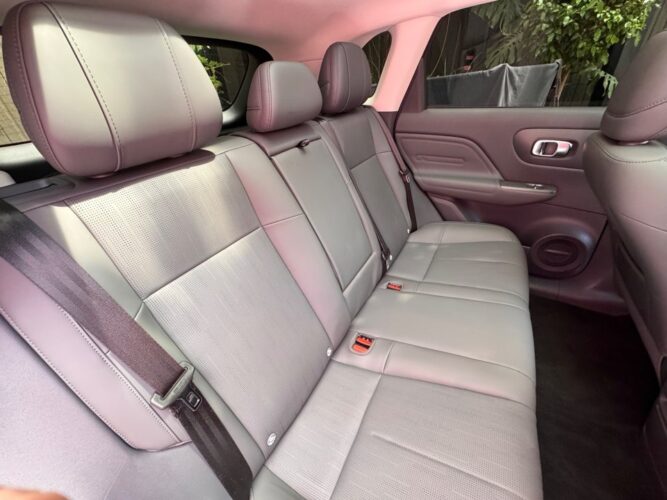
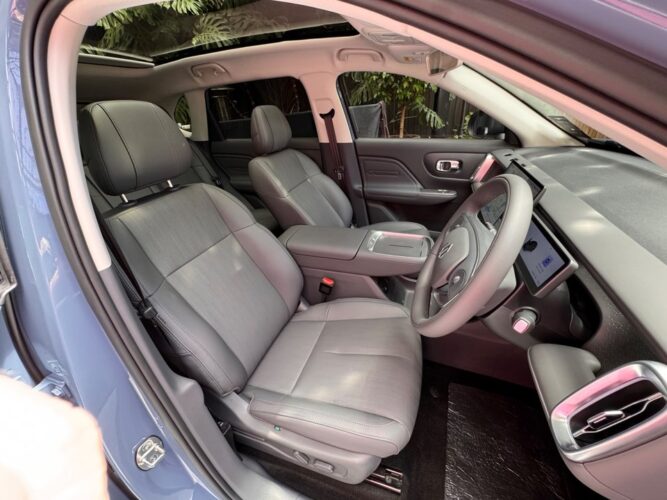
At 4515mm long on a 2735mm wheelbase, the B10 sits in Corolla Cross territory dimensionally but feels more spacious inside due to its upright driving position and flat floor. Storage includes 22 compartments, a 25-litre frunk, and up to 1700 litres of cargo space with the rear seats folded.
Both variants feature an expansive glass roof with sun blind. The Life uses fabric seating while the Design upgrades to synthetic leather with heating and ventilation for front occupants only. Materials quality appears improved over the C10, reflecting the company’s learning curve since beginning vehicle development in 2014.
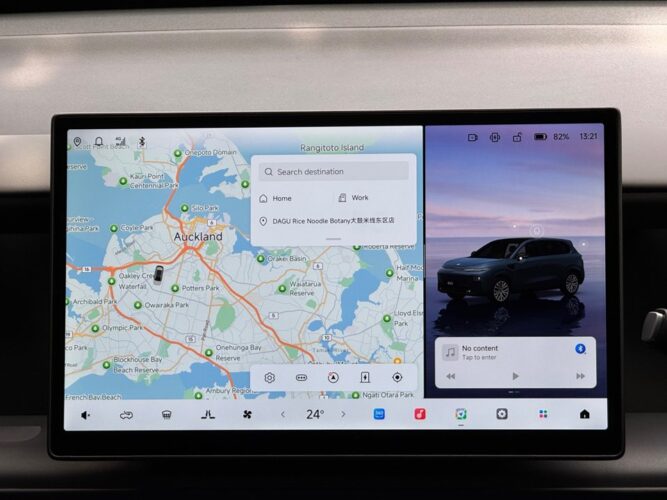
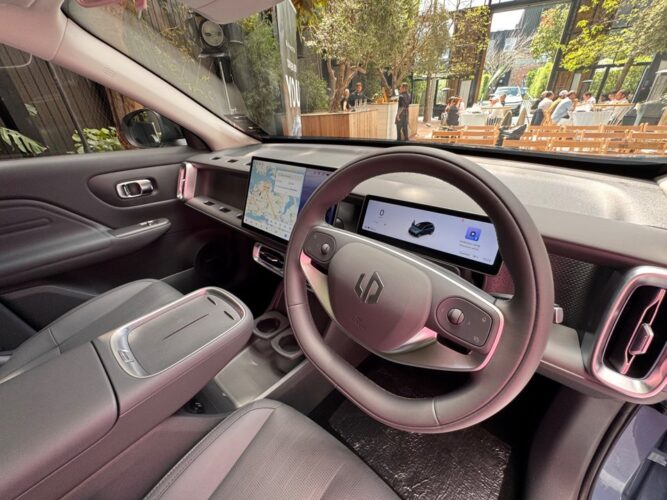
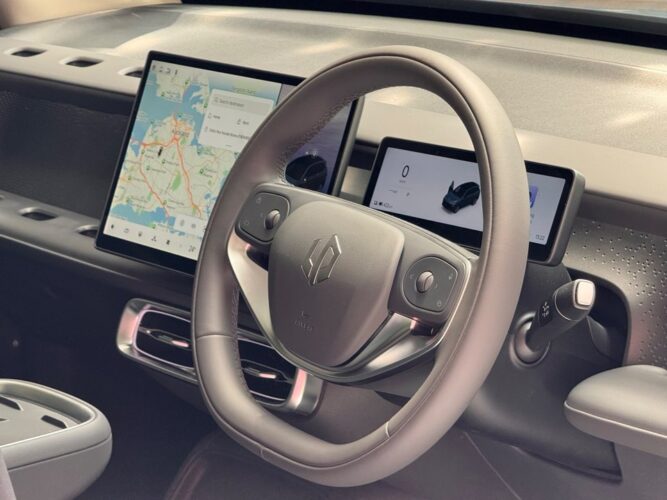
A 14.6-inch central screen and 8.8-inch driver display handle most functions, including connectivity for Apple CarPlay and Android Auto, wireless charging, and a companion Leapmotor app that functions as a digital key. The app enables remote locking, pre-conditioning, seat adjustment, and digital access sharing, with an NFC card provided as backup.
Early impressions
Initial city driving suggests Leapmotor’s development trajectory is steep. The B10 demonstrates solid build quality with quiet, well-damped suspension that handles Auckland’s road surfaces effectively. Steering is light and accurate, while throttle response prioritises smoothness over aggressive acceleration.
Energy consumption registered around 15kWh/100km in urban conditions, below the official claim and encouraging for real-world range expectations. The vehicle’s 17 driver assistance features operated without excessive alerts during testing.
General manager Brian Carr says the B10 demonstrates the brand’s evolution.
“The B10 is the first global product in its segment, built for international markets from day one,” he says. “It’s designed to democratise electric mobility through high quality, affordability and intelligent solutions.”
Globally, Leapmotor has produced more than one million vehicles, with approximately 65% of each model designed and built in-house. This scale, combined with its Stellantis joint venture, provides the brand with notable polish despite its relative youth.
The B10 faces strong competition from the BYD Atto 3, Geely EX5, and MG ZS EV, but its composure, specification level, and solid engineering make it a credible newcomer in the mainstream EV segment. For Leapmotor NZ, it represents evidence that the brand’s rapid growth has substance behind the expansion.


Join the conversation