
LiveWire struggles as Harley’s electric gamble loses charge
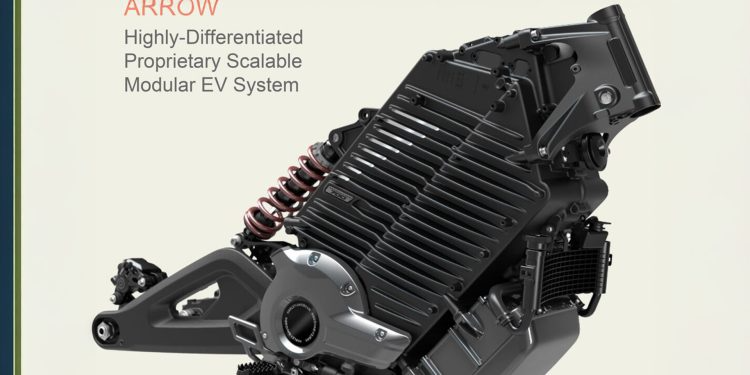
Harley-Davidson’s attempt to carve out a niche in the electric motorcycle market is faltering, with its EV subsidiary LiveWire facing significant headwinds. Despite the initial excitement around the brand’s launch, sales have remained low, losses are mounting, and parent company Harley-Davidson is sounding increasingly cautious about its future.
LiveWire, spun out as a standalone EV brand in 2021, was positioned to capitalise on the electric revolution while attracting a new generation of riders. But in 2024, the company sold fewer than 660 bikes worldwide, and forecasts for 2025 suggest volumes will struggle to reach 1,000 units.
With quarterly losses exceeding US$20 million and a cumulative burn rate approaching US$115 million, the pressure is on. Harley-Davidson chair Jochen Zeitz recently admitted that the market “is not yet ready,” blaming a lack of charging infrastructure and consumer readiness for the brand’s poor performance.
Electric motorcycles remain a niche within a niche, with high costs and limited range still discouraging many potential buyers. In comparison to electric cars, two-wheelers haven’t enjoyed the same level of government incentives or infrastructure support.
Industry observers say LiveWire’s current model line-up, including the S2 Del Mar and the LiveWire One, are priced too close to premium petrol models without offering enough perceived benefit.
There’s also concern that by separating LiveWire from Harley-Davidson’s core identity, the brand may have inadvertently distanced itself from its most loyal customers.
With competitors like Zero Motorcycles and Energica also facing growth challenges, some analysts believe the industry may see consolidation before widespread adoption. For now, LiveWire remains on the road, but the ride ahead looks increasingly uncertain.
Chery’s electric sub-brand iCar, set to rebrand as iCaur for international markets, is preparing to launch its fourth model—the V27—on August 1.
The iCar V27 will come in both full electric and extended range EV (EREV) versions, a strategy increasingly popular among Chinese automakers. The EREV pairs a 1.5-litre petrol generator with a 30+ kWh battery pack, enabling 150 to 200 km of pure electric range and more than 1,000 km of total range with fuel backup.
This hybridised approach addresses one of the key barriers to EV adoption: range anxiety. For markets like New Zealand and Australia—where long distances, low charger density, and uneven terrain still deter many EV buyers—EREVs offer a compelling solution.
Based on early teasers, the V27 will be a compact crossover, positioned to compete against models like the BYD Song Plus, Haval H6 Hybrid, and MG HS PHEV. Chery has not confirmed a right-hand-drive version, but company insiders have hinted at broader export plans under the iCaur nameplate.
The V27 marks a continuation of Chery’s push to establish itself as a global EV player. With the automotive world watching Chinese brands increasingly shape the future of electrification, the V27’s arrival adds more fuel to an already hotly contested segment.
We’ll have full details following the official August 1 launch.
Join the conversation