
Low hydro levels and higher prices shouldn’t impact EVs

This story first appeared in the November issue of EVtalk – CLICK HERE to download the magazine FREE
Hydro dams are at historical low levels, and as hydroelectric generation contributes about 60% of New Zealand’s total electricity, we asked if electric vehicle owners should be worried.
“Not at all,” Mercury chief marketing officer Julia Jack replies.
“The current lake levels are unusual but not actually cause for concern.
What the market is seeing are higher prices than usual due to gas supply issues and uncertainty about what impact that will have on fuel storage.”
Hydro storage levels have fallen to nearly 60% of the historical average for this time of the year, and in part is also due to supply interruption at the country’s largest gas field, Pohokura.
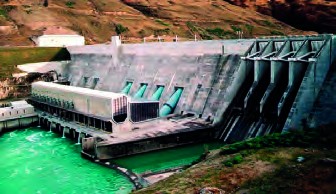 This year started with reportedly the lowest hydro lake levels since 2008 – when New Zealand last had very low lake levels for a prolonged period.
Jack says the “vast majority” of EV owners – and consumers in general – won’t see any impact at all, because they are on agreed tariffs or price plans.
“It’s those who might be on spot pricing who would feel the impact of the current situation.
”
Fixed price contracts are set understanding market variability like this and are designed to help customers by giving them certainty over the duration of their contract, she adds.
“We take on the risk in that regard.
”
EV use is a small fraction of overall electricity demand, even with 10,885 EVs on our roads, she says.
“So even if it was a matter of supply, at these numbers you wouldn’t see a material impact.
And EV owners on our EV fuel package get 20% off their electricity prices to charge overnight when demand is lower anyway.”
Jack says what Mercury is seeing, though, is an increase in concern about petrol prices.
“Anecdotally, we’re seeing more enquiries from non-EV users about EVs than ever before,” she says.
People are interested to hear more about things like Mercury’s EV subscription service, Drive, and its 20% off home electricity usage off-peak for EV owners (9pm-7am), she says.
Asked whether other renewables like wind, solar and geothermal are enough to allow for future growth in the number of EVs in New Zealand, Jack says; “Absolutely”.
“New Zealand is blessed with a diverse electricity mix, meaning all our eggs aren’t in one basket.
We have plenty of renewable energy – hydro, geothermal and wind – as well as thermal supply to top up.
“It’s also exciting to think of how emerging technology might complement the important role our hydro lakes play in storing electricity in the future – such as solar panels and in-home batteries.”
Forecasters are predicting a long, hot summer, so if lake levels continue to remain low what’s the answer?
“We’re not at that stage yet,” Jack says.
“What we’re hearing is that gas outages should be fixed later this month.
Remember also that southern hydro lakes get most of their water in the summer months as snow and ice from winter melts.”
How resilient is New Zealand in a situation where hydro lakes are low?
“Extremely resilient,” Jack says.
“We’re fourth in the OECD for a reason; we rate highly in terms of cost, security and renewability.
“A lot of that’s down to our hydro lakes which serve as massive batteries and our world-leading geothermal expertise.”
The rapidly developing vehicle-to-grid (V2G) technology will also allow EVs to act like power plants and return electricity to the grid, particularly in times of need.
Development of solar power associated with this could also mean EVs are less reliant on grid electricity.
Meanwhile, Transpower New Zealand – the state-owned enterprise responsible for electric power transmission, has a regular update of the hydro lake situation on its website
, along with further information.
It shows that because of a lack of rainfall, hydro lakes nationally are well below normal for this time of year.
That can change rapidly, as shown when hydro lake levels were also very low in late 2017 and early 2018, but topped up quickly.
As the owner of the national grid, Transpower provides electric power transmission infrastructure that allows consumers to have access to generation from a wide range of sources and enables competition in the wholesale electricity market.
Transpower manages the grid’s real-time operation and the physical operation of the electricity market.
It says inflows (rainfall and snowmelt) can be stored in hydro lakes until needed.
The most important are lakes Tekapo, Pukaki, Hawea, Manapouri, Te Anau, and Taupo.
The lakes have quite limited operating ranges – for technical and resource consent reasons, each lake’s level cannot be lowered below a certain point.
It is not possible to completely “empty” a hydro lake, for instance.
In the absence of inflows, the lakes can only hold enough water for a few weeks of winter energy demand.
For security of supply purposes, hydro storage is divided into two categories: Controlled and contingent storage.
Generators can use controlled storage at any time, but contingent storage may only be used during defined periods of shortage or risk of shortage.
During sustained dry periods, controlled and contingent storage are important indicators of overall supply risks.
South Island controlled storage, representing around 85% of New Zealand’s controlled storage capacity, is often used as a key measure.
Storage is expressed in gigawatt-hours (GWh).
Transpower says total controlled storage for New Zealand is below average for this time of the year.
As at November 4, Lake Taupo was at 287GWh – about 49% of its maximum controlled storage.
South Island controlled storage as at November 4 was 1115GWh, about 37% of the maximum South Island controlled storage.
“This is below the historical average for the time of year,” Transpower says, which assesses the risk of hydro shortage at less than 1% (barring major unexpected equipment failures).
The conditions that allow contingent storage to be used differ with each hydro lake and are governed by resource consents between the relevant local authority and generator.
Join the conversation