
Luxury electrifying – Lexus
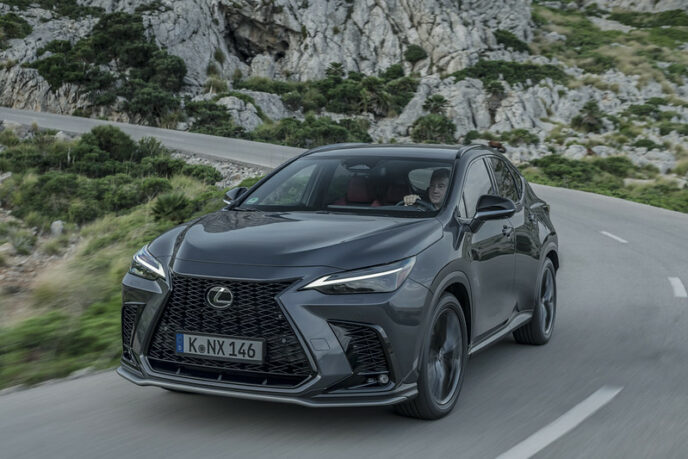
Lexus New Zealand says the luxury market is electrifying rapidly, and that is playing well for the hybrid-heavy brand.
In 2020, Lexus head Andrew Davis says 17% of the segment was electrified, rising to 33% last year and to 43% year-to-date this year – and the expectation is this year will end at over 55%.
While he admits some of that shift comes down to Tesla, an increasing mix of Lexus hybrids plays a role. Currently, the brand sits at around 81% electrified, with a planned rise to 95% by 2025 – when the expectation is that 2000 Lexus models will be delivered a year.
“Lexus is on a journey towards carbon neutrality through a varied portfolio of sustainable powertrain options for customers. Over the past 12 months, we have seen more than a 20% increase in Lexus Electrified product sales, and this is expected to continue as we also increase our Lexus Electrified product range.”
It won’t just be hybrids doing the mahi, with the UX300e electric SUV already in the range, a plug-in hybrid drivetrain launched in the new NX SUV, and its first dedicated EV, the RZ450, on the way – the first of 13 Lexus electric vehicles announced by Akio Toyoda last year.

“It will obviously come to our shores as soon as it can, which will be likely the start of next year,” Davis says. “It is absolutely chock a block full of new tech. It shows that next chapter in design for Lexus.”
The RZ is revealed in full internationally on April 20.
Sales and marketing manager Craig Burton says demand for Lexus models is running at a rapid rate, to the point where they have a massive pipeline in the face of restricted supply.
“Order volume has exceeded delivery since February last year, which has resulted in an ever-growing order pipeline that now sits at over 1000,” Burton says.
The Clean Car Plan has accelerated this.
“UX300e and the rest of our range of hybrids certainly received new interest.”
While the brand suffers the same issue as other luxury operators, in that much of the range is above the $80,000 Clean Car limit, Burton suggests there is still a benefit – with key competitors to NX and RX attracting a few, while none of the Lexus hybrid variants do.
Four models do gain a rebate – the UX300e, UX250h, ES300h and IS300h.
NX to go hybrid-only
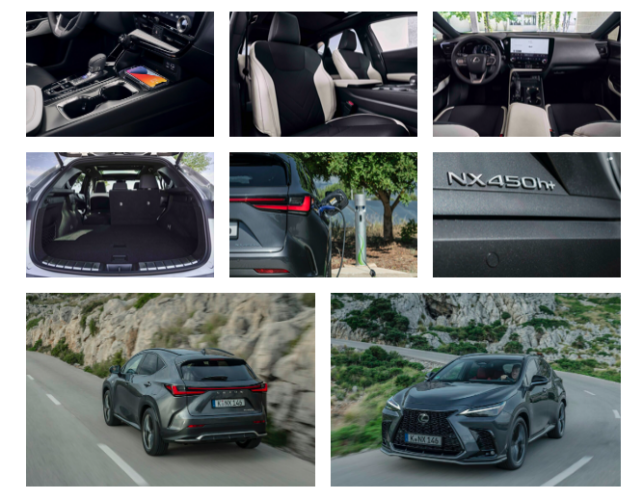
The confidence in electrified drivetrains has seen the brand only take the new NX’s hybrid and plug-in hybrid models, rationalising to just three variants from seven.
The range opens with the NX350h hybrid at $92,700, with the NX350h hybrid at $101,900 and the NX450h+ F Sport PHEV at $107,900.
Compared to the previous generation NX, the overall length has increased by 20mm, the wheelbase by 30mm, the width by 20mm and the height by 15-25mm.
The new NX is the first model to feature Lexus’ Tazuna concept for the driver’s cockpit, an approach that was first revealed in the Lexus LF-30 Electrified concept car. Key design features include a new-generation steering wheel for the brand, a huge 14-inch touchscreen and a corresponding reduction in buttons from 78 to 45, a new ‘Hey Lexus’ voice control system and electronic door handles that remove the risk of doors being opened into other traffic, cyclists or pedestrians.
Additionally, the Lexus Safety System+ has been expanded. New features include Intersection Turn Assist in the Pre-Collision System, and Lane Trace Assist in the Dynamic Radar Cruise Control.
The drivetrain range opens with the NX350h, which is front-wheel drive and utilises a new generation 2.5-litre hybrid petrol motor paired to a CVT transmission. The hybrid system uses a 1.1kWh battery and rates under WLTP at 5.5-litres of premium fuel per 100km. The hybrid system has a combined output of 179kW.
The Limited gains all-wheel-drive through an additional rear motor but has the same system output and fuel economy figure.
So far, 40% of orders have been for the range-topping NX450h+ F Sport, the brand’s first PHEV. It uses two electric motors and the same petrol motor to produce an output of 227kW against a WLTP consumption figure of 1.4-litres per 100km. Lexus claims a range of up to 87km on the 18.1kWh battery. Charging is single-phase up to 6.6kW.
The PHEV is a quick car at 6.3 seconds to 100km.


Join the conversation