
Mercury results unlock about $1b investment
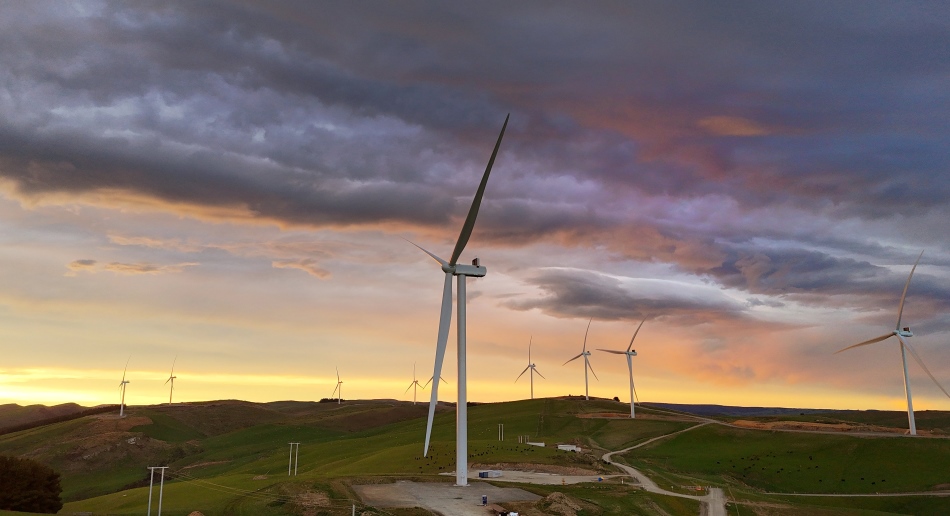
Mercury progressed major renewable projects in FY24.
“We’ve continued to deliver more renewable generation for New Zealand this year,” says Mercury chief executive Vince Hawksworth.
“This includes $700 million committed to the expansions of Kaiwera Downs wind farm and Ngā Tamariki geothermal station and more planned. These will help support Aotearoa’s shift to an electrified future.”
The impact of significant investment to increase scale, together with strong generation performance, helped secure Mercury’s results over FY24.
“The energy transition will deliver long-term gains for the nation; however, it requires careful navigation – particularly to maintain reliable power while rapidly and affordably scaling up renewables,” says Mercury chair Scott St John.
“This is front-of-mind for our strategic considerations.”
St John says the company expected electricity price pressure to continue for some time, reflecting the ongoing need for higher cost thermal generation in the system.
“As we continue to invest in renewables, generating capacity must remain flexible enough to quickly adjust to changing environmental conditions, such as low rainfall or cloudy, still days.
“Gas has a critical role as a transition fuel. Gas supply challenges need to be addressed head-on with recent projections highlighting this may continue to impact energy markets through to early 2026.”
To help facilitate the transition Mercury has supported the ongoing operation of the Huntly Power Station with purchases through the Market Security and Huntly Firming Options.
St John says lower than usual hydro inflow at fifth percentile nationally from February 1, 2024 to August 18, 2024 had compounded current challenges, contributing to high spot and wholesale prices.
“While a few are exposed to these current high spot prices, 98% of our sales volume across residential, small and large business customers are protected from these elevated prices due to fixed-rate agreements.”
Mercury’s FY25 EBITDAF guidance has been set at $820 million.
FY25 stay-in-business CAPEX guidance is $160 million. FY25 ordinary dividend guidance is 24.0 cps, representing a 3% increase on FY24 and the 17th consecutive year of ordinary dividend increase.
Mercury’s net profit after tax lifted to $290 million, largely due to changes in the fair value of unhedged financial instruments.
It reported $877 million EBITDAF, up 4% on the prior year, due to increased wind and geothermal generation and higher customer prices, offset by reduced hydro generation and higher operating costs.
Taupo storage was impacted by 30th percentile inflows during the financial year, and hydro generation was 4096GWh, down 21% on the prior year’s record generation.
Wind generation of 2062GWh was up 40% on the prior year with the addition of new generation from Turitea South wind farm and stage one of the Kaiwera Downs wind farm.
Geothermal generation was 2622GWh, up 11% on the prior year due to improved resilience.
Operating costs were $385 million, up 11% on the prior year, primarily due to an increase in the number of full-time employees and new generation maintenance costs relating to the operation of Kaiwera Downs wind farm.
Stay-in-business capital expenditure (CAPEX) was $142 million, up 19% on the prior year, with the geothermal drilling campaign ramped up during the year and continuing into FY25.
Hawksworth says a key focus of the year is executing against Mercury’s commitment to invest up to $1 billion over the financial year in new generation projects.
Two of the three projects signalled were progressed during the year. Higher procurement and construction costs lifted the cost of these projects, bringing Mercury’s combined total FY24 commitment to these two renewables projects to more than $700 million.
“This included the $220 million expansion of Ngā Tamariki geothermal station, which adds another net 46MW through the addition of a fifth generating unit,” says Hawksworth.
“We also began construction of the $486 million, 155MW second stage of Kaiwera Downs wind farm after signing a long-term supply agreement with New Zealand Aluminium Smelters. This agreement gave us further confidence to execute on our high-quality generation development pipeline.”
The third signalled project, Kaiwaikawe wind farm, was delayed due to procurement and construction logistics but is now nearing final investment decision.
Mercury also celebrated the opening of stage one of Kaiwera Downs in November 2023, completed under budget and on schedule.
Hawksworth says another focus of the year was innovation, including giving all Mercury customers access to a broader range of products and services including various telecommunications solutions.
The company anticipates exceeding the Trustpower retail business integration synergies previously forecast, however inflationary pressures remain. Most synergies are expected to be realised in FY25.
Mercury continues to provide wraparound support for customers experiencing hardship and focus on developing solutions that address the broader challenges related to affordability.

Hawksworth will retire from August 31, 2024, with Mercury’s executive general manager generation Stew Hamilton appointed chief executive.
Mercury trialled EV smart charging, hot water load control and time of use solutions to help customers shift their energy use; published its first mandatory Climate Statement, which complies with Aotearoa New Zealand Climate Standards, and made significant progress towards becoming a more progressive, future-fit organisation, and set several milestones to reach safety citizenship, the gold standard of safety culture by December 2026.
Mercury’s board has declared a fully imputed final dividend of 14 cents per share (cps) to be paid on September 30, 2024, bringing the full-year ordinary dividend to 23.3 cps, up 7% on the prior year (21.8 cps FY23).
Join the conversation