
Minister supports $1m for EV car share
New Zealand’s electric vehicle uptake is receiving a booster shot from the Ministry of Transport, by letting local bodies allow them into bus and transit lanes, as well as making them more affordable for private buyers, and promoting their use in car-share and ride-share services.
Encouraging members of the Road Controlling Authorities (RCA) Forum to apply for grants from the newly launched low emission vehicles contestable fund, transport minister Simon Bridges says he would support putting up to $1m into an EV car sharing scheme.
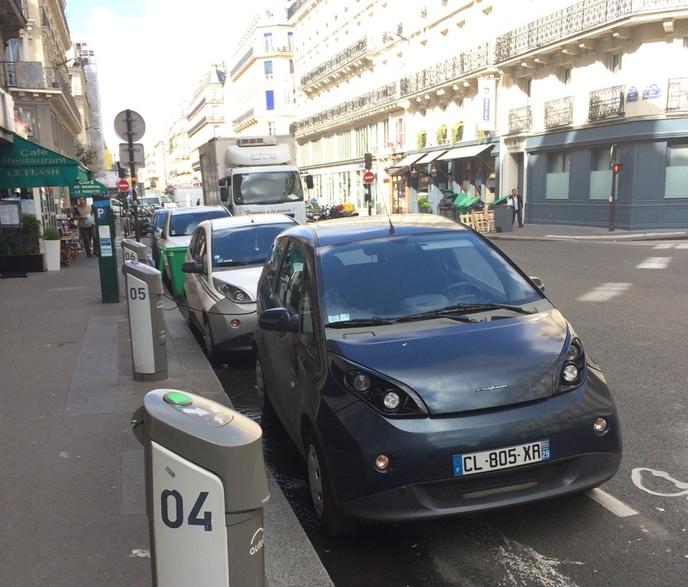
The transport minister announced this news when he was asked by Auto Media Group if he would consider an EV car share service such as Autolib in Paris, France where such vehicles are parked all around the city at charging points and are available for public hire by the hour.
“I wouldn’t blink at putting a million dollars into such an EV car sharing system,” Bridges told the gathering of local body transport officials in Wellington.
“The fund starts soon, and we want to see how it can work for public transportation,” says Bridges.
“I am incredibly keen to partner up with the Road Controlling Authorities to get such projects moving, and the Transport Agency knows this,” he says.
The RCA holds the levers, and we need to do this together,” says Bridges.
The transport minister also told the RCA forum that he feels the car of the future would be “a driverless electric vehicle which we won’t own.”
“Increasingly people won’t own cars; there is a trend amongst young people not to own a car and not to get a driver’s licence,” says Bridges.
“They don’t give a Monkeys about having a car,” he says.
The transport minister also says that contrary to the previous reporting he won’t be banning ride-sharing service Uber, but he is looking for greater assurances around safety from such operators.
“Ride-sharing is not just for the major cities, it’s also popular in small university towns, more than half of the journeys undertaken by (USA-based) Lyft involve two stranger passengers,” says Bridges.
Bridges also told the RCA that legislation would be passed by the Government to give local bodies the ability at their discretion to allow Electric Vehicles into bus lanes and high-occupancy vehicle lanes such as the T2 and T3 lanes currently in operation.
“It may not be suitable for all local authorities, but in the USA its dramatically increased the uptake of Electric Vehicles,” he says.
“Electric Vehicles are a no-brainer, New Zealand is the world’s fourth largest renewable superpower, more than 83% of electricity is generating from renewable sources,” says Bridges.
“The cost of electricity is equivalent to paying 30 cents for a litre of fuel, so it makes abundant sense,” he says.
“We also have more than enough power currently generated to support a much great fleet of electric vehicles,” says Bridges.
The transport minister says that most passenger car brands have an EV strategy, and he says Government is working with the automotive industry and the private sector to try to bring procurement costs down to make vehicles more easily accessible.
Join the conversation