
New breakthrough could see EVs powered up in seconds
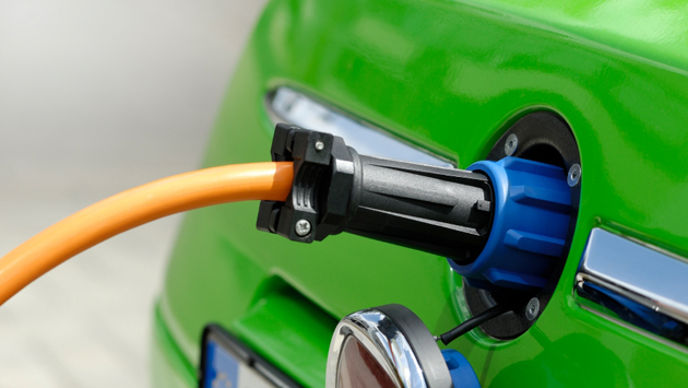
A team of researchers has developed what it says is a new technology that could replace batteries in electric vehicles (EVs) with very high energy density supercapacitors.
The contact-lens based technology could solve some of the biggest challenges facing EVs by letting them recharge in seconds.
Research by the University of Surrey, Augmented Optics and the University of Bristol unearthed materials with a potential capacity between 1000 and 10,000 times greater than existing supercapacitors, which are the current common alternative to conventional batteries.
The technology could power EVs across similar distances to petrol vehicles, and recharge as quickly as it takes to fill up a petrol tank. The EVs that are currently available take around six to eight hours to recharge their battery.
The project was initiated by Dr Donald Highgate, whose previous research into soft contact lens materials provided a platform for the development.
Highgate teamed up with principal investigators Dr Ian Hamerton and Dr Brendan Howlin to make the materials electrically-active.
Testing the conduction of materials at the University of Surrey soon sprung a surprise – their performance improved over time. Independent reports verified the electrical properties and recommended the development of high-energy density supercapacitors.
“We’re not talking about something which will take five, 10, 15, 20 years to realise a device,” Augmented Optics chief executive Jim Heathcote says.
“We’re talking about potentially getting into prototyped devices within a matter of months,” he adds.
The research group is actively seeking partners in order to supply the polymers and offer assistance to build these ultra-high-energy density storage devices.


Join the conversation