
New generation smart cars launched

A collaboration between Mercedes-Benz and Geely has resulted in the relaunch of the smart brand as an electrified brand for global markets, including Australia and New Zealand.
Australia’s largest Mercedes-Benz retailer, LSH Auto, will distribute and retail the smart brand through its dealerships.
Armstrong’s has secured the distribution rights for the smart brand in New Zealand. It will sell the vehicles through its Mercedes-Benz dealerships in Botany, Auckland, and Christchurch, with a dedicated smart area within its showrooms.
It’s a clever strategy. The least expensive electric Mercedes currently is the EQA 250+, which costs $92,500. So, all smart cars are significantly less costly but no less premium.
Unlike the diminutive 2.7-metre first-generation smart fortwo cars, developed by Swatch and Mercedes-Benz and produced at a plant in Hambach, France (now the home of Ineos Grenadier production), the new generation is made in China. They can be up to 4.5 metres long and seat up to five passengers.

Electric only, but PHEV soon
For now, the smart #1 and smart #3 are battery-electric vehicles designed by Mercedes-Benz using the Geely sustainable experience architecture (SEA).
There are six variants of each model. That’s because there are three grades for each of the body shapes, varying by specification and power, by and large. For both ranges, the entry model is the Pro+, the intermediate model is Premium, and the Brabus go-hard model is at the head of each shape. The latter are dual-motor AWD variants.
Brabus is a long-time aftermarket tuning house specialising in Mercedes, Maybach, and smart vehicles. Thus, Brabus has been producing smart vehicles from the outset, with the first Brabus fortwo emerging in 2003.
The smart badge looks like a stylised C with an arrowhead beneath it. It stands for ‘compact and forward thinking’. Hence, the smart name, with a lowercase.
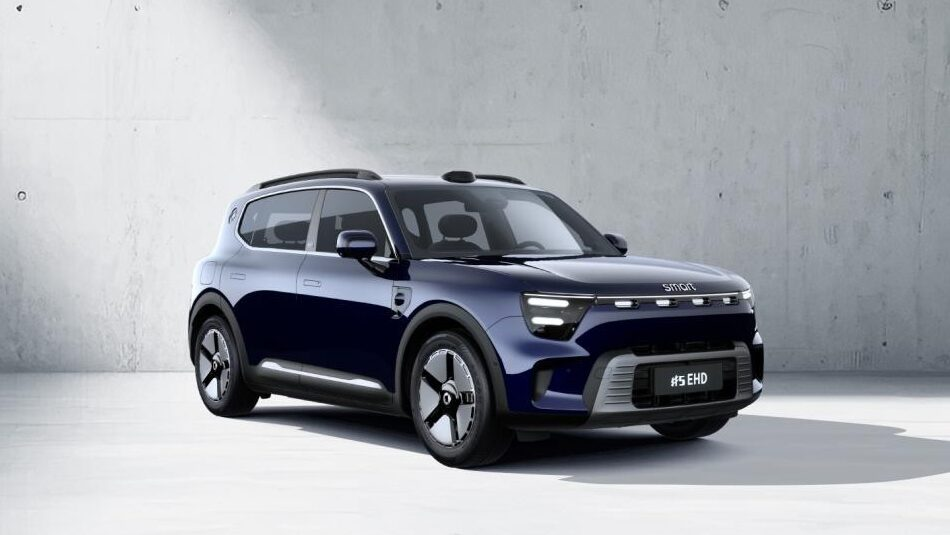
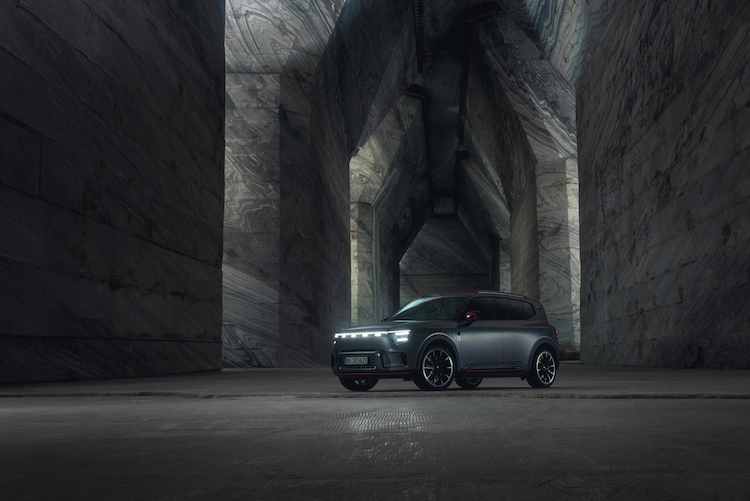
The next model to join the Smart lineup later in the year isn’t compact at 4700mm. The #5 medium electric SUV will feature a 100kW battery pack offering a real-world range of around 550km, so Smart is entering not-so-compact territory here.
Expect both an SUV and a more expensive Summit off-road version. They will come with an 800v platform, permitting a 70 per cent recharge in 15 minutes. And, like most manufacturers who aim to be electric only, the slowdown in EV adoption has led to Smart looking towards a PHEV version of the #5. That’s for H2 of this year.
Driving in and out of town
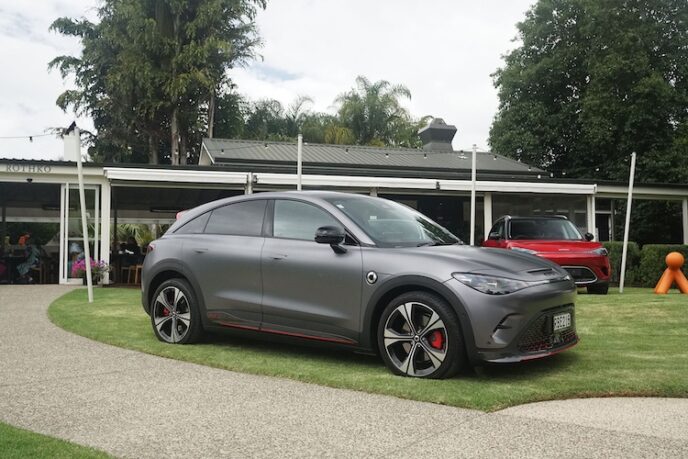
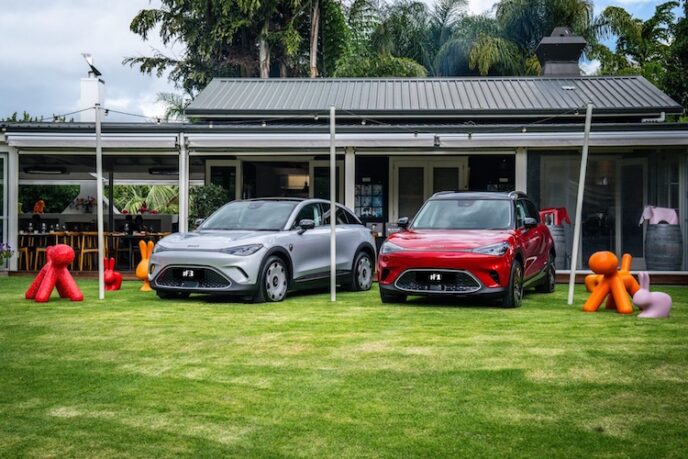
The cars pictured here are about to go on sale, and we got a short taste test in one of each range. Kicking off with the coupe-style #3 Premium variant ($74,990), which has a 66kWh battery (DC fast charging 10-80 per cent takes 30min), a range of around 450km and a 200kW/343Nm motor driving the rear wheels. That’s a fair amount of poke for a vehicle weighing 1810kg. Using the Comfort mode, it feels smooth and effortless in town and is said to reach 100 from stopped in 5.8sec in Sport. Plant it for an overtake, and it will rush forward somewhat. The #3 range kicks off with the Pro+ at $69,990.
The Premium we drove is not as fast as the $10k more expensive Brabus version; however, with 315kW and 543Nm and weighing just over 1900kg wet, it can complete the 100km/h dash in 3.7sec.
However, we did drive back from the Matakana area in the #1 Brabus ($79,990).
This is the more upright urban-look electric hatch. It has the same powertrain as Brabus #3, and when we let it rip away from an intersection in Brabus mode, it rampaged to 100, with a convincing synthesised snarl as an accompaniment. People will like how these two Brabus perform. And their brakes and regen settings are just as well thought out.
The Premium is also a good drive. It is nicely balanced and has rear-wheel drive. However, you’d probably only choose the Brabus if you want that pace or genuinely need AWD.
Sorted IFT systems
We also like this pair’s control systems. All those annoying safety items earn each vehicle a five-star ANCAP crash rating, but some of the reminders can be vexing. We culled the overspeed bongs and the lane departure noises. You can then save these optimised settings so that next time around, you need to push the shortcut button to silence them all.
Both cars look modern, and the smart interior is just that: interesting metallic dash finishes, supportive seats, a panoramic sunroof, and Qi charging. There are contrasting paint finishes, too, with a black or red roof. Premium comes with leather seat trim and Beats audio sound system. There’s power operation for the fifth door across the range. The upper two models in each line-up come with a head-up display.
All ride on 19-inch wheels, except the Brabus versions, get 20-inch rims. They all have a five-year/150,000km warranty (battery eight years/160,000km). Service intervals are 12 months/20,000km.
Smart describes its vehicles as “the perfect blend of German precision, European quality, and cutting-edge Chinese EV technology.”
General Manager Arek Zywot has been driving the #3 Brabus and commented, “You have a smile on your face every time you get behind the wheel.”
“Smart is here to shake things up and disrupt the status quo,” Zywot says
We’d spend the extra money on the #3; the sleek coupe styling alone is worth it. Besides, it has more boot space at 260L vs. 203L. However, if that’s important, the #1 is more compact at 4270mm vs. 4400mm. Both are handy five-seaters. Rivals include Cupra Born, MG4 XPower, and some of the incoming premiums, such as Zeekr X.
Dealer sites open in March. Visit www.nz.smart.com.

Join the conversation