
New rules boost solar export to local networks
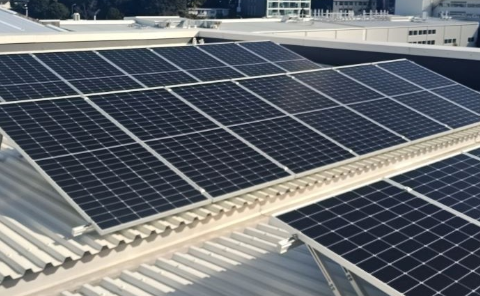
More solar energy systems will be able to supply electricity to local networks under new rules announced by the Electricity Authority Te Mana Hiko, aimed at making export limits more efficient and reducing costs for consumers.
The Authority is updating regulations to allow electricity generation and storage connected to local networks – including rooftop solar, batteries, and wind and solar farms – to export more power while maintaining safety and reliability standards.
Authority General Manager Networks and System Change Tim Sparks says the changes will support lower network costs that flow through to consumers’ bills over time.
“Currently about 75,000 households with solar, and more than 14,700 of those with batteries, can feed into local networks. But the amount of electricity they can supply has been capped at levels lower than it needs to be, which means, at times, higher-cost electricity is being used instead of these cheaper sources of power,” Sparks says.
Default 10kW limit for residential systems
Under the new rules, lines companies must set a default export limit of 10kW for straightforward, small-scale distributed generation such as household solar and battery systems.
Sparks says recent regulatory changes had already enabled lines companies to voluntarily increase export limits for residential connections, with most taking advantage of that option.
“These new rules will ensure all lines companies are setting at least 10kW limits for residential connections where they can – although this won’t be possible everywhere on networks,” he says.
The rules also allow lines companies to offer dynamic or flexible export limits for residential connections as an alternative to the fixed 10kW limit, making export limits more efficient by allowing flexibility above or below 10kW as network conditions change.
“This flexible approach future-proofs regulations. It opens the door to adopting smarter, more flexible technologies in the future, including vehicle-to-grid charging that returns electricity to the network from EV batteries,” Sparks says.
Standardised approach for larger systems
The new rules create a nationally consistent and transparent approach to export limits for solar installations, wind farms and other distributed generation that supply more than 10kW.
The Authority is requiring industry to develop an assessment tool for lines companies to use when setting exports for larger-scale distributed generation, standardising the approach across New Zealand’s 29 lines companies.
“This will standardise the approach across each of the 29 lines companies, and streamline the process for those connecting larger distributed generation to networks. It could also encourage the installation of larger systems, as people will be clearer from the outset about their potential return on investment for exporting electricity,” Sparks says.
Industry will be required to develop assessment tools for establishing when a limit below 10kW is needed for safety or reliability reasons, or where a dynamic or flexible limit is appropriate.
The 10kW default export limit for residential connections is required to come into effect later next month, with other changes being required at stages through until mid-October.
The decision represents the first part of stage two of the Authority’s broader Network connections project, which aims to make distribution networks more efficient, lower costs for consumers and improve electricity supply security and resilience.
Future work on the project will consider issues including application processes for residential solar, rules to enable plug-in solar and fees paid for processing network connection applications.


Join the conversation