
New Zealand’s first landfill-based EV charging hub opens in Lower Hutt
New Zealand’s first electric vehicle charging hub located at a landfill has opened at Silverstream, as Hutt City Council moves to cut emissions from waste and heavy transport operations.
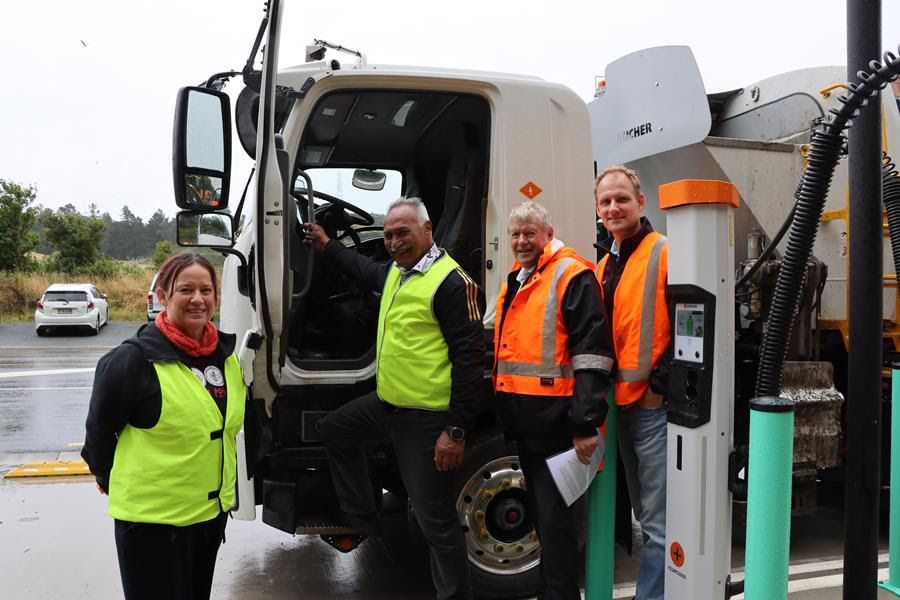
New Zealand’s first electric vehicle charging hub located at a landfill has opened at Silverstream, as Hutt City Council moves to cut emissions from waste and heavy transport operations.
The heavy EV charging hub, unveiled on Tuesday at Silverstream Landfill, supports electric waste and construction vehicles and is part of the council’s broader effort to transition to lower-carbon waste services and future-proof its infrastructure.
Lower Hutt mayor Ken Laban opened the charging hub alongside councillors, project partners and sector representatives.
He says the project reflects council’s commitment to reducing emissions from waste and heavy transport, while continuing to deliver reliable services for the community.
“Waste and heavy transport are among our biggest sources of emissions, and electrifying heavy vehicles is one of the most effective ways we can bring those numbers down.
“This project shows how Lower Hutt can lead on climate action while still delivering the services our community relies on every day,” Laban says.
The charging hub supports an electric loader operating at the landfill as well as electric kerbside collection trucks, replacing diesel vehicles that are typically among the highest emitters in waste operations.
Council estimates a conventional 20-tonne diesel loader operating at Silverstream produces about 68 tonnes of carbon dioxide a year. Switching to an electric loader can reduce those emissions by about 80 to 90%, depending on the electricity source.
Hutt City Council says vehicle fuel use accounts for most landfill emissions, and further electrification of on-site machinery, including articulated dump trucks, could deliver the majority of the site’s emissions reductions over the next five to eight years.
Waste contractor WM New Zealand provides kerbside rubbish collection services for the council. Lower North Island general manager Sarah Whiteman says the hub supports the company’s transition to lower-emissions services.
“WM strongly supports the move to electric heavy vehicles and we already operate 60 electric collection trucks across our fleet. We aim to be carbon neutral in our operations by 2050, and infrastructure like this is critical to making that goal achievable.
“Having reliable charging at key operational sites gives us the confidence to keep investing in low-emissions technology while continuing to deliver the services communities depend on. This project shows what can be achieved when councils, contractors and partners work together to deliver real emissions reductions.”
The project received $500,000 in co-funding from the Energy Efficiency and Conservation Authority. EECA chief executive Marcos Pelenur says the hub demonstrates how infrastructure can support more efficient services.
“This project shows how the right technology and infrastructure can unlock real productivity and cost benefits for councils and contractors.
“Heavy electric vehicles offer lower running and maintenance costs, improved efficiency and better working conditions, and this charging hub gives operators the confidence to adopt them. It’s a practical demonstration of how innovation can future-proof essential services while delivering long-term value.”
While the charging hub is already being used by electric kerbside trucks, Hutt City Council says it will expand to support more service vehicles and may be made available to other companies operating at the site in the future.

Join the conversation