
Nissan pioneers solid-oxide fuel-cell car
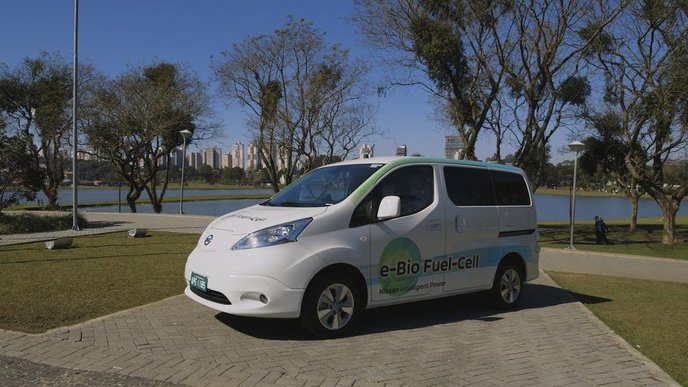
Nissan has launched the world’s first solid-oxide fuel-cell (SOFC)-powered prototype light commercial vehicle in Brazil.
This fuel-cell prototype is a perfect fit in Nissan’s focus on constructing zero-emission vehicles as it is designed to run on 100% ethanol to charge a 24kWh battery. This enables a cruising range of more than 600km (373 miles) and the use of multiple fuels such as ethanol and natural gas.
The base vehicle for the prototype is the Nissan e-NV200, with a 30-litre tank capacity. The fuel-cell has an output of 5kW.
“The e-bio fuel-cell offers eco-friendly transportation and creates opportunities for regional energy production, all the while supporting the existing infrastructure,” says Nissan chief executive Carlos Ghosn. “In the future, the e-bio fuel-cell will become even more user-friendly. Ethanol-blended water is easier and safer to handle than most other fuels. Without the need to create new infrastructure, it has great potential to drive market growth.”
The e-bio fuel-cell is carbon-neutral in that any CO2 emitted is offset by the process of growing the crops that are used to create the fuel, while also running quietly, like an EV, with the cruising range of a standard gasoline-engined vehicle.
Nissan will conduct further field tests on public roads in Brazil.
Bio-ethanol fuels are mainly sourced from sugarcane and corn. These fuels are widely available in countries in North and South America, which feature widely-established infrastructure.
Due to the low combustibility of ethanol-blended water, the system is not heavily dependent or restricted by the existing charging infrastructure, making it easy to introduce to the market. In the future, people may only need to stop by small retail stores to buy fuel off the shelf.


Join the conversation