
Nissan unveils solid-state batteries prototype production facility
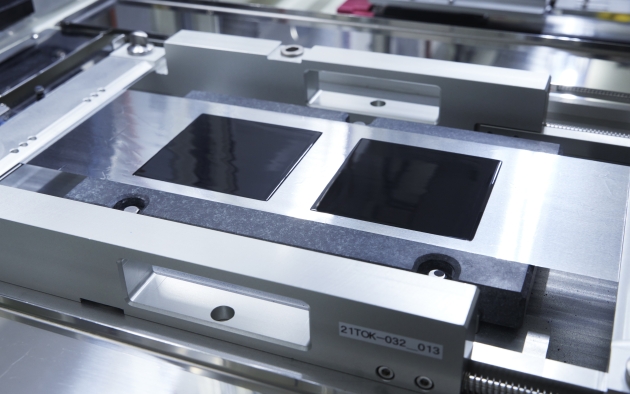
Nissan has revealed its prototype production facility in Japan for laminated solid-state battery cells, which it aims to bring to market in about six years.
Under its long-term vision Nissan Ambition 2030, Nissan aims to launch an EV with solid-state batteries developed in-house by the 2028 financial year.
It plans to establish a pilot production line at its Yokohama Plant in 2024, with materials, design and manufacturing processes for prototype production on the line to be studied at the prototype production facility within the Nissan Research Centre in Kanagawa Prefecture.
Nissan believes solid-state batteries can be reduced to US$75 per kWh in fiscal 2028 and to US$65 per kWh thereafter, placing EVs at the same cost level as gasoline vehicles.
Solid-state batteries are expected to be a game-changing technology for accelerating EVs’ popularity. They have an energy density about twice that of conventional lithium-ion batteries, a significantly shorter charging time due to superior charge/discharge performance, and lower cost through using less expensive materials.
With these benefits, Nissan expects to use solid-state batteries in a wide range of vehicle segments, including pickup trucks (utes).
“Nissan has been a leader in electrification technology through a wide range of R&D activities, from molecular-level battery material research to the development of safe, high-performance EVs,” says Nissan research and development executive vice president Kunio Nakaguro.
“Our initiatives even include city development using EVs as storage batteries.
“The knowledge gained from our experience supports the development of all-solid-state batteries and we’ve accumulated important elemental technologies. Our R&D and manufacturing divisions will continue to work together to utilise this prototype production facility and accelerate the practical application of all-solid-state batteries.”


Join the conversation