
NZ among 19 countries past EV tipping point
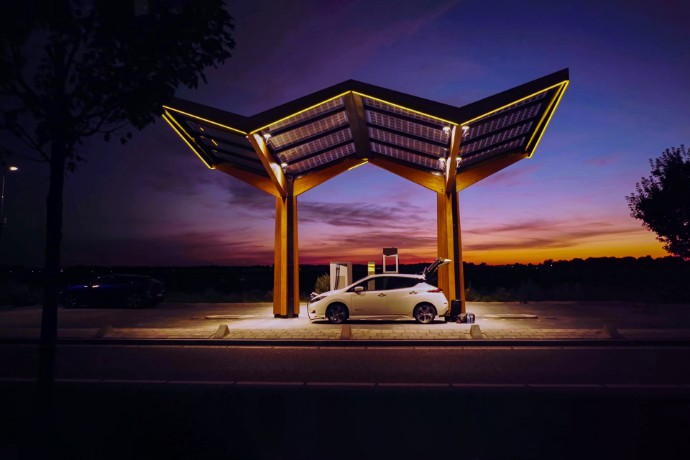
The US is among the latest countries to pass a critical EV tipping point – 5% of new car sales being electric.
That’s according to a study of EV adoption rates globally, the 5% mark the point when early adopters are overtaken by mainstream demand, Bloomberg explains.
After the 5% threshold is reached everything changes, says the Bloomberg analysis of 19 countries (including New Zealand) that have passed that point.
The US joined Europe and China — collectively the three largest car markets — in moving beyond the 5% tipping point, Bloomberg adds.
“If the US follows the trend established by 18 countries that came before it, a quarter of new car sales could be electric by the end of 2025. That would be a year or two ahead of most major forecasts.”
Bloomberg points out that most successful new technologies — electricity, televisions, mobile phones, the internet, even LED lightbulbs — follow an S-shaped adoption curve.
“Sales move at a crawl in the early-adopter phase, then surprisingly quickly once things go mainstream.”
After the 5% EV mark is reached, rapidly accelerating demand ensues, says Bloomberg.
It adds that most impediments to EV uptake are universal. “There aren’t enough public chargers, the cars are expensive and in limited supply, buyers don’t know much about them. Once the road has been paved for the first 5%, the masses soon follow.”
Bloomberg says the EV adoption curve followed by South Korea starting in 2021 ends up looking like the one taken by China in 2018, which is similar to Norway after its first 5% quarter in 2013.
The next major car markets approaching the tipping point this year include Canada, Australia, and Spain.
The analysis mentioned is for battery electric vehicles (BEVs) as Bloomberg says some countries, primarily in Europe, were quicker to adopt plug-in hybrids (PHEVs) which have smaller batteries backed by a gasoline-powered engine.
“Including those, the world just surpassed 20 million electric vehicles on the road, and that figure will double again by the end of next year, according to a recent report by analysts at BloombergNEF.
“Since using a plug-in hybrid doesn’t require the same level of infrastructure or consumer awareness, the early phase of adoption was less consistent. A consistent tipping point for this broader category of EVs wasn’t achieved until 10% of new vehicles had a plug,” Bloomberg explains.
It adds the US and China mostly skipped PHEVs and went straight to fully electric vehicles, and the US hasn’t yet crossed the 10% PHEV threshold, while 17 countries have crossed a 10% threshold which includes PHEVs.
Every country that crossed an EV tipping point has federal incentives and pollution standards.
“Continued growth also depends on the ability of automakers and their suppliers to increase production fast enough,” says Bloomberg.
It adds EV growth may also depend on material supplies like battery components.
Global EV sales tripled in the last two years, says the International Energy Agency.
That means this year could see the peak of internal combustion engine (ICE) vehicles on global roads.

Join the conversation