
NZ-built electric hydrofoil network planned for Tasmania’s Derwent River
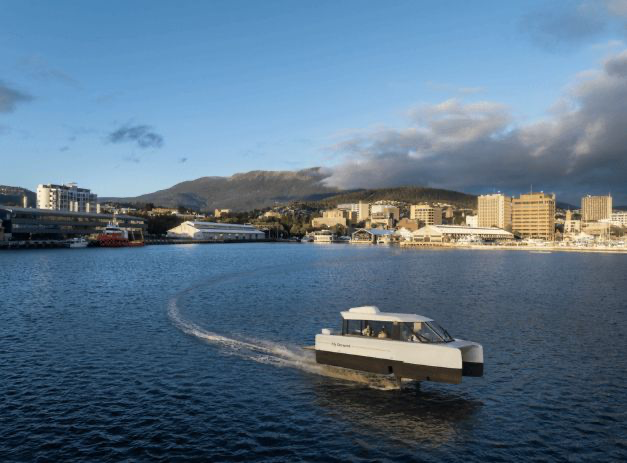
A fleet of New Zealand-designed electric hydrofoil vessels is set to underpin Australia’s first hydrofoiling passenger network, with services planned for Tasmania’s Derwent River.
Tasmanian venture Fly Derwent and Auckland-based Vessev have announced plans to launch the network using fully electric hydrofoiling vessels developed in New Zealand.
The network will initially deploy Vessev’s VS–9, a 10-seat hydrofoiling catamaran, with larger VS–12 vessels planned, each capable of carrying up to 30 passengers.
Fly Derwent principal Cameron McCulloch says the project aims to reshape how waterways are used for transport.
“This world-leading technology unlocks affordable, river-based commuter and tourism transport in Hobart without the need for large-scale infrastructure changes,” McCulloch says.
“It’s an entirely new mode of transport that enables us to use waterways in a way that is more like a metro system than a ferry service.”
The hydrofoiling vessels use carbon fibre foils to lift the hull above the water, reducing drag and improving efficiency. The boats can travel at around 25 knots while producing minimal wake, allowing higher speeds without damaging riverbanks.
McCulloch says conventional electric vessels were unable to meet the operational requirements for the project.
“Hydrofoiling changes that completely, lifting the hull clear of the water, reducing drag and unlocking the efficiency needed to deliver commercial services on electric power alone.”
The network will operate across a 60-kilometre stretch of the Derwent River, connecting locations from New Norfolk to Opossum Bay, with an initial focus on commuter services and tourism.
Vessev chief executive Eric Laakmann says the project highlights the global potential for New Zealand-developed technology.
“Electric hydrofoiling enables an entirely new category of water transport… Almost every major city has waterways sitting largely unused for passenger transport and electric hydrofoiling changes that,” Laakmann says.
The vessels will be powered by Tasmania’s largely renewable electricity grid, with developers also exploring battery storage and mobile charging solutions.
The first VS–9 vessel is expected to arrive in Hobart in early 2027, with additional VS–12 vessels to follow as the network expands.


Join the conversation