
NZ pioneers prototype device hailed as future of transport
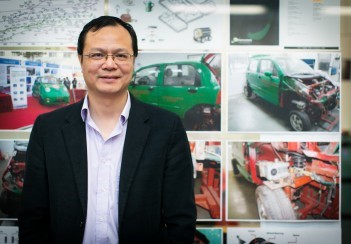
Otago Polytechnic associate professor Tom Qi has developed a transport prototype that could represent the future of transport – and its inception in New Zealand.
The prototype, says Stuff, has generated interest around the world and attracted multiple partners.
While some details of Qi’s six-year-long project remain under wraps, he confirmed that the small transportation device, which he doesn’t want to call a car anymore, is designed to be parked in a house where it can be charged.
The small self-driving self-parking vehicle, which can be physically adapted to become a smart convertible wheelchair or even a driveable suitcase, will be internet controllable and linked with others to form a type of ‘family car’.
“A computer would make less mistakes than a human being”, says Qi, potentially enabling it to say lives.
Companies have shown particular interest in the prototype’s motor driven wheels that allow it to move sideways for easier parking.
Qi acknowledges that traditional car manufacturers with “outdated assembly lines” are not rushing to embrace this prototype; rather it is non-car manufacturers expressing interest.
He says he hopes the prototype can be manufactured in New Zealand – which is also an ideal testing ground before the vehicle is sold – as the advancement of 3D printing makes this possible.
“The problem is the risk of investment because (New Zealand) is such a small country,” he says.
Qi is not a supporter of the country’s “expensive exercise” in setting up a charging station network for electric vehicles as almost every family has a garage or a carpark, enabling home charging.
“The technology is ready but society, including industry, is not necessarily ready,” concludes Qi.

Join the conversation