
Police take charge with first frontline EVs

Police are rolling out five new electric vehicles as part of a $1.7 million trial testing the operational needs of the cars over the next six months.
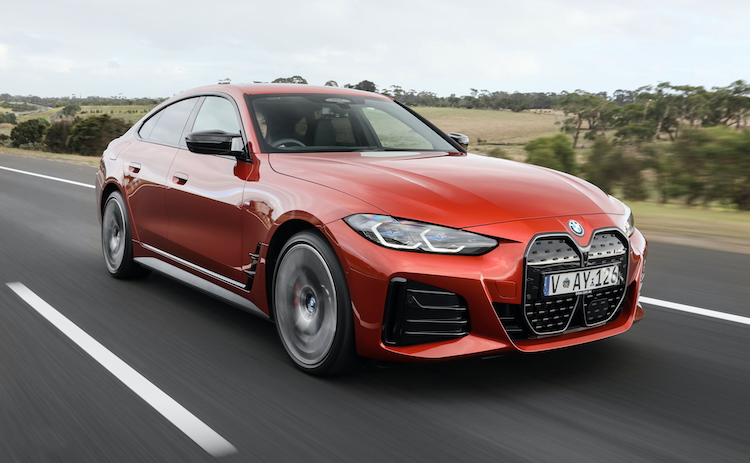
The BMW i4 has been selected for the initial trial, successfully meeting most performance requirements for an operational vehicle while fulfilling carbon reduction targets and fitting within existing project funding, police say.
The project is supported with co-funding from the State Sector Decarbonisation Fund, administered by the Energy Efficiency and Conservation Authority (EECA).
Road policing was identified as a suitable trial for operational use as it means the vehicles are generally used by single drivers, sticking to mostly highway travel and consistent routes that should not be affected by range limitations, police say. They also work in shifts, allowing for the required charge time.
If the trial is successful, it will create an opportunity for police to consider future options EVs to transition into suitable areas of the fleet. The pure electric vehicle follows a previous police trial over recent months using a plug-in hybrid.
It’s also part of a wider fleet electrification project, introducing 45 electric vehicles into the police fleet along with the associated charging infrastructure. This is expected to reduce carbon emissions by around 176.1 tonnes annually.
Police Commissioner Andrew Coster was at Auckland’s Ardmore Airport on June 2 to help unveil the first of the new electric vehicles in full livery.

“Police vehicles are fundamental to our ability to serve the public and provide safer communities across New Zealand.
“We are proud to take these new steps seeking to reduce transport-related emissions while keeping New Zealanders safe,” Coster says.
The BMW i4 can accelerate from 0 to 100 km/h in 5.7 seconds. It has a battery range of up to 590km depending on load and how the vehicle is driven – this is something police will be evaluating as part of the trial.
Drivers have undertaken specific EV driver training as it is the heaviest and highest performance car within the fleet.
Chargers will be installed at police stations around the country and will charge the vehicle in around two hours. Public charges will also be used in the trial and if charged at a hyper-charger, this could be completed in as little as 30 minutes.
The first vehicle will be trialled in the Waikato, and then deployed to Counties Manukau, Central Districts, Christchurch, and Dunedin.
Police say the spread of geographical locations will allow them to test a range of variables such as topography, weather, driving conditions and more.
A range of electric vehicles were reviewed and tested ahead of the trial but police say the BMW i4 met more of the requirements for an operational vehicle than other options.
The selected vehicle has one of the highest kilometre ranges of any EV currently available in New Zealand.
“The operational police environment places huge demands on operation vehicles in our fleet.
“The combined weight of equipment and people carried, along with urgent duty driving, places a higher-than-normal drain on a vehicle’s energy source,” police say.
Police say they will approach the market more formally for suitable EVs depending on what the user requirements are after the trial.
Globally, other police forces are also using small numbers of electric vehicles in their fleet including Switzerland, the Netherlands, Germany, and Italy. There are also small trials happening in various Australian States. As well as New Zealand, the UK, Spain and Belgium also have BMW i4 EVs operating in their operation police fleets.
New Zealand’s police light vehicle fleet contributes around 40% of the organisation’s emissions and also accounts for around 20% of all-of-Government’s light fleet.

Join the conversation