
Porsche produces three drive types on one assembly line

Autonomous processes and robot technology help incorporate the electric Macan into the production line at the Porsche Plant Leipzig.
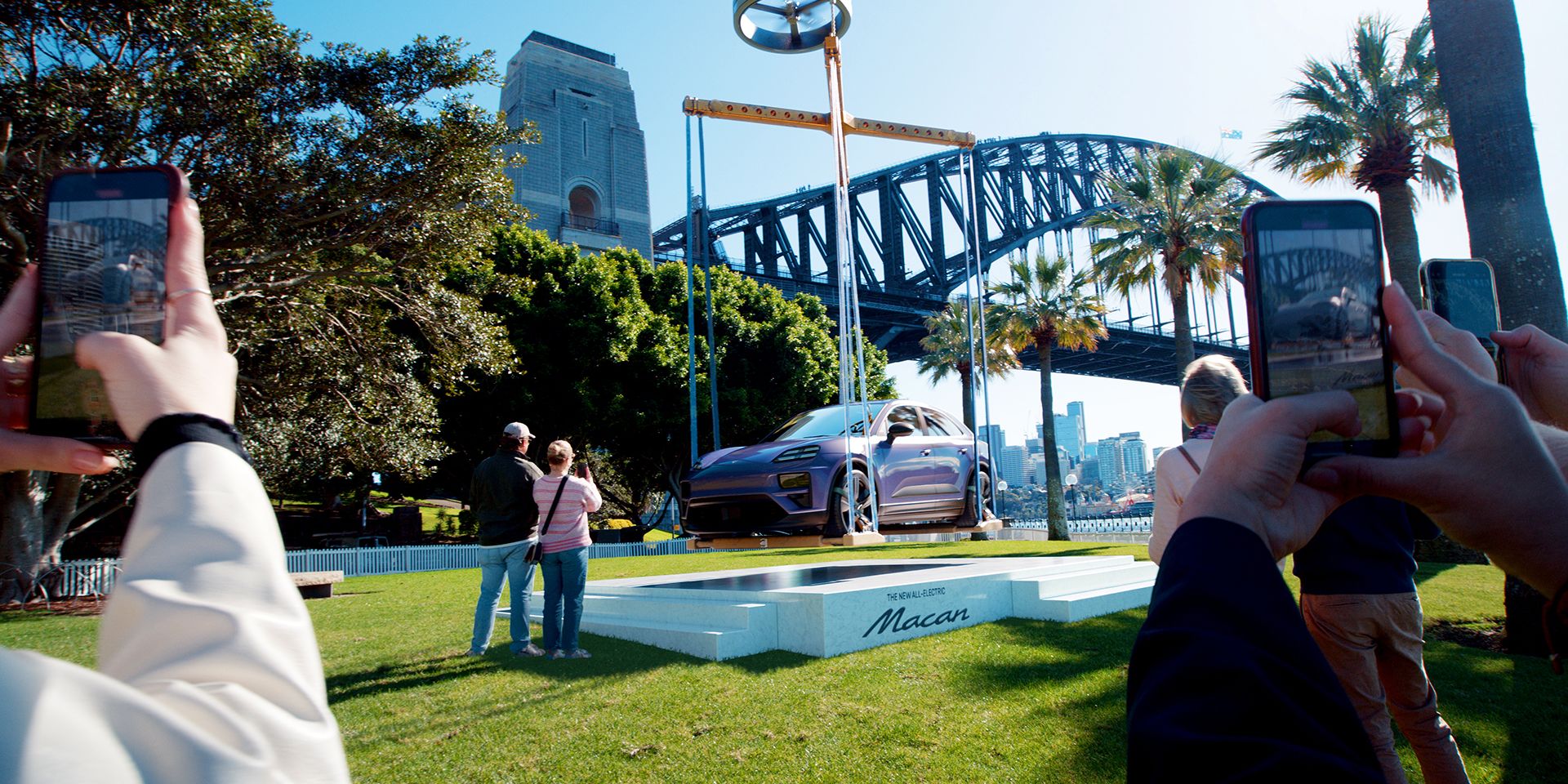
The body of a Porsche Macan in Oak Green Metallic is slowly lowered on a hanger, its electric powertrain brought in by a driverless transport system – the two components automatically joined and screwed together before the interior is installed.
Three different drive concepts are manufactured on a single production line – gasoline-driven, hybrid, and EVs. About 600 Macan and Panamera cars are produced this way daily for customers around the world.
Engineer Sebastian Böttcher is an equipment planner and developed the system with a dozen of his Porsche coworkers.
The foundations were laid in 2018 when the executive board decided to produce the electric Macan in Leipzig on the existing production line that until then had been reserved for internal combustion engine (ICE) or hybrid vehicles.
“We soon realised we would have to completely revise the existing marriage and many other workflows at the plant,” says Böttcher.
“An additional type of powertrain is like a little world of its own, with new requirements, special procedures, and special tools.”
In the case of an ICE or hybrid the vehicle’s underbody and chassis are screwed together in 20 places compared to 50 in an electric model.
What was previously four assembly stations stretching 24 metres became nine stations across 60 metres. Six additional robots and 18 automatic screw stations were incorporated.
Porsche came up with new ideas with help from external partners, such as developing an automatic screw loading system that, depending on the product line and fittings, could handle any screw size and shape, torque and angle, at incredibly high speed.
A measuring device was also developed which has its patent pending, passing along the assembly line to check the screw spindles during production operations.
A special camera system was installed which autonomously examines an EV’s high-voltage batteries’ surface for foreign objects like mislaid washers or nuts.
“The pearl necklace principle has a key part to play in everything we do here,” says Denny Schubert of the vehicle control systems department.
At Porsche, this is a concept that ensures effective employee utilisation, minimises warehousing, and pre-sorts parts, sending them to the assembly line at the right time.
“We endeavour to precisely manage the order in which the vehicles are processed, lined up like on a string of pearls,” says Schubert.
The pearl necklace principle is similar to a compass, ensuring that each step of the manufacturing process is coordinated with the next one.
The Porsche Plant Leipzig generally plans 10 days ahead, allowing suppliers to coordinate their production with the assembly line needs and supply all the parts at the right time.
“Producing three different powertrain types on a single line is demanding for everyone at the plant. Our work is highly complex,” says Martin Reinbacher of industrial engineering.
Each vehicle covers 3.6km on the line and there are two product lines on which three drive concepts are assembled, each vehicle requiring 4000 work steps, assembly involving 5000 parts with 331 (work) cycles per vehicle.

Join the conversation