
First Drive: Kia EV4 – Kia’s 630km EV Sedan

While SUVs continue to dominate the EV space, Kia’s EV4 dares to be different. With its sleek profile, long-range capability and practical tech, the EV4 isn’t just a sedan—it’s Kia’s answer to the Tesla Model 3 and a refined electric option for Kiwi drivers wanting something distinct.
I travelled to Korea to drive the EV4 and came away genuinely impressed.
Long range and practical EV tech
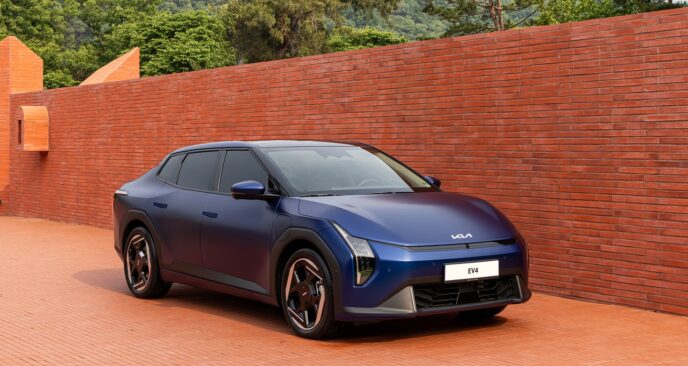
Based on the same 400V E-GMP platform as the EV3, the EV4 takes things a step further in size, design and ambition. Two battery options are expected: 58kWh and 81kWh, both using NMC chemistry for lighter weight and better energy density.
The larger 81kWh battery delivers up to 630km of WLTP range. And this isn’t just a brochure number—our test car showed more than 370km remaining at 62% charge after a day of driving hilly Korean roads. The drag coefficient is just 0.23Cd, contributing to its range and refinement.
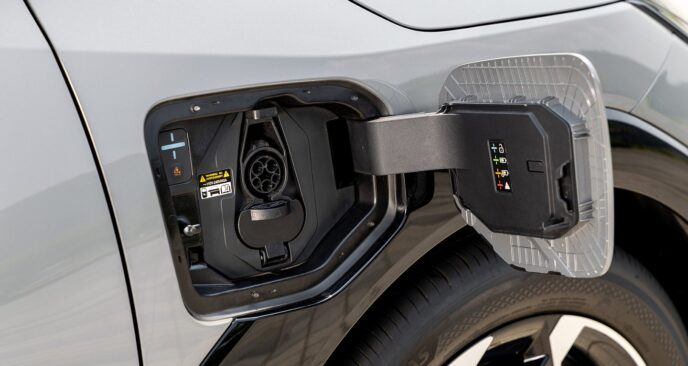
DC charging is capped at 135kW for the 81kWh variant and 100kW for the smaller pack. That’s not cutting edge, but Kia’s stable charging curves and efficient thermal management mean decent real-world results. AC charging comes in at 11kW. Kia’s recent charging strategy appears to favour reliability over record-breaking numbers, and it works here.
Interestingly, Kia has designed the EV4 with the flexibility to offer both vehicle-to-load and future vehicle-to-home capabilities. Its 3.6kW V2L system can power camping gear, tools, or even small appliances, and a three-pin plug is located in the rear seat base. There’s also potential for full V2G integration, though New Zealand readiness will determine how soon those features are activated.
It is a sedan, right?

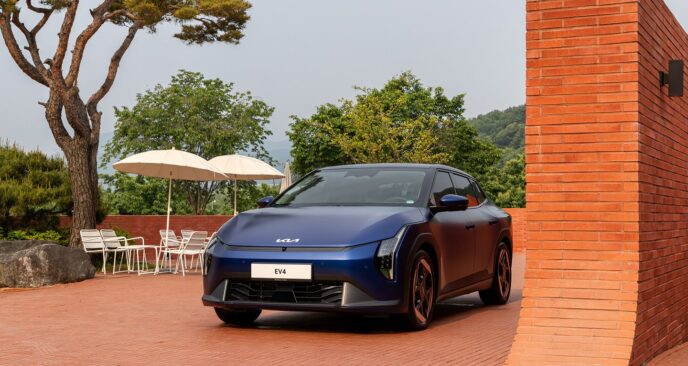
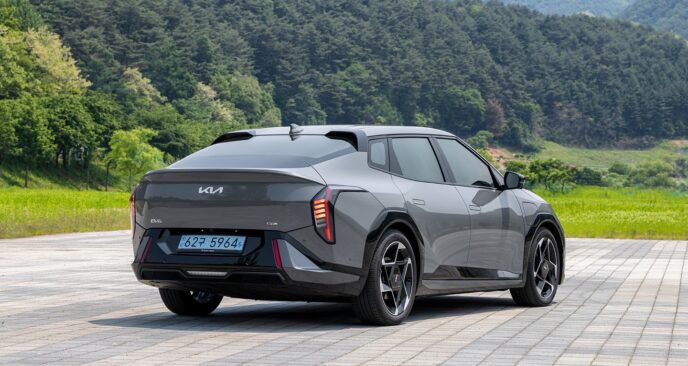
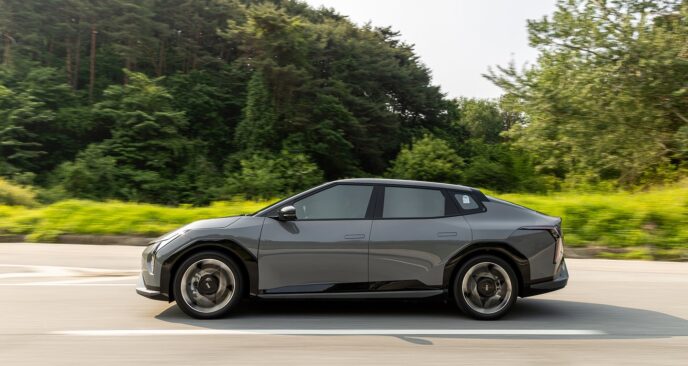
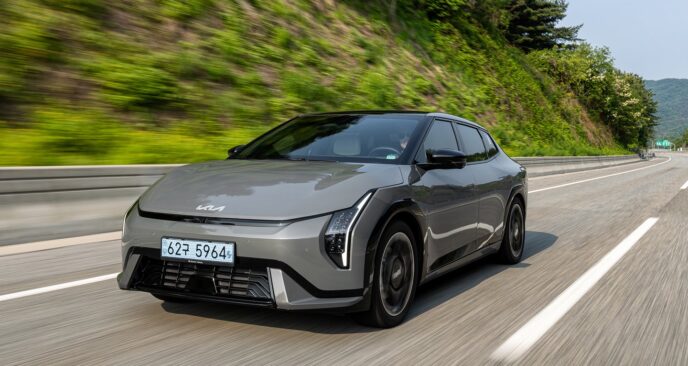
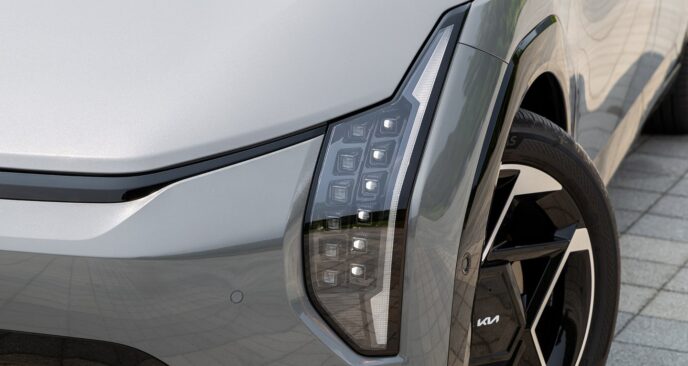
The EV4 is more fastback than sedan, with sharp lines, angular LED lighting, and SUV-style black wheel arches. It looks confident and futuristic. From the side, it shares more in common with a Polestar 2 or Hyundai Ioniq 6 than traditional sedans.
Flush door handles and aero-optimised wheels contribute to that slippery 0.23 drag coefficient. Even details like the underbody and rear diffuser have been tuned for aero gains, showing Kia’s growing EV engineering focus.
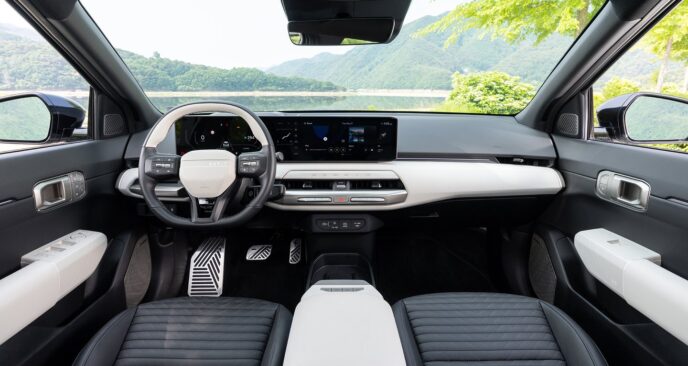
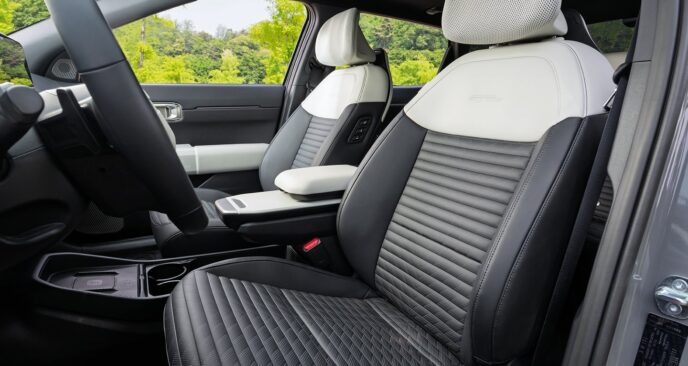
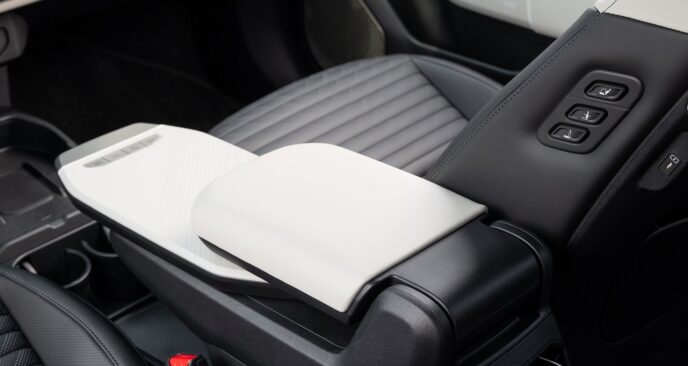
Inside, Kia nails the balance between premium and practical. Recycled and textured materials avoid gloss and fingerprints, while the floating centre console and wide-screen layout create a modern cabin. Three displays span the dash: driver info, infotainment, and climate control. That small centre climate screen is still visibility constrained, but interestingly is better in LHD models
The infotainment setup uses Kia’s next-gen interface with customisable layouts, and over-the-air update support. Wireless Apple CarPlay and Android Auto are standard, and Kia’s Connect app enables remote charging, cabin pre-conditioning, and—soon—phone-as-key capability.
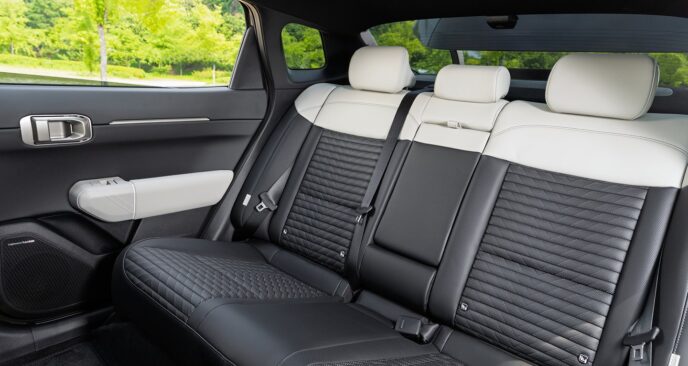
Rear-seat space is decent rather than expansive, although headroom is tight for taller passengers due to the sloping roof. USB-C ports, fold-down seats, and an electric tailgate enhance usability. A panoramic roof will be offered in some markets, though it’s unclear if it will be standard in New Zealand.
The boot at 490 litres is massive, but the electric tailgate is almost unnecessarily small and restrictive. This car could have been so much better as a lift back.
Smooth, confident drive on Korean roads
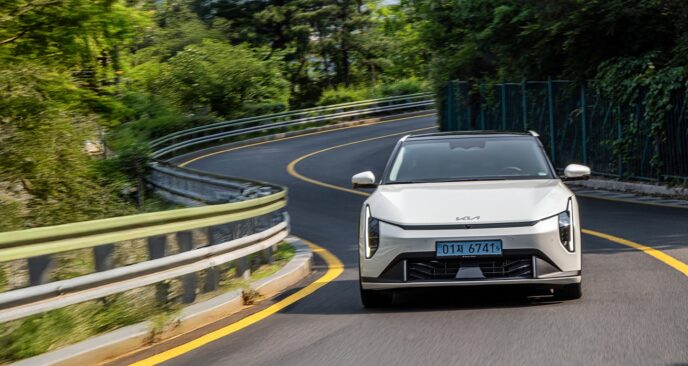
On the road, the EV4 shines as a smooth, composed cruiser. The 81kWh variant produces 150kW and 283Nm, sending power to the front wheels. It’s good for 0–100km/h in 7.7 seconds, or 7.4 seconds in the lighter 58kWh version. Three regen levels are available via paddles, plus Kia’s “i-Pedal” one-pedal mode and an adaptive setting based on traffic.
The ride is settled, quiet and mature, and the steering (especially in Sport mode) is responsive without being twitchy. It’s an easy car to drive briskly, but one built more for comfort than corner carving. Kia’s variable steering assistance adds some extra character across drive modes, and the vehicle stays impressively flat during quick lane changes.
Four-wheel disc brakes and well-calibrated transition between regen and friction braking make the EV4 predictable and easy to modulate in all conditions.
Driver tech and power sharing features
Tech is another highlight. Kia’s latest driver assist suite is excellent, with lane centring, adaptive cruise, blind spot monitoring and rear cross traffic alert all included. Highway hands-on driving is effortless, and the car’s built-in navigation system integrates with lane assist for smarter steering on multi-lane roads.
A 100W USB-C port sits up front, and Kia’s 3.4kW V2L system adds flexibility. The EV4 also supports vehicle-to-home and vehicle-to-grid features, pending local support.
One feature we didn’t test but should be highlighted is the EV4’s “theatre mode,” allowing occupants to recline and stream video content while parked—a nod to Kia’s growing emphasis on comfort and downtime in EVs.
Final thoughts
Overall, the EV4 slots into the market as a quiet achiever. It’s not as shouty as the Ioniq 6 or minimalist like a Tesla, but it delivers where it matters—range, comfort, usability and smart design. It’s a standout option for buyers wanting an EV that feels genuinely fresh.
Would I buy one? Personally, the EV3’s packaging or the larger EV5 would tempt me more. But if you like your EVs in sports sedan form, the EV4 deserves a long, hard look.
Kia EV4 (Preliminary Specs – 81kWh Model)
- Platform: E-GMP 400V architecture
- Motor: 150kW / 283Nm (Front-wheel drive)
- Battery: 81kWh NMC (also available: 58kWh)
- WLTP Range: Up to 630km
- Charging: 135kW DC / 11kW AC
- 0–100 km/h: 7.7s (81kWh) / 7.4s (58kWh)
- Drag Coefficient: 0.23Cd
- Vehicle-to-Load: 3.4kW (external + cabin outlet)
- Driver Assistance: Lane centring, adaptive cruise, blind spot, AEB, cross traffic alert
- Interior: Triple-screen dash, wireless Apple CarPlay/Android Auto, recycled materials
- NZ Availability: Unconfirmed – expected late 2025

Join the conversation