
VIDEO: EV road trip tips – Northland to Christchurch in the LDV MIFA 9
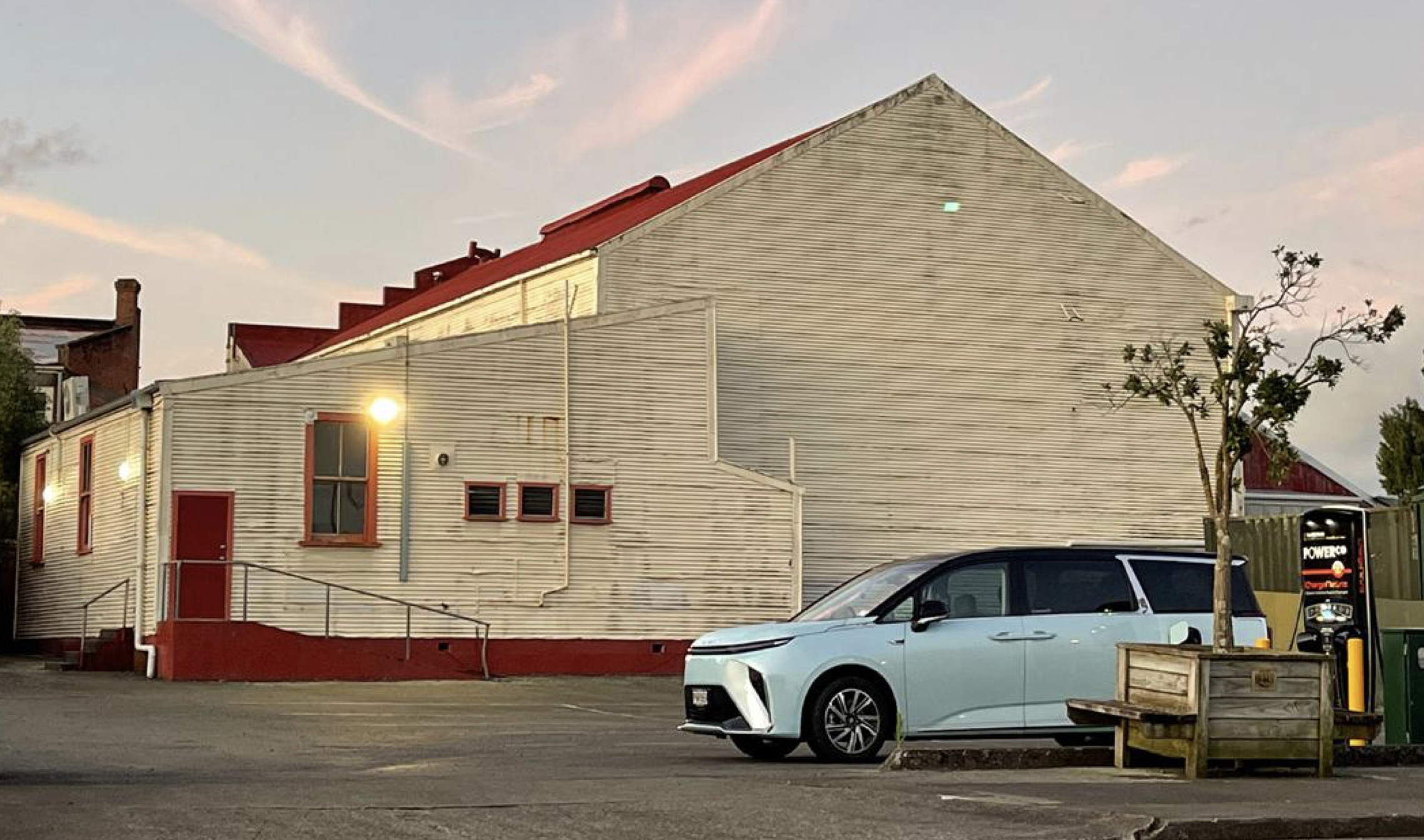
We head out on a summer road trip, and find planning and smart thinking can save you waiting for chargers this year.
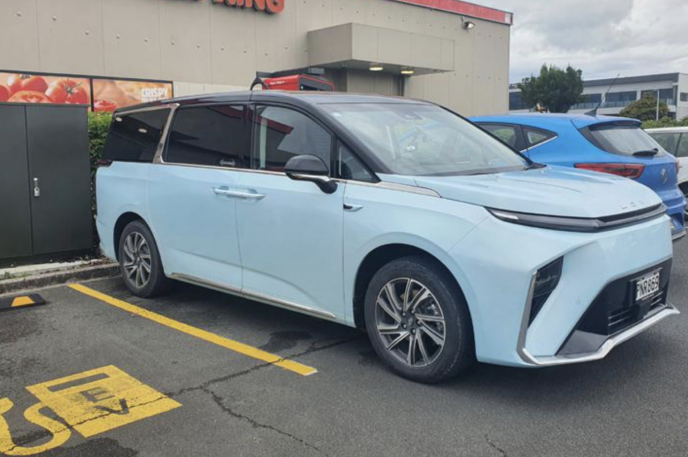
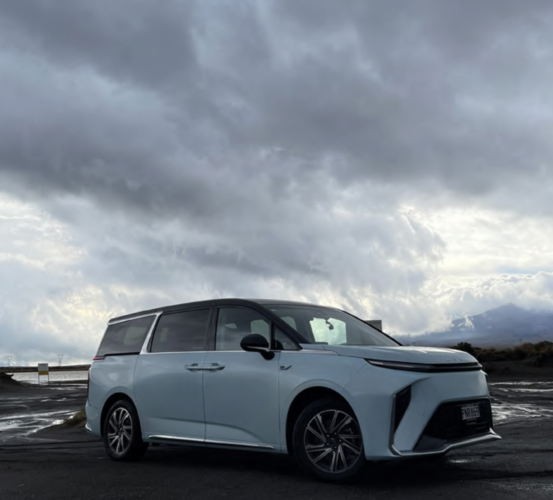
Last month we covered the launch of the LDV Mifa 9, an all-electric people mover.
With a 350 to 400km range, 90kWh battery, and seven comfy seats (a couple of which will give you a massage), it has the makings of a great summer road trip vehicle.
So, we put it to the test, taking two
days and two nights (midday Sunday
to midday Tuesday) to make the drive from our Mangawhai, Northland base, to Christchurch.
And we didn’t run entirely light, with near 350kg of people and gear on board. Sure, the Mifa can carry 700kg, but we don’t have that many friends able to drop everything for this kind of thing.
We’re going to run through our key tips for summer EV road trips, while taking you on our trip down the country. And we made a video! You can head over to YouTube.com/ evsandbeyond to watch the trip in two parts.
LEAVE FULL, AND PREPARE
Leave full! This seems like such a simple point, but I have made the mistake before in the rush to get ready for a family trip to not
plug-in the car in time to get 100% charge.
This is so important. With DC charging it takes time to get the top 20% of battery back, so you leave on the back foot.
There is additional preparation that will make your trip easier as well. Make sure you have your charging fobs and apps –
ChargeNet, Open Loop, Z Energy and BP are the baseline now.
Plugshare is a must for checking in at stops. A Better Route Planner and PowerTrip are handy, but more for those that are aiming to stretch their range, which is not something I would attempt with the variability of summer conditions.
Check your tyre pressures; it can help efficiency. Also clean your windscreen and top off your washer bottle. Chargers don’t have buckets, brushes, and taps!
Last, think about packing. You can’t beat physics, and an overladen car will use more energy than a lightly loaded one. Same with the bikes on the back of the car or kayaks on the roof. Will you use them? If it’s not certain, leave them behind!
CHARGE EARLY, CHARGE OFTEN(ISH)
Out of Mangawhai, the Mifa was pointed south and headed for Auckland, in some rather average conditions.
A quick stop was made in Mt Roskill to collect our co-driver Graeme, before a coffee stop at the Bombay ChargeNet hyper-charger.
At this point we were well under half-way through the battery, with over 200km of range available. So why charge here?
Safety and efficiency. Sure, we could have pushed on and charged further down the road, but until Taupo most charger options are single 50kW units where the chance of queuing on a busy day is high.
Heading for multiple units reduces this and being a hyper-charger we are in and out of there faster, at just over 20 minutes to bring us back up to 360km of range.
My rule this summer: if you’re under 70% battery, don’t drive past an empty charger. It will give you so many options later.
The Mifa surprised with a peak charging speed this time of nearly 100kW, well above the 90kW speed marketed. But more was to come.
SLOW DOWN (A LITTLE)
Not long after Bombay is the Waikato expressway, a piece of road with a 110km/h speed limit, and a great spot to test my next tip.
We ran the Mifa at 90km/h and averaged 17kWh per 100km to maintain speed. Up the speed to 100km/h and you burn 21kWh per 100km, while moving to 110km upped the burn rate to 26kWh per 100km.
On a 50kW charger that’s probably an additional 10 minutes of charge and up to $7 in additional charge cost per 100km of travel.
Slow down, reduce charging time, reduce cost!
HELP YOUR FELLOW EV DRIVERS
We rolled into Taupo with just over 30% battery remaining. Sure, we could have carried on to Turangi or even Waiouru, but
with either single or 50kWh units coming ahead, heading to Taupo with its wide array of charging options was the smart move. We plugged in for what proved to be a 20-minute top-up, with the Mifa again out- performing specification, peaking at 130kW, before settling on a solid period of 115kW.
Here we stumbled across two fellow EV users in trouble. One, a car that was having technical issues. We tried to help but it was beyond our technical pay grade. The second was a user with a Polestar that was venturing to a hyper-charger for the first time and struggling. We jumped in, helped her get underway, and gave a few tips for next time.
If you see someone struggling, offer to help. The quicker people can get on and off the charger, the better for everyone.
GIVE YOURSELF OPTIONS
The Mifa flew (at legal speeds) over the central plateau, with a quick stop at Waiouru to pee and catch-up with some EV friends at the two units outside the Army Museum.
They confirmed the comfort of the MIFA’s second row. It was lucky we had plenty of
range as two chargers were in use when we arrived, with another car waiting.
Our target was Bulls, and with an energy recouping downhill run, we arrived with around 120km of range left.
Having range left at your intended charging spot is key. This gives you options, one we almost needed as on arrival a handsome new MG ZS EV was charging.
We had the ability from there to get to at least three further 50kW charging stations, two of them with multiple units. This reduces the risk of having to queue and having annoyed family members waiting on a hot day.
As it turns out while we were preparing to leave the owner of the MG turned up, and we were able to charge for 25 minutes for the run into Wellington.
This was both an overcharge – we were probably too cautious and needed only 15 minutes’ charge to make the trip, and the last DC charge we’d need to get to Christchurch.
Why?
CHARGE WHILE YOU SLEEP!
This is one of my top tips for EV road trips: work on that basis of charging while you sleep. And if you’re concerned about how far you can get safely in a day, take an extra night and reduce your DC charging needs.
In this case, we were staying in Wellington, at the Novotel, where we rolled in around 10.30pm, with a healthy amount still on the Guess-o-meter.
This great inner-city hotel has a type 2 7kW unit and a Tesla destination charger, both free for guests, though the hotel recommends booking them.
Multiple accommodation websites now have a search by EV charger option, but my tip is to call the hotel first and check the charging it has suits your car and can be booked.
Staying at campgrounds? A higher- amperage ‘blue commando’ EVSE or adaptor could be a good back-up.
In some cases, charging where you stay can be of economic benefit. We took on around 65kWh on the charger, which could cost around $55 at a DC unit. Take that off
the hotel bill and our stay, with breakfast, came down to just $152.
If you’re staying with family, take your charging cable with you. Sure, you won’t get a full charge every night, but at around 24kWh per 24-hour period, it sure helps.
Of course, ask in advance and offer to compensate them, I recommend a rate of around 30 cents a kW/per hour, as a token. It’s a great chance to educate as well.
RELAX, ENJOY YOURSELF
After a few meetings the next day it was on to the ferry for the trip to Picton.
I highly recommend charging before you get on the ferry heading in either direction so you can get underway without hassle.
Particularly heading south charging is limited and will probably be very stressed this summer. Don’t plan on charging if you can get away with it.
The Mifa was still chocka, so we cruised all the way down to Kaikoura for our second night away, though we could have made it to Christchurch with a ‘splash-and-dash’ here or further along the road.
Instead we got to try one of the new EV
Power units installed at the also-new Sudima Kaikoura. It’s great to see new hotels being built with infrastructure like this.
Again, the free charging mitigated the cost. We highly recommend the lamb and mojitos!
The final morning involved a relaxing day cruising along the stunning Kaikoura coast, before heading inland and south to the Mifa’s new home at LDV Christchurch.
Splitting the trip up made for a relaxing experience, with no need to charge on route at all. It was a lot of fun.
BE KIND
My last tip – to quote Jacinda – is be kind. Yes, there will be queues this summer, and yes trips will take longer than planned.
But if we all relax, think of each other while planning and waiting, and keep a cool head, it will be better for everyone.
Be kind, don’t get agitated. And have a lot of fun.
To reiterate my first tip: leave full. You won’t regret it!
Join the conversation