
Work ready? We drive NZ’s first 4X4 electric ute
Ever since Jacinda famously suggested they were “on the way” (well before they actually were), it’s been the pub-talk question: can a BEV really tow, haul, and climb like a proper ute? So far, most brands have taken the safe route with plug-in hybrids such as BYD’s Shark 6 or Ford’s Ranger PHEV.
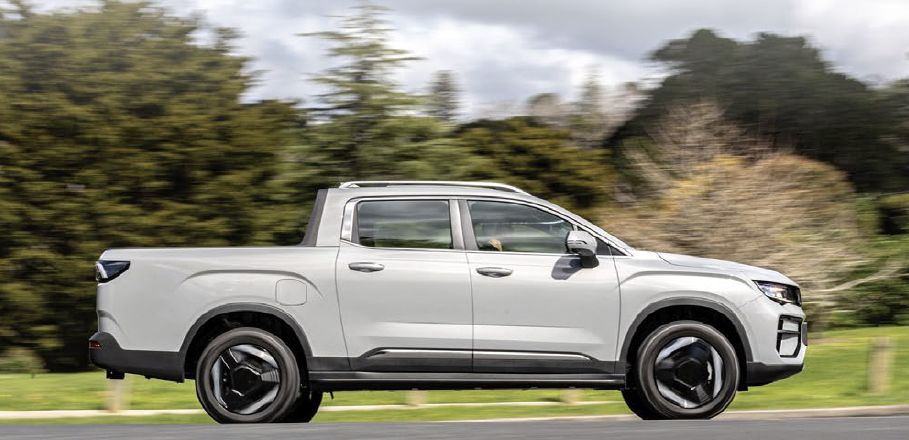
Geely has skipped that halfway house and gone straight to a full battery-electric double-cab — the Riddara RD6 Pro. The badge may be new, but the brand behind it certainly isn’t. Geely also builds Volvo, Polestar, and Zeekr vehicles, and that shared DNA shows through. Underneath sits Geely’s SEA (Sustainable Experience Architecture) platform — a passenger-car structure rather than a ladder frame — so the RD6 isn’t a truck pretending to be a car, it’s a car that thinks it’s a truck. That turns out to be a very good thing.

LOOKS THAT GROW ON YOU
Photos don’t quite capture its proportions. At 5.26 metres long and 1.9 wide, the Riddara has full-size ute stance. Up front, a solid-panel “grille” framed by a full-width LED bar spells out RIDDARA in glowing letters. It’s a bold, futuristic face — though some may prefer the more conventional Chinese-market look, likely to become an AliExpress swap-out special. Beneath the bonnet is a 70-litre frunk, ideal for tools or groceries, and something utes have never offered before.
Along the sides sit steel steps, roof rails, and 18-inch tri-spoke alloys with 235/60 R18 tyres — Chao Yang rubber that proved surprisingly composed on tarmac. A CCS port hides behind the left-rear flap, supporting 6.6kW AC and 110 kW DC charging, good for a 30–80 per cent top-up in around half an hour.
A TRAY THAT EARNS ITS KEEP
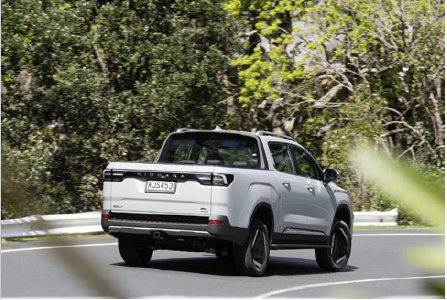
The deck offers 1194 litres and measures 1525 × 1450 mm between the walls, easily swallowing a pallet. The soft-damped tailgate conceals a pull-out step — a neat touch, though ours was sticky on test. There’s also a weather-sealed Vehicle-to-Load panel with four 240 V/16 A outlets and two 12 V ports, letting tradies power tools or campers plug in lights, fridges, even an espresso machine. With up to 6 kW available, few rivals come close to that level of onboard power.
If there’s a miss, it’s the tie-downs — just four, mounted high — but dealer-fit rails will solve that. Towing capacity is 3000 kg braked and payload a healthy 1030 kg, though we’ll need a later test to confirm when factory towbars arrive.
CAR INSIDE, UTE OUTSIDE
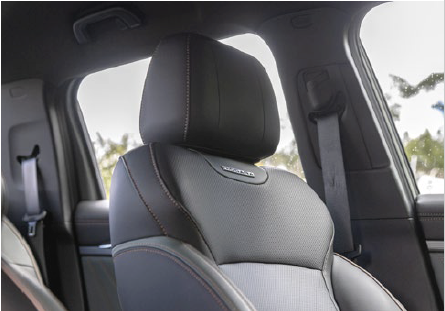
Step into the cabin and it feels more SUV than workhorse. Soft-touch materials, a 14.6-inch touchscreen, 10.2-inch cluster, and plentiful storage give a premium impression — though time will tell how those plush surfaces handle the worksite. Heated and ventilated seats come standard front and rear, along with dual-zone climate using a heat pump and CN95 filtration. A 50-watt wireless charger and multiple USB-C ports keep devices topped up. Thankfully, key climate controls still have physical buttons.
Rear-seat space is excellent. With no separate chassis intruding, legroom rivals a Hilux or Ranger crew cab, while the cushion height gives proper thigh support. Hidden bins under the seat base add 48 litres of extra storage. Two ISOFIX anchors are fitted, though only two top-tethers mean three child seats won’t all secure. A “camping mode” keeps air-con and power running overnight without draining systems — even auto-closing windows if rain’s detected, a tiny but telling tech flourish.
NO UTE DRIVES LIKE THIS
Twin permanent-magnet motors deliver 315 kW and 595 Nm to all four wheels. Geely claims 0–100 km/h in 4.5 seconds — ambitious, but still brutally quick for a ute. Launches are instant, lag-free, and silent. Torque hits hard, yet the ride remains refined thanks to independent multi-link rear suspension and coils instead of leafs. On twisty roads, the RD6 feels more crossover than commercial — the cleanest-riding ute we’ve driven.
Seven drive modes — Eco, Comfort, Sport, Sand, Mud, Off-Road, and Wading — tweak throttle, traction, and regeneration. In Eco it switches to rear-drive for efficiency yet still feels lively. Sport lights up both motors; Wading shuts the HVAC and seals vents for water crossings up to 815 mm.
Out on rural roads it feels nothing like a truck. Steering is precise, body control tight, and brake feel natural despite regen. Only the odd thud over coarse bumps reminds you there’s a tray behind. Around town, instant torque and one-pedal control make it effortless. At 2205 kg it’s roughly 400 kg lighter than a Shark PHEV, helping both ride and efficiency.
RANGE AND EFFICIENCY
The 73 kWh LFP pack is rated at 424 km NEDC or around 360 km WLTP locally. In the real world we saw energy use near 30 kWh/100 km — roughly 250 km between top-ups when driven hard, or closer to target in everyday use. Expect less when towing, but for urban tradies or fleets covering 100–150 km a day, it’s more than adequate.
OFF-ROAD ABILITY
Despite its monocoque chassis, the Riddara manages mild off-road work with confidence. Hill-descent control and clever traction software keep it tidy, while 225 mm clearance and adjustable regen make downhill crawling simple. It handled mud, water, and steep climbs on road tyres with little fuss. It can even “tank turn”, though mostly by locking the rear and pivoting on the front — more handy than heroic.
Without locking diffs or live axles it’s no Ranger Raptor, but beach runs or bush tracks are easily within its wheelhouse.

SAFETY AND TECH
Safety spec is comprehensive: six airbags, ESC, AEB, blind-spot monitoring, lane-keep assist, adaptive cruise, rear cross-traffic braking, and even a door-open alert for cyclists. We’d like a touch more local tuning, particularly for lane control, but overall the suite is competitive. A 540-degree camera with “transparent chassis” view makes parking simple. Voice control works, though Kiwi accents can still trip it up.
RIVALS AND CONTEXT
At $69,990 + ORCs, the Riddara competes directly with BYD’s Shark 6 PHEV ($69 k), GWM’s Cannon Alpha PHEV ($64,990), and mid-spec Ranger PHEVs (~$70 k). The key difference: those still burn petrol. The Geely is all-electric — no oil changes, zero tailpipe emissions, and eligible for the final round of EV company write-offs.
Against that crowd, the RD6’s performance and refinement shine. It won’t match a Ranger’s range towing a boat to Taupō, but for urban and regional use, it’s the first genuinely practical all-electric ute. A plug-in hybrid using Geely’s Thor EM-P drivetrain (1.5-litre turbo triple plus dual-motor AWD) is due 2026, bringing petrol-assisted range for those still cautious. A 100 kWh NMC version exists overseas, trading payload for distance — a possible future option here.
OWNERSHIP AND WARRANTY
Geely NZ backs the RD6 with a seven-year unlimited-kilometre warranty, eight-year battery cover, and roadside assistance for the same term when serviced at dealers. Early buyers also get three years of free servicing and 15,000 km RUC credit — a nice sweetener for early adopters.
VERDICT: THE REAL DEAL
The Riddara RD6 Pro is a properly sorted ute that just happens to be electric. It tows three tonnes, carries one, wades deeper than a Hilux, and outruns the lot to 100 km/h. It’s also the quietest and most comfortable ute we’ve driven. Range and charging infrastructure remain the only real caveats, but for everyday New Zealand use, it already fits the brief.
Anyone seeking a clean, clever, quick workhorse will find this Geely more than a novelty — it’s proof that an electric ute can do the job, and sometimes do it better.
Join the conversation