
Scania EVs hit the road for Reliance

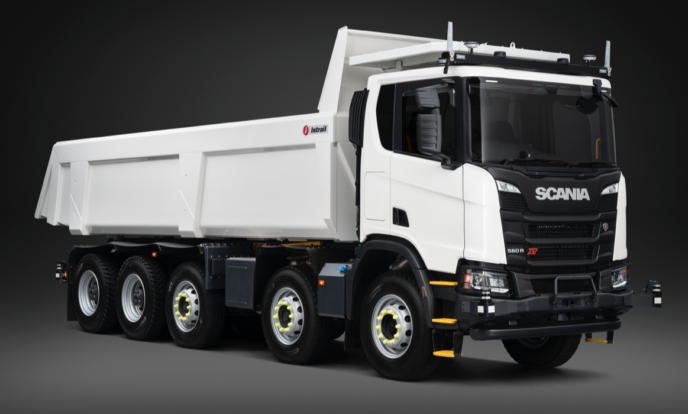
South Auckland-based last-mile cartage specialist Reliance Transport is the proud operator of the country’s first two battery-powered Scania trucks.
Scania originally revealed the first generation 29 tonne (GCW) battery electric vehicles (BEVs) in June, and since then they have been undergoing livery and road readiness preparation for their new owner. Reliance began the commissioning trial late last month.
The vehicle’s suitability for short to medium haul journeys, each with a range of up to 180km, made them an ideal acquisition for the Reliance fleet.
They are used exclusively for transporting last-mile freight in the Auckland metropolitan area, carting containers and steel products around the city’s port and freight networks.
Mark Darrah, director of the family business that has been around more than 60 years, says reducing their fuel costs and footprint alongside their responsibility to sustainable practice is a focus for the company’s next 60 years.
“That long-term view and focus was certainly the main motivation for purchasing the BEVs. I’ve made a few trips to Europe, China and USA investigating alternative fuel and sustainable transport options and the Scania BEVs suited our needs the best. We intend adding more to the fleet as resources permit,” he says.
The BEVs were co-funded by the Government’s Low Emission Transport Fund administered by the Energy Efficiency & Conservation Authority (EECA).
EECA transport portfolio manager Camilla Cochrane says the electrification of heavy vehicles has “come along in leaps and bounds in a very short space of time”.
This will help the decarbonisation of the heavy transport sector which has an “out-sized impact” on the country’s greenhouse gas emissions.
“We’re pleased to see another pair of electric trucks hit the road, to show there are a growing number of solutions available,” Cochrane says.
Meanwhile, Darrah says he’s “extremely grateful” for EECA’s involvement and initiative and looks forward to an ongoing relationship with the authority.
The two Scania BEVs were purchased with the help of $500,000 from the fund.
The BEV investment represents the third stage of Reliance Transports’ Project Switch – a five stage, multi-year business journey to carbon zero and sustainable practices.
“This current third stage is a multi-phase programme that will see our diesel-powered heavy truck and fork hoist fleet replaced with zero emission BEVs,” Darrah says.
“We’re already offsetting current carbon emissions by achieving Toitū (environmental management) carbon zero accreditation, and by investing in additional carbon credits.”

Stage four will begin next developing a sustainable micro-grid on site to provide a 1MW charging capacity for the electric fleet.
The battery electric vehicles come with the option of either five or nine batteries – totalling 165kWh or 300kWh installed capacity respectively. With the combustion engine removed, space for batteries has been created and additional batteries are mounted on the chassis frame.
The new electric motor delivers a continuous power of 230kW or approximately 310hp. The motor has two gears to provide high power over a wider speed span and the vehicles also include optional emission free operation for both hydraulics and refrigeration units.
Scania NZ managing director Rafael Alvarenga says bringing in the first of these fully electric trucks is not a one-off.
Instead, they represent a genuine factory-led solution to sustainable transport in Aotearoa by Europe’s premier truck manufacturer, he says.
“Scania NZ is as serious in its commitment to building a battery electric truck fleet in Aotearoa as our customers are about acquiring them.
“Acquiring an electric truck is not just an investment in a customer’s fleet, but also in their brand and market. An electric truck enables the customer to stay ahead of the competition, learn about infrastructural challenges and start adapting for the future,” Alvarenga says.
Reliance Transport also introduced an electric reach stacker in September.


Join the conversation