
The future of cars: no fuel, no driver
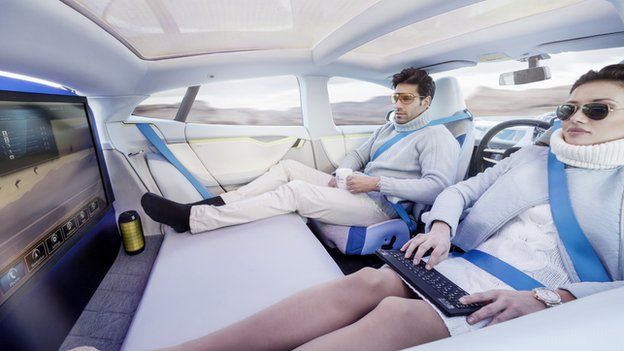
Driverless cars, running exhaust-free off renewably-produced electricity, will one day become reality, if the current R&D activity bears fruit.
Germany’s Volkswagen has predicted that by 2030, every other vehicle sold will be an electric one.
BMW has proclaimed itself less than happy with its current market penetration rate and has pledged to plough fresh cash into its electromobility R&D activities, believing e-mobility to be the future.
Both companies’ attempts to accelerate the motor revolution have been boosted by the recent announcement from the German government to set aside some 600 million euros ($675 million) of taxpayers’ money (to be matched euro for euro by the car industry) as a subsidy for people buying electric cars.
New car-buyers stand to get a 4000-euro (NZ$6500) subsidy if they buy a purely electric car, and 3000 euros if they opt for a plug-in hybrid car, which combines a battery and a small combustion engine. Not only that, electric cars will be exempt from motor vehicle taxes for 10 years.
“The growing demand will trigger important and necessary investment along the entire supply chain of electromobility,” said Germany’s minister of economics Sigmar Gabriel.
Meanwhile, a study by the German Economic Institute (IW) has also revealed that 58% of all patents in the field of autonomous driving since 2010 have been made in Germany. The car industry, one of the industries most integral to the German national identity, is setting itself up to be the global place of innovation, where driverless, fumeless cars are targeted as the norm.
“This huge number of patents shows just how innovative German companies are,” says Rico Trost, manager of transport technologies at Germany Trade & invest, the federal economic development agency.
“The incorporation of e-mobility into society is a development not only beneficial to Germany’s car industry, but also to its energy efficiency concept and its energy transition policy. The move to cleaner, more efficient technology is a key underpinning of Germany’s future strategy.
“When you look at the developments in supply or satellite industries, such as navigation and carsharing as well, you can see how well these companies are adapting to the looming changes in the transport industry,” says Trost.
Germany’s cars constitute 72% of the world’s premium car market. The auto industry is considered vital to Germany’s economy, representing some 775,000 jobs and some 400 billion euros a year in turnover.


Join the conversation