
Toyota breakthrough enables focus on EVs

Engineers at Toyota Motor Corporation say they have tamed volatile lithium-ion battery technology.
They say that this feat enables Toyota to now safely pack more power at no significant extra cost, enabling the carmaker to enter the growing all-electric car market, reports Reuters.
Before this breakthrough Toyota avoided EVs in favour of hydrogen fuel cell vehicles (FCVs).
The carmaker says its Prius Prime, a soon-to-be-launched plug-in electric version of the world’s top-selling petrol hybrid, will use Li-ion batteries with enough energy to make the car go around 60km when fully charged before the petrol engine kicks in.
While rivals including Tesla Motors and Nissan Motor Corporation began adopting Li-ion battery technology nearly a decade ago, Toyota largely held back due to concerns about cost, size and safety.
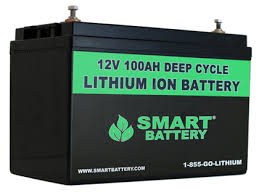 The batteries can be unstable and have been blamed for incendiary Samsung smartphones and smoking Boeing 787 Dreamliner planes.
Toyota’s confidence in its battery’s safety and stability comes from improved control technology that precisely monitors the temperature and condition of each of the 95 cells in its new battery pack.
“Our control system can identify even slight signs of a potential short-circuit in individual cells, and will either prevent it from spreading or shut down the entire battery,” says Hiroaki Takeuchi, a senior Toyota engineer involved in the development.
Working with battery supplier Panasonic – which also produces Li-ion batteries for Tesla – Toyota has also improved precision in assembling the battery cells, ensuring the chemistry is free of impurities.
The introduction of even microscopic metal particles or other impurities can trigger a short-circuit, overheating and a potential explosion.
“The environment where our lithium-ion batteries are produced is not quite like the clean rooms where semiconductors are made, but very close,” says Takeuchi.
Battery experts say increasingly sophisticated systems that can track individual cell conditions are becoming closely held trade secrets.
“State of charge management, safety management and algorithm development is becoming one of the higher tiers of proprietary internal development,” says Eric Rask, principal research engineer at Argonne National Laboratory, a US Department of Energy facility outside Chicago. “It’s very internal, very strategic, and companies are seeing management algorithms as a competitive advantage.”
Toyota has also been able to shrink the size of each cell, for example, closing the distance between the anode and cathode where active ions travel when charging and discharging.
This has doubled battery capacity to around 8.8kWh, while only increasing the size of the battery pack by around two-thirds and its weight by half.
Battery experts say Li-ion battery cell prices have fallen by about 60% in five years to around $145/kWh (NZ$203/kWh) as enlarged production scales make them cheaper to make.
Falling battery prices also have enabled Toyota to develop its more compact, efficient battery, while also adding more sophisticated controls to the battery pack, says Koji Toyoshima, chief engineer for the Prius. Toyota declined to say more on its costs.
Many Li-ion car batteries use a chemical combination of nickel, cobalt and manganese. These store more energy, take a shorter time to charge and are considered safer than other Li-ion technologies. But they can still overheat and catch fire if not properly designed, manufactured and controlled.
“It’s a tall order to develop a lithium-ion car battery which can perform reliably and safely for 10 years, or over hundreds of thousands of kilometres,” says Toyoshima.
“We have double-braced and triple-braced our battery pack to make sure they’re fail-safe. . . . It’s all about safety, safety, safety.”
Toyota has mainly used the more mature nickel-metal hydride batteries to power the motor in the conventional Prius, widely regarded as the forefather of the ‘green’ car, though it did use some lithium-ion batteries from 2009 in its first plug-in hybrid Prius, around the time the first all-electric cars powered by Li-ion batteries – such as the Tesla Roadster and Nissan Leaf – came onto the mass market.
While Toyota sees FCVs as the ultimate ‘green’ car, the US and China are encouraging automakers to make more all-electric battery cars as they push alternative energy strategies.
“Developing lithium-ion batteries for both hybrids and plug-ins will enable us to also produce all-electric cars in the future,” concludes Toyoshima. “It makes sense to have a range of batteries to suit different powertrains.”
Join the conversation