
Trucking toward lower emissions
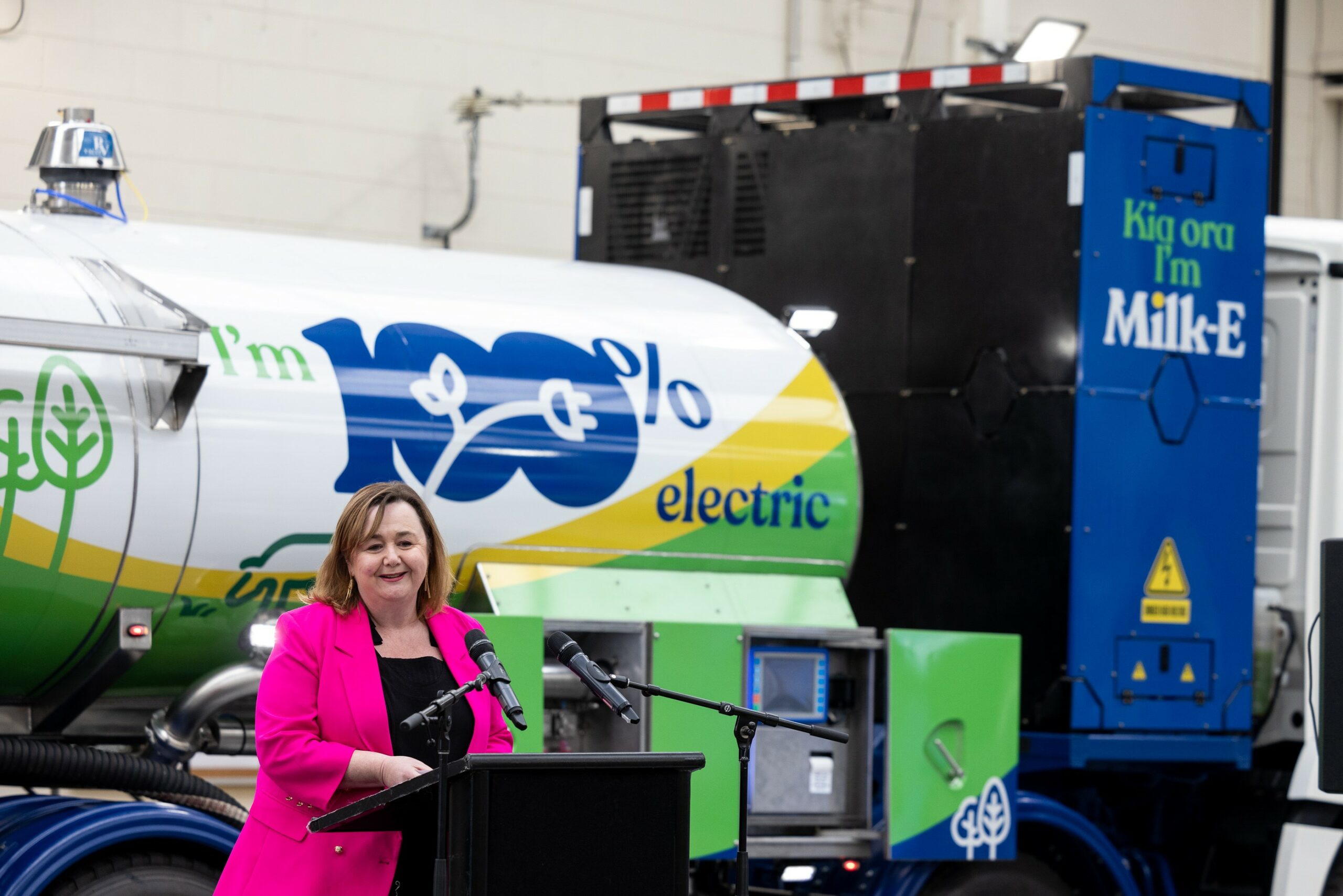
Fonterra has its first electric milk tanker called “Milk-E”.
It operates on battery-swap technology, meaning just a few minutes’ downtime to swap batteries which can be charged at off-peak times, said energy and resources minister Megan Woods in launching the e-truck on July 18 shortly before attending NZ Post’s first hydrogen truck event.
Both were helped by Government funding, Woods adding that New Zealand’s (and possibly the world’s) first electric milk tanker is entering Fonterra’s fleet and Hyundai and NZ Post are getting the country’s first hydrogen truck on the road.
Woods highlighted the importance of organisations that operate large fleets, leveraging new technology to reduce their emissions.
“These Government partnerships with industry are vital to achieving our climate goals,” she said.
“It’s my hope these projects will deliver valuable lessons and financial insights that will be shared with others and can be replicated across the national heavy fleet.
“Transport makes up more than 20% of the country’s emissions, and heavy vehicles, most of which are for freight, emit almost a quarter of our total transport emissions,” Woods added.
“Heavy transport is harder to decarbonise than light transport, and it’s likely a mix of hydrogen, electricity and other low-emission fuels will be needed to help meet the Emissions Reduction Plan’s target to cut emissions from freight transport by 35% by 2035.
“These truck projects have the potential to be transformational for heavy transport. According to Hyundai, the truck will save emissions the equivalent of taking 100 cars off the road.
“In the dairy sector, nationwide annual emissions from Fonterra’s milk collection are estimated to be around 126,000 tonnes of CO2e, so if this project proves replicable it represents an excellent opportunity to make a huge cut to Fonterra’s heavy fleet emissions.”
Both projects received co-funding from the government’s Low Emissions Transport Fund (LETF), administered by the Energy Efficiency and Conservation Authority (EECA).
Fonterra received $427,000 in co-funding, of an estimated total cost of $850,000 to purchase the electric truck cab/chassis and convert it into a tanker. The work was completed by a local engineer who specialises in mounting Fonterra’s tanker barrels and Fonterra’s in-house service technicians who specialise in building their tankers.
Milk E will based at Fonterra’s Waitoa plant.


Join the conversation