
US study finds EV charging stations boost local businesses
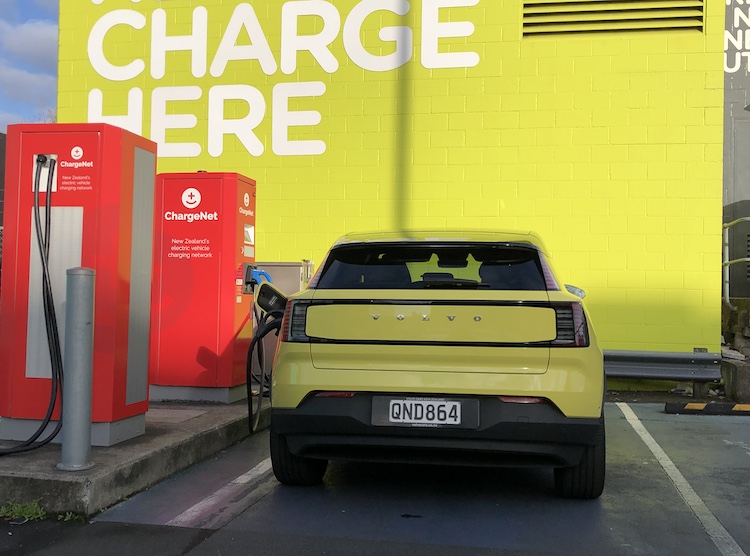
Massachusetts Institute of Technology (MIT) researchers have published a new study suggesting that EV charging stations provide economic benefits for local businesses as well as the environment.
According to MIT News, the study found that, in California, opening a charging station boosted annual spending at each nearby business by an average of about US $1500 in 2019 and about US $400 between January 2021 and June 2023.
The spending bump amounts to thousands of extra dollars annually for nearby businesses, and the increase is particularly pronounced for firms in under-resourced areas.
The Singapore-MIT Alliance for Research and Technology (SMART) and the Singapore National Research Foundation partially supported the research.
SMART Post-doctoral student Yunhan Zheng was the study’s lead author and hopes it sheds some light on the economic benefits of EV charger installations.
Zheng told MIT News the findings could diversify the income stream for charger providers and site hosts, leading to more informed EV charging station business models.
Her co-authors were David Keith, a senior lecturer at the MIT Sloan School of Management; Jinhua Zhao, an MIT professor of cities and transportation; and alumni Shenhao Wang and Mi Diao.
MIT News reports that EV advocates argue that charging stations benefit surrounding communities economically. Still, Zheng says previous studies on their impact relied on surveys or were small-scale.
For their study, the researchers collected data from 4,000 charging stations in California and 140,000 businesses, relying on anonymised credit and debit card transactions to measure changes in consumer spending. They used data from 2019 through June 2023, skipping the year 2020 to minimise the impact of the pandemic.
The researchers compared data from businesses within 500 metres of new charging stations before and after installation. They also analysed transactions from similar companies in the same time frame that weren’t near charging stations.
Installing a charging station boosted annual spending at nearby establishments by an average of 1.4% in 2019 and 0.8% from January 2021 to June 2023.
Specifically, those percentages translate to almost US $23,000 in cumulative spending increases in 2019 and about $3,400 annually from 2021 through June 2023.
Zheng told MIT News the decline in spending increases over the two time periods might be due to a saturation of EV chargers, leading to lower utilisation, an overall decrease in spending per business after the COVID-19 pandemic, and a reduced number of companies served by each EV charging station in the second period.
Despite this decline, the annual impact of a charging station on all its surrounding businesses would still cover approximately 11.2% of the average infrastructure and installation cost of a standard charging station.
Through both time frames, the spending increases were highest for businesses within about a football field’s distance from the new stations. They were also significant for firms in disadvantaged and low-income areas.
“The positive impacts of EV charging stations on businesses are not constrained solely to some high-income neighbourhoods,” Shenhao Wang says. “It highlights the importance for policymakers to develop EV charging stations in marginalised areas because they foster a cleaner environment and catalyse enhancing economic vitality.”
Zheng told MIT News that the findings teach a lesson for charging station developers seeking to improve the profitability of their projects.
“The joint petrol station and convenience store business model could also be adapted to EV charging stations,” Zheng says. “Traditionally, many gas stations are affiliated with retail store chains, enabling owners to sell fuel and attract customers to diversify their revenue stream. EV charging providers could consider a similar approach to internalise the positive impact of EV charging stations.”
Zheng also told MIT News the findings could support the creation of new funding models for charging stations, such as multiple businesses sharing the construction costs so they can all benefit from the added spending.
Those changes could accelerate the creation of charging networks. Still, Zheng told MIT News that further research is needed to understand how much the study’s findings can be extrapolated to other areas.
She hopes other researchers will study the economic effects of charging stations and that future research will include states beyond California and even different countries.


Join the conversation