
Video: E-bike ‘reads’ rider’s mind
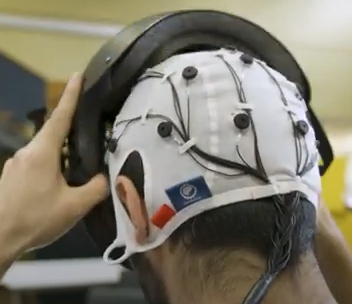
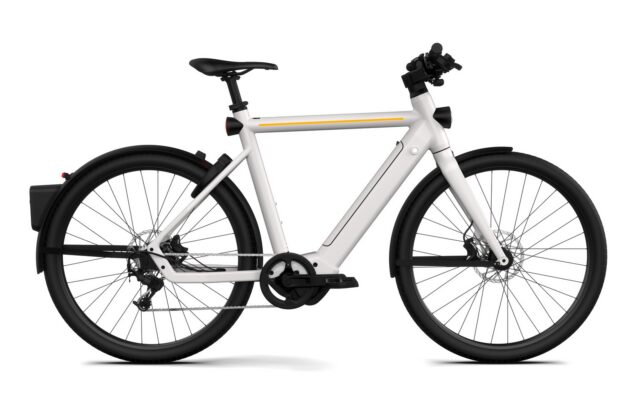
An e-bike prototype that can “read” a cyclist’s mind and respond to a potentially dangerous situation has been developed in Australia.
An electroencephalogram (EEG) supported e-bike prototype called Ena, which monitors electrical activity on the brain corresponding to changes in the rider’s field of view, has been developed by researchers from Monash University, IBM Research – Australia and the University of Southampton.
Changes to the field of view in peripheral awareness is often linked with a decrease in the quality of human performance.
A study with 20 participants as part of this research revealed various themes and design tactics suggesting that peripheral awareness as a neurological state is viable to align human-machine integration with internal bodily processes.
In the case of cyclists, potential scenarios such as a car cutting them off or an obstruction to a bike path, are very likely circumstances.

Ena offers a human-computer integration that allows for a safer and more enjoyable riding experience.
Cycling is growing in popularity in Australia and New Zealand, brought on by the COVID-19 lockdown.
A recent survey compared the number of riders on key bike paths in Melbourne from November last year to April this year and found a 270% increase.
With more cyclists taking to the streets the risk of accidents also increases.
Project lead IBM researcher Josh Andres, also a member of the Exertion Games Lab at Monash University and a research fellow at the Wellthlab, is working with a team from all three institutions.
He designed a system that reads the rider’s field of view via their brain activity. The system can determine when the rider’s field of view is broad, or in other words when the rider is aware of their surroundings.
During this period the system offers engine support to go faster. However, if the rider’s field of view narrows as a response to a threat, such as a car veering across, the system immediately stops engine support, allowing the rider to go slower while they decide how to respond to the situation.
“The new research shows promising results on how humans can work together with intelligent systems in everyday life to extend their abilities,” Andres adds.
“There are several scenarios where technology like this could be beneficial, from increasing safety and response time for emergency personnel to potentially monitoring a patient’s peripheral vision to learn about a condition, right through to being used in sports to help soccer players develop their peripheral vision.”
Ena has the potential to give cyclists another set of eyes on the road, Exertion Games Lab director and co-creator professor Florian ‘Floyd’ Mueller says.
He sees this ground-breaking research as an opportunity to further human-computer interaction experiences in real-time, where the rider and the e-bike ‘fuse’ together to support each other.
“Via Ena, we are able to explore technology that integrates with the human body to amplify the happiness that being physically active offers, while keeping you safer,” Mueller says.
The Exertion Games Lab has also produced Ari the green-light bike which uses traffic light data to ride a “green wave” through intersections, and Ava the e-bike which echoes the rider’s interactions, such as speeding up when the rider leans forward.
Visit https://bit.ly/2V5ZxzF
for more information.

Join the conversation