
$31b earmarked for Auckland transport
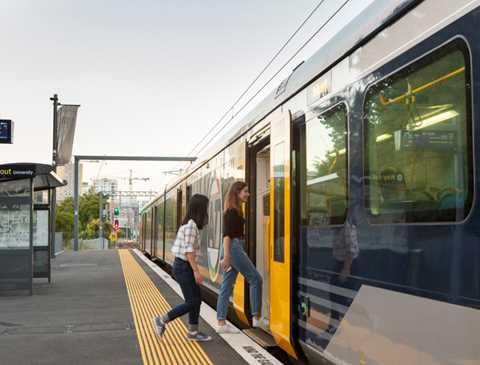
About $31 billion is allocated in the Auckland Transport Alignment Project (ATAP) 2021-31 package for critical transport infrastructure and services across Auckland which includes more electric trains.
Transport minister Michael Wood and Auckland mayor Phil Goff have announced the new package with the ATAP largely building on the $28b 2018 package, Wood adding it continues work to unlock Auckland and steps up transport emission reductions.
The previous package focused on developing a rapid transit network, walking and cycling, safety and unlocking growth.
“There are a number of projects already underway which are helping with our economic recovery and will reduce congestion, like the Glen Innes to Tāmaki Drive Shared Path, upgrades to SH20B and the Northern Busway extension,” Wood says.
“For the first time we’re turning around transport emissions rising in Auckland. The ATAP 2021-31 package alone would result of around 13% decrease in emissions per capita when compared with the previous package, and is projected to increase public transport trips by 91%.
“Alongside our recently announced policies to reduce transport emissions, ATAP could help prevent up to 3.3 million tonnes of carbon emissions in Auckland over the next decade.”
The new ATAP is funded from an expected $16.3b in the National Land Transport Fund, while the Auckland Council’s draft 2021-31 Long Term Plan budget proposes $10.2b for transport.
Government funding of around $4.9b has been allocated to Auckland from the New Zealand Upgrade Programme, the Covid Response and Recovery Fund and the Government’s share of the City Rail Link.
Funding levels over the 10-year period from the National Land Transport Fund and Auckland Council have largely remained the same, while costs across-the-board have increased compared to ATAP 2018-28. COVID-19 has had a significant short-term impact on revenue at both the local and national levels, with Auckland proposing big rate rises to help compensate.
These factors, together with the investment committed to projects underway and key programmes (safety, minor improvements, network optimisation, walking and cycling) meant a small proportion of the available funding remained for prioritising across a broad range of projects, the ATAP says.
The scale of Auckland’s population growth is challenging traditional funding sources for infrastructure development, requiring collective new thinking on funding and financing options, with the new Infrastructure, Funding and Financing Act (2020) offering new avenues for Auckland to pursue, it adds.
The $1.5b for local boards and walking and cycling initiatives to see cycleways completed through the isthmus is $600 million more than previous package, while $1.3b for buses and ferries is $500 million more than previously.
A Community Connect concession pilot to reduce public transport fares by 50% for community services card holders would mean around 2.7 million more public transport trips in Auckland in its first year, helping to ease congestion and reduce emissions, Wood and Goff suggest.
“Officials have advised it will be ready to roll out by July 2022, but we will be doing everything we can to bring it forward. If successful, we would look to work with other councils to roll it out across the country,” Wood says.
Goff says the $31b is the largest capital programme ever allocated for Auckland transport infrastructure and services.
“We have a huge backlog from years of underinvestment to make up and this is a step in the right direction.
“By itself, ATAP does not solve all of Auckland’s transport problems but it will allow us to make inroads into the increasingly serious problems of carbon emissions, traffic congestion and housing shortages.”
ATAP 2021-31 Key Projects
• City Rail Link and ‘day 1’ investments to maximise CRL benefits
• State Highway 16 bus Improvements
• Planning work on the Additional Waitematā Harbour Crossing
• Penlink (includes land for future public transport priority lanes)
• Light Rail ($1.8 billion seed funding allocated)
• Eastern busway
• Northern Pathway
• Connected Communities Programme
• Rail electrification to Pukekohe and extension of third main rail line (Wiri to Quay Park)
• City Centre Bus Improvements
• Walking and cycling programme including the Te Whau Pathway and completing the Glen Innes to Tāmaki cycleway
• Significant programme of safety improvements with an expected reduction in deaths and serious injury of 65% by 2031
• Additional electric trains
• Community Connect to reduce public transport costs for Community Services Card holders
• State Highway 1 Ara Tūhono Puhoi to Warkworth
• State Highway 1 Northern Corridor including Northern Busway extension to Albany


Join the conversation