
New electric car factory for Audi
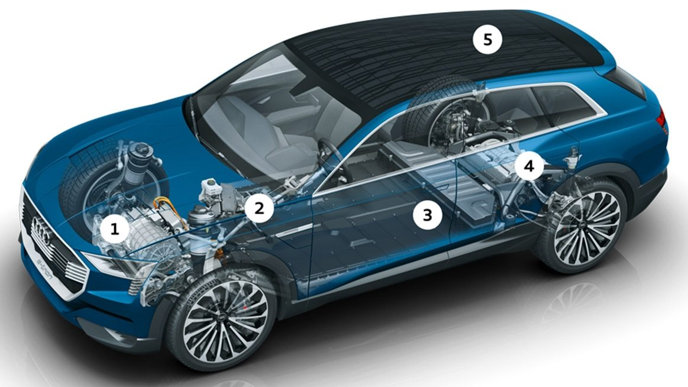
Audi is previewing its new electric car factory by saying, “electric motors instead of internal combustion engines, batteries instead of fuel tanks”.
It’s gearing up to start production of the Audi e-tron quattro next year at its Brussels plant, being revamped with new production lines, Electrek reports.
New production planning at what Audi is calling its ‘E-factory’ is reportedly going at “full speed”.
 “We plan to retain the same number of workers currently building the A1 in two shifts,” production project manager Bertram Günter says. “Because the larger SUV has more production content than the smaller Audi A1, the workforce will still be running at full capacity. And the layout of the halls is also very convenient. Battery assembly will take place in one hall that’s currently used for logistics. The main contractor there is Audi Toolmaking, which is preparing all the equipment.”
Audi is not making its own battery cells, but it is making the battery modules and packs important production parts.
“One of the new aspects of the electric SUV is the full integration of the battery into the load-bearing structure of the vehicle floor pan,” says Dr Christian Allmann, a battery specialist in Günter’s team. “This means an extremely high degree of safety in the design, and a level of precision in battery assembly with which we’re setting new benchmarks.”
The Audi e-tron quattro is expected to be the first in a series of all-electric vehicles coming in the next few years from German premium vehicle automakers like Porsche, Mercedes, and BMW.
The vehicle is likely to feature about 440 kilometres real-world range on a 95kWh battery pack.
Audi appears to be investing heavily in the vehicle’s production. While there’s no volume announced yet, we don’t expect it to be a compliance car, reports Electrek.
Pricing and final timing information for the release are expected by the end of the year.
Caption: The Audi e-tron quattro concept includes, (1) the front electric motor, (2) power electronics, (3) lithium-ion battery with 95kWh capacity, (4) two rear electric motors and (5) solar cells.

Join the conversation