
Video: Self-driving pods use eyes
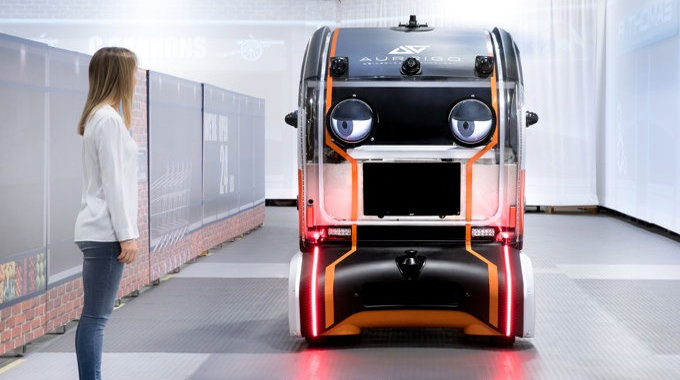
‘Virtual eyes’ allowing intelligent pods to make eye contact with pedestrians are part of a Jaguar Land Rover study to understand how humans will trust self-driving vehicles.
The pods’ eyes signal intent and interact with other road users.
Research suggests up to 63% of pedestrians and cyclists worry about how safe it will be sharing the road with a self-driving vehicle.
The friendly-faced ‘eye pods’ help work out how much information future self-driving cars should share with users or pedestrians to ensure that people trust the technology.
As part of the engineering project, Jaguar Land Rover has enlisted the help of a team of cognitive psychologists to better understand how vehicle behaviour affects human confidence in new technology.
The trust trials form part of Jaguar Land Rover’s government-supported United Kingdom Autodrive project.
The intelligent pods run autonomously on a fabricated street scene in Coventry, while the behaviour of pedestrians is analysed as they wait to cross the road.
The ‘eyes’ have been devised by a team of advanced engineers, working in Jaguar Land Rover’s Future Mobility division. The pods seek out the pedestrian – appearing to ‘look’ directly at them – signalling to road users that it has identified them and intends takng avoiding action.
Engineers record trust levels in the person before and after the pod makes ‘eye contact’ to find out whether it generates sufficient confidence that it would stop for them.
The trial is aligned with Jaguar Land Rover’s goals to make cars safer, free up people’s valuable time and improve mobility for everyone.
“It’s second-nature to glance at the driver of the approaching vehicle before stepping into the road,” Jaguar Land Rover future mobility research manager Pete Bennett says.
”Understanding how this translates in tomorrow’s more automated world is important.
“We want to know if it is beneficial to provide humans with information about a vehicle’s intentions or whether simply letting a pedestrian know it has been recognised is enough to improve confidence.”
The trials are part of a wider study exploring how future connected and autonomous vehicles can replicate human behaviour and reactions when driving.

Join the conversation