
Dyson plans EV testing at British airfield
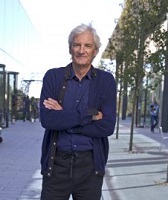
James Dyson.
Dyson has submitted plans for development of its Hullavington Airfield base in Wiltshire following restoration of two 1938 hangars for its electric vehicle team.
The company known for its vacuum cleaners has outlined plans for its total 200 million pound (NZ$391.5m) investment in the airfield to include additional buildings and test tracks.
About 400 members of Dyson’s automotive team have now moved into the advanced automotive space and a further three buildings are on course for delivery over coming months.
With architect Chris Wilkinson, Dyson is already restoring and enhancing the airfield, creating state-of-the-art engineering work spaces.
To date, Dyson has invested 84 million pounds (NZ$164.3m) into its new technology centre with two hangar restorations. An additional 15,000 square metres of testing space will be provided.
The phase two plan includes over 16km of vehicle test tracks for vehicle development and verification. In addition, it outlines 45,000sqm of new development space which could provide space for over 2000 people as well as a cafe; sports centre; recreation space; and supporting technical facilities.
The testing track proposals include a dynamic handling track to assess and tune all aspects of ride, handling, steering and brakes; a vehicle stability dynamic platform for testing manoeuvrability, an off-road route, and a hill and handling road route to simulate a challenging fast road route incorporating corners of differing severity and changes in altitude.
There’s also a fast road route to test maximum speed and the functionality of advanced driver assistance systems, plus test slopes of varying gradients to test powertrains.
“It will quickly become a world-class vehicle testing campus where we hope to invest £200m, creating more high-skilled jobs for Britain. We are now firmly focused on the next stage of our automotive project strengthening our credentials as a global research and development organisation,” Dyson chief executive officer Jim Rowan says.
Hullavington was a base for aircraft from Mosquitoes, Spitfires and Lancasters to Douglas Bostons, North American Mitchells and GAL Hotspur troop-carrying gliders. By the end of World War II more than 1000 aircraft were based there.
Since 1995, the airfield has been largely inactive until 2016 when Dyson purchased it with cross-Government support.

Join the conversation