
Tesla cuts supercharger price rise
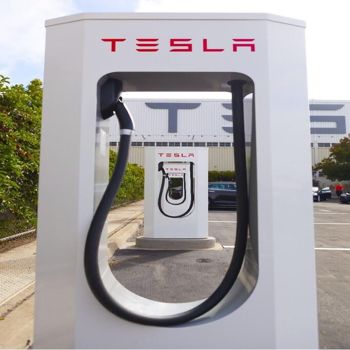
Tesla has cut back on its supercharger price increase globally after customer feedback.
The company is transitioning from free supercharging to a paid model but still appears to be fine-tuning its approach.
Since November, all new Tesla cars are officially sold as part of its new pay per use supercharger programme.
Owners have to pay per kWh used at the supercharger stations or pay per minute in some markets that don’t allow direct electricity sales, Electrek reports, adding it learned Tesla had “significantly” increased prices across many markets around the world.
Reacting to customer feedback, Tesla says it has now reduced the supercharger price increase globally by 10%, effective immediately.
That means Tesla owners in New Zealand and Australia now pay 42c per kWh instead of about 47c, a Tesla spokesperson says.
Tesla is moving away from its per state/region pricing structure to implement a per station pricing structure in order to get more comprehensive prices based on local electricity rates and demand charges, Electrek says.
“We’re adjusting supercharging pricing to better reflect differences in local electricity costs and site usage,” Tesla told Electrek.
“As our fleet grows, we continue to open new supercharger locations weekly so more drivers can travel long distances at a fraction of the cost of gasoline and with zero emissions. As has always been the case, supercharging is not meant to be a profit centre for Tesla.”
The company says it aims to use supercharger revenue to provide more stations.
Tesla has about 1422 supercharger stations with 12,011 superchargers around the world, according to Electrek, and wants to about double that this year.
Meanwhile, overseas media report Tesla has been in talks with China’s Tianjin Lishen to supply batteries for its new Shanghai car factory, as it aims to reduce reliance on Japan’s Panasonic.
Tesla chief executive officer Elon Musk scotched suggestions a preliminary agreement may have been reached with Lishen, saying such reports are “untrue”.

Join the conversation