
Safety emphasis as electric scooter use soars
This story first appeared in the January issue of EVtalk – CLICK HERE to download the magazine FREE
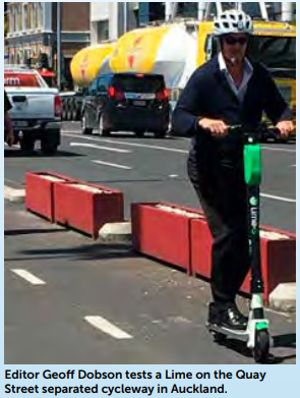 A focus on safety is being taken as more electric scooter riders hit the streets – sometimes literally.
Electric scooter ride-sharing company Lime’s Auckland licence and trial period has just been extended to March 31 by the Auckland Council and Auckland Transport (AT).
With that comes a commitment from Lime to work with AT on safety initiatives to increase responsible use of e-scooters.
“Our streets are used by lots of different people and modes of transport.
We are working to improve road safety and we are pleased that Lime will be working in partnership with us to trial initiatives around scooter education and appropriate speeds on our busier footpaths,” Auckland Transport chief executive Shane Ellison says.
Lime New Zealand Lime Launcher Hank Rowe says a “Lime ambassador” programme helping educate riders and improve safety will be included in the trial extension.
He says the new initiatives will help people understand Lime’s safe riding practices, and ambassadors will also approach riders who need reminding of Lime’s terms and conditions.
“We’re also looking at pop-up opportunities in and around the city centre for demonstrations, safety training and giveaways.”
Similar initiatives to those applying in Auckland will be discussed with relevant local authorities and agencies in other cities, Rowe says.
The Auckland trial and licence extension will also allow AT and the Auckland Council to get better information on electric scooter rider injuries from the ACC.
Safety issues are the main priority, according to Ellison.
“Electric scooters can be ridden on footpaths, roads and separated cycleways – that means they share their path with people, cars and bikes – so safety considerations must be a priority.
“Electric bikes, privately owned e-scooters and now ride-sharing options are becoming more popular in world-class cities everywhere,” he says.
“Enabling this trial to continue for a further 10 weeks will give us a holistic picture of the demand for and use of e-scooters in our city and enable a clear way of managing that demand in the future.”
A review towards the end of the trial will determine whether hireable e-scooters will become a permanent fixture in the Auckland region.
Lime e-scooters launched in Dunedin on January 10 and are operating under trials in Christchurch and the Hutt Valley, with Queenstown, Tauranga and Hamilton also expected to get them.
Rowe says uptake has been “phenomenal” since Lime launched in Auckland in October.
At least two other e-scooter operators were expected to participate in the Auckland trial over four months, but one withdrew and another is facing a delay in launching.
“Their licences were staggered between mid-October 2018 and the end of February 2019,” Auckland Council chief operating officer Dean Kimpton says.
“Lime’s licence was due to end on January 14, leaving us without any operators in the Auckland market for the remainder of the trial period.
“We have extended Lime’s licence to allow us to continue to gather information and to complete our review.
We are also pleased to be working with Lime on trialling some additional initiatives that will add to our review.”
During the first e-scooter licence period the council and AT have been monitoring the trial.
This has included logging feedback from the public, meeting regularly with operators, liaising and sharing information with other agencies like ACC, the NZ Transport Agency and Christchurch City Council, Kimpton says.
Information gathered during the trial period is being collated so that officers can make a recommendation on whether the council should continue issuing licences for e-scooter rental providers.
“Extending the trial until the end of March will enable us to complete our review within the trial period,” Kimpton says.
He says the exact timeline for the review work and how elected representatives will be involved should be known shortly.
Associate transport minister Julie Anne Genter, an electric bike fan who made world headlines last year after riding her e-bike to hospital to give birth, intends waiting until after the Lime e-scooter trial before investigating whether any further regulation is needed.
Meanwhile, AT says it will continue to encourage scooter users to use common sense and share footpaths with all users safely, including using scooters at safe speeds and wearing a helmet.
Both AT and the Auckland Council launched a “scooterists code” late last year in response to public and media enquiries about scooter safety.
The Scootsafe code:
Ears out, eyes up (pay attention at all times, look where you’re going and don’t use mobile devices while on a scooter).
Cars hurt – scoot where it’s safe (while the road rules allow e-scooters to use the road, we recommend considering this carefully.
Separated cycleways are also OK – but not cycleways that are part of the road network).
It’s cool to wear a lid (it’s always recommended to wear a helmet).
Keep it cruisey and enjoy the ride (watch your speed; a slower trip can also be an enjoyable one).
One scooterist per scooter (this is a condition of use and an important safety consideration).
Avoid people – it’s the best way forward (share the footpath, road or cycleway with care; pedestrians have every right to be on footpaths too and we don’t want to see them knocked over).



Join the conversation