
World hydrogen energy experts in Rotorua
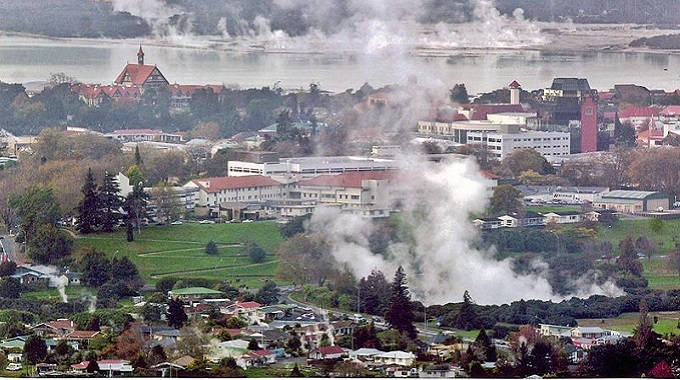
It’s perhaps appropriate global leaders in hydrogen technology will discuss hydrogen as a future fuel source in Rotorua on February 19-21.
After all, Rotorua is renowned for its hydrogen sulphide from the thermal wonderland, producing that distinctive “rotten egg” smell.
But it’s the purer form of hydrogen developed from renewable energy sources which interests members of the International Energy Agency Hydrogen Technology Collaboration Programme (IEA Hydrogen TCP).
The executive represents 21-member countries, the European Commission, UNIDO, and has eight industrial members. It will hold the first of its biannual meetings at the Millennium Resort Hotel in Rotorua.
The committee will discuss research and promotion of hydrogen as a fuel source, also hosting a public forum where local industry and anyone with an interest can hear about the technology and its potential deployment with applications in transport, industry, and energy systems.
The free public IEA Hydrogen Forum is on February 20 from 1pm-3pm.
“The ministry view is that hydrogen has the potential to play an important role in replacing fossil fuels and reducing greenhouse gas emissions in domestic transport and industry,” Ministry of Business Innovation and Enterprise (MBIE) principal policy advisor Mark Pickup says.
He says there’s potential to develop an export industry for renewable hydrogen.
The ministry recently supported the New Zealand Hydrogen Association’s formation to drive adoption of renewable hydrogen.
Unitec associate professor of engineering Dr Jonathan Leaver is MBIE’s representative on the executive committee, one of two elected IEA Hydrogen vice-chairs and a member of the International Standards Organisation (ISO) committee charged with development of safe systems for the production, storage, transport, measurement and use of hydrogen.
“Hydrogen will have an important role in the transport sector alongside battery electric vehicles (BEVs). Hydrogen powered cars, trucks and trains are actually electric vehicles operating on hydrogen fuel cell technology instead of batteries,” he says.
“Fuel cells have no moving parts and convert hydrogen stored in a fuel tank into electricity and pure water. Fuel cell electric vehicles (FCEVs) have driving ranges and refuelling times similar to gasoline and diesel vehicles.”
Leaver says global market development for hydrogen vehicles is about eight to 10 years behind that of BEVs, although FCEV cars are available overseas from car makers like Toyota, Hyundai, and Honda.
Ports of Auckland announced in December it would build the first hydrogen fuel production plant during 2019 for used in forklifts, cars, and potentially a bus.
IEA Hydrogen chairman from the French Commissariat for Atomic Energy and Alternative Energies (CEA) Paul Lucchese says hydrogen is gaining traction as a potential fuel source, helped by growing climate concern.
“Japan, the current G-20 president and an IEA Hydrogen member, plans to showcase the outlook for hydrogen (with IEA support) when it hosts the G20 Summit this June.”

Join the conversation